Category: Sacred Reflections

A season of quiet course-correction. I used to run ahead—saying yes to every favor and confusing hurry with help. These reflections pick up where Only Whisper begins: walking at the Lord’s pace, using “miracles of knowledge” to bless, and remembering why I’m here.

  • Marked in Time — Willing to Submit

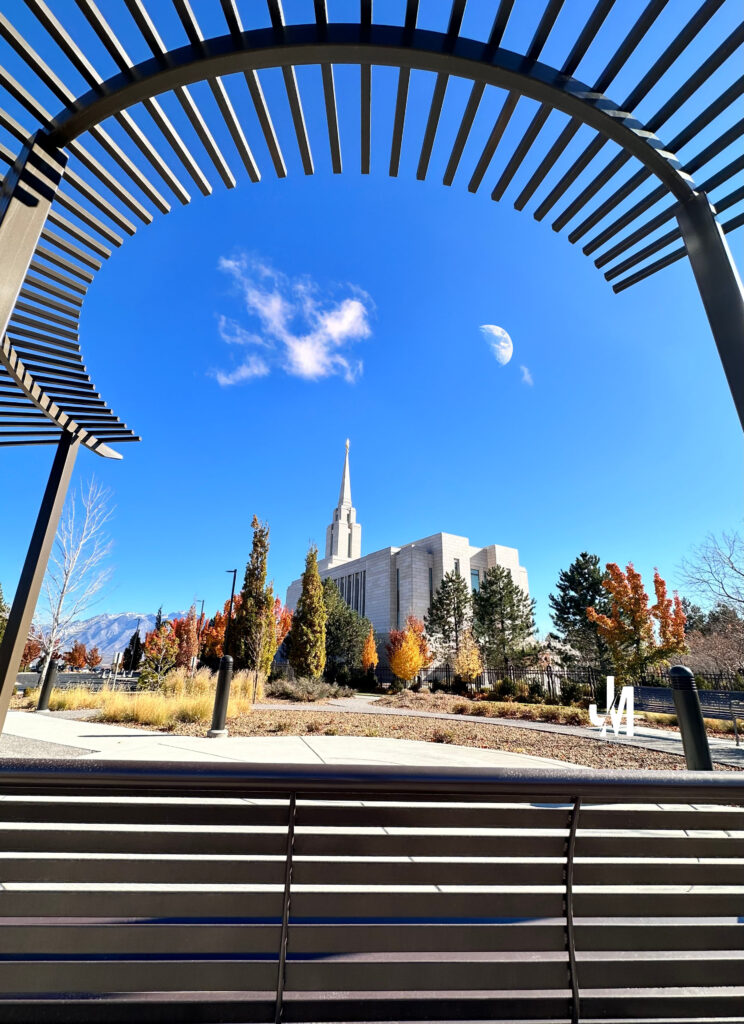
    Quiet reflection outside the temple — learning to trust God’s timing and His will.

    Excerpt
    “May we now, in our time and turn, be willing to submit.”


    Intro
    Some lessons in life are about effort. Others are about patience. But Elder Neal A. Maxwell teaches that the deepest discipleship is not just about doing more — it is about yielding more. Submission is not weakness. It is trust in God’s wisdom when life does not unfold according to our plans.


    Notes from Elder Maxwell
    Elder Maxwell explains that spiritual growth often requires us to accept certain realities while actively improving others. True submissiveness is learning to discern the difference between what must be endured and what must be changed. It is the quiet willingness to trust God’s purposes even when life feels heavy or unclear.


    Perspective (direct quotes)
    “Suffice it to say, God ‘allotteth unto men’ certain things with which we are to be content. (See Alma 29:4, Philip. 4:11; 1 Tim. 6:8.) A missing parent or limb is to be lived without. Yet temper and lust are to be tamed. One’s race is fixed, but one’s genetic endowment offers opportunity to be a careful steward. The submissive soul will be led aright, enduring some things well while being anxiously engaged in setting other things right — all the time discerning the difference.”

    “We have been given three special words — but if not — by three submissive young men who entered their fiery furnace, knowing ‘our God … is able to deliver us from the burning fiery furnace, … But if not, be it known unto thee, O king, that we will not serve thy gods.’ (Dan. 3:17–18.)”


    Practice (today, not someday)
    Today I will focus on surrendering control where I need to trust God more. I will work to improve what I can change — my discipline, my attitude, and my patience — while accepting the things God has allotted to me with humility and faith.


    Personal Reflection
    Last night I listened to Elder Maxwell’s talk repeatedly — over and over — until the early hours of Sunday morning. I kept my mind engaged and my hands busy. While listening, I converted my Ruger PC Carbine, did laundry, and prepared a healthy dinner. Moving from one meaningful task to another helped steady my thoughts.

    When those were finished, I continued with two hours of non-stop shadow boxing and isometric exercises, still listening to the talk. By the end of the night, I had heard it nearly twenty times.

    I am learning that submission is not always expressed in dramatic moments. Sometimes it is simply continuing to do good things — working, building, training, and trusting God to shape the heart quietly.


    Final Reflection
    Submission is not giving up. It is aligning our will with God’s will. Elder Maxwell reminds us that discipleship is not proven in comfort but in trust — especially when the answer is “but if not.” Faith means believing God can deliver us, while trusting Him even if He does not.


    Pocket I’m Keeping
    “The submissive soul will be led aright.”


    What I Hear Now (direct quotes)
    “Nevertheless not as I will, but as thou wilt.”
    “May we now, in our time and turn, be willing to submit.”


    Link to the talk
    https://www.churchofjesuschrist.org/study/general-conference/1985/04/willing-to-submit

    © 2012–2026 Jet Mariano. All rights reserved.
    For usage terms, please see the Legal Disclaimer.

  • MIT-8 The Eye

    The eye that communicates what words cannot.

    In certain eyes, I glimpse something no English adjective can contain.

    Excerpt
    Some eyes carry the moment. Other eyes are taught to see beyond it.


    Intro
    The scriptures teach that sight is not always natural. Sometimes the Lord allows understanding beyond ordinary vision. These moments are not constant, and they are not ours to explain. They come quietly, teach something essential, and pass.

    There are also eyes that carry burdens the world cannot see. Their owner may not know what others perceive in them.

    Two kinds of sight exist at the same time — one that is lived, and one that is given.


    Notes from the Scriptures
    When the servant of Elisha saw armies surrounding them, fear filled his heart. Elisha prayed that the young man’s eyes would be opened.

    “And the Lord opened the eyes of the young man; and he saw: and, behold, the mountain was full of horses and chariots of fire round about Elisha.” (2 Kings 6:17)

    The situation did not change. Only sight changed.

    Enoch experienced something similar when the Lord instructed him to wash his eyes:

    “And he beheld also things which were not visible to the natural eye.” (Moses 6:36)

    Even Moses was invited to see beyond natural limits:

    “Thou art my son… look, and I will show thee the workmanship of mine hands.” (Moses 1:4)

    Natural eyes alone could not perceive these things.


    Perspective
    In speaking of the man born blind in John 9, President Jeffrey R. Holland described how the Savior placed clay upon the man’s eyes and sent him to wash. After obeying, the man returned seeing. When challenged by those who doubted the miracle, he responded simply:

    “Whereas I was blind, now I see.”

    President Thomas S. Monson later reminded us that blindness is not always physical. Many “have their eyesight but… walk in darkness at noonday,” blinded by anger, prejudice, indifference, or neglect of truth.

    “Their ears are dull of hearing, and their eyes they have closed…”

    “The Spirit speaketh of things as they really are, and of things as they really will be.” (Jacob 4:13)

    “The light of the body is the eye.” (Matthew 6:22)


    Practice Today
    Today I will remember that sight is both physical and spiritual. I will seek to see people with compassion, recognizing that what is visible is not always complete.


    Final Reflection
    There are eyes that reflect weariness when the day is heavy. There are eyes that reflect quiet strength when burdens are lifted. The owner of those eyes may not know what others perceive in them.

    And there are moments when, looking into them, something is seen that cannot be explained — not by imagination, but not by natural sight either. Like the servant of Elisha seeing the chariots of fire, or the man born blind returning from Siloam, or Enoch seeing beyond the natural world, the experience is brief and passing.

    It is not given to be understood or held.
    It is given to steady the heart.

    One set of eyes lives the moment.
    Another set of eyes learns from it.

    Both belong to God.


    Pocket I’m Keeping
    “Whereas I was blind, now I see.”


    What I Hear Now
    “Open my eyes.”
    “See with compassion.”
    “Let the moment pass, but keep the lesson.”


    © 2012–2026 Jet Mariano. All rights reserved.
    For usage terms, please see the Legal Disclaimer.
  • MIT-8 “Righteousness from Heaven, Truth from the Earth”

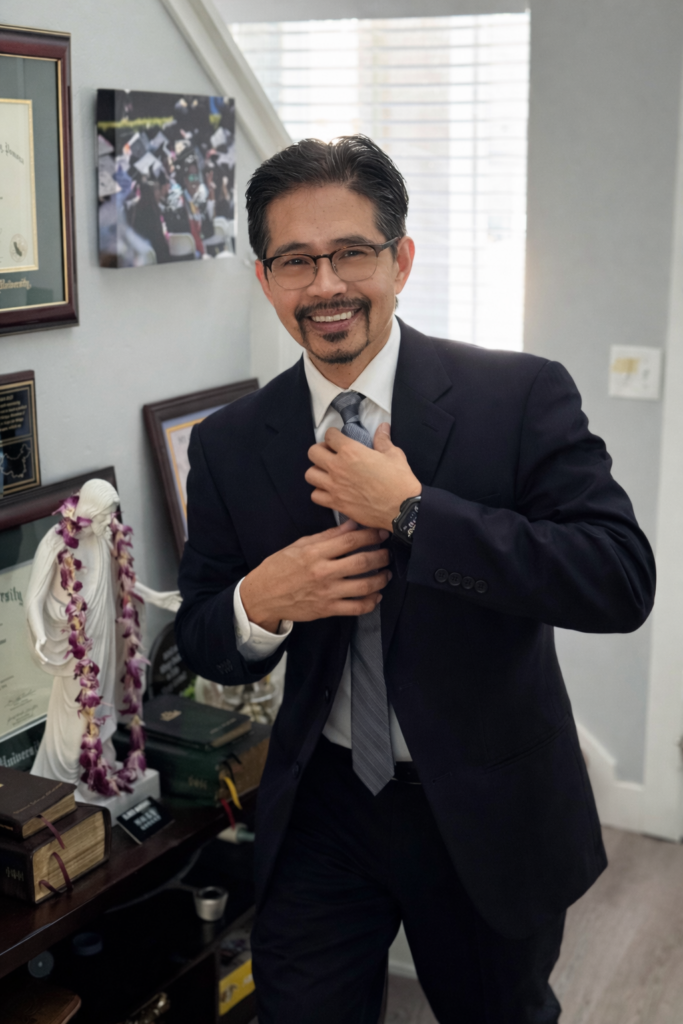
    Preparing for Church this afternoon Suit pressed, heart steady, and gratitude present. The drive to Juniper Crest Ward reminds me how blessed I am — good health, sufficient food, and strength to keep my covenants. Six days of labor and training, one day to remember the Giver of all things.

    Excerpt

    After a demanding week of work and training, the Sabbath reminds me that truth rises from the earth while righteousness comes from heaven — and both lead us back to God.


    Intro

    Five days of stressful work as an Infrastructure Engineer, and six days of training — boxing and Muay Thai, three hours at a time — can leave the body tired and the mind stretched thin. But Sunday belongs to God alone.

    Today is not about productivity or performance. It is about renewal.

    The scriptures remind me that God’s work has always been a partnership between heaven and earth.

    Grateful for the strength to come, the means to arrive, and the faith to worship.

    Notes from My Friend

    “Truth shall spring out of the earth; and righteousness shall look down from heaven.”
    Psalm 85:11

    In Enoch’s expansive vision, God orchestrates a collaboration between heaven and earth for the salvation of humanity.

    Early in the vision, Enoch’s people are lifted up to God’s presence through his teaching and leadership (Moses 7:21), leaving a void of goodness on the earth. But the people who remained behind were not left alone:

    “Enoch beheld angels descending out of heaven, bearing testimony of the Father and Son; and the Holy Ghost fell on many, and they were caught up by the powers of heaven into Zion.”
    Moses 7:27

    Both the heavens and the earth sorrow for the wickedness of humanity, causing Enoch to weep also (Moses 7:28, 40, 48).

    Then, before the Savior’s Second Coming, God sends revelation through both heavenly and earthly sources, to once again create a society like the one Enoch’s people built anciently:

    “And righteousness will I send down out of heaven; and truth will I send forth out of the earth, to bear testimony of mine Only Begotten; his resurrection from the dead; yea, and also the resurrection of all men; and righteousness and truth will I cause to sweep the earth as with a flood, to gather out mine elect from the four quarters of the earth, unto a place which I shall prepare, an Holy City, that my people may gird up their loins, and be looking forth for the time of my coming; for there shall be my tabernacle, and it shall be called Zion, a New Jerusalem.”
    Moses 7:62

    At the time of the Savior’s coming, Enoch’s city will return to the earth to unite with this new Zion:

    “Then shalt thou and all thy city meet them there, and we will receive them into our bosom, and they shall see us; and we will fall upon their necks, and they shall fall upon our necks, and we will kiss each other;”
    Moses 7:63–64

    One literal fulfillment of God bringing truth “out of the earth” is the Book of Mormon itself, which Joseph Smith translated from engravings on metal plates buried by Moroni. As Moroni prophesied:

    “[this record] shall be brought out of the earth, and it shall shine forth out of darkness”
    Mormon 8:16

    Another fulfillment is the work of living people flooding the earth with truth as they share prophetic messages with one another. As Elder Jeffrey R. Holland testified:

    “God will send help from both sides of the veil to strengthen our belief”
    “Lord, I Believe,” April 2013 general conference


    Perspective

    All week long, truth rises from the earth through effort — work, training, discipline, endurance. Sweat, repetition, and responsibility shape the person I am becoming.

    But on the Sabbath, righteousness looks down from heaven.

    For decades, I have tried to keep Sunday different. I don’t shop or buy food on the Sabbath. I have six other days to do those things. Sunday is reserved for worship, visiting the sick, prayer, and quiet pondering.

    This discipline is not about restriction. It is about remembering who provides strength beyond my own.

    The strength I build through boxing and Muay Thai is earthly strength. The peace I feel on Sunday is heavenly strength. Both are necessary, but they are not the same.

    One prepares the body. The other restores the soul.


    Practice (today, not someday)

    Today I will be grateful for both earthly and heavenly help which God sends to bring us to Him. I will remember that in the important work of the salvation of His children, heavenly and earthly forces collaborate under His direction.


    Final Reflection

    When truth rises from the earth through effort and righteousness descends from heaven through grace, God prepares His people for Zion.

    Six days I labor and train. One day I worship and renew. In that rhythm, I see the wisdom of God’s design — strength from the earth, peace from heaven.


    Pocket I’m Keeping

    Truth rises through effort. Righteousness descends through grace.


    What I Hear Now

    “Truth shall spring out of the earth.”
    “Righteousness shall look down from heaven.”
    “God will send help from both sides of the veil.”


    © 2012–2026 Jet Mariano. All rights reserved.
    For usage terms, please see the Legal Disclaimer.

  • MIT8 – Enoch and Empathy

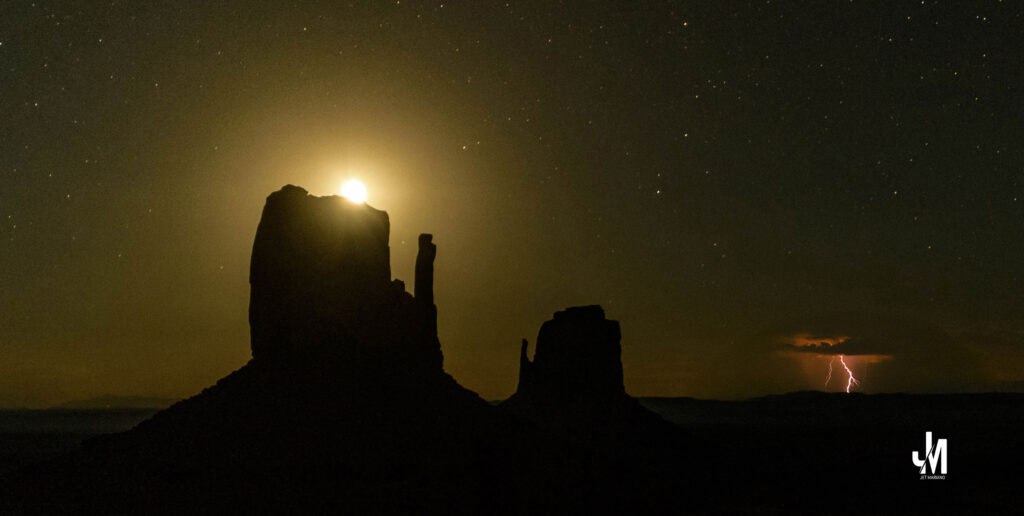
    I was reminded of that truth while camping in Monument Valley, waiting patiently in the quiet hours before dawn. I stayed awake at the cabin, watching the sky, trusting that light would come in its own time. When the waning gibbous moon finally rose, it crowned the stone buttes with a soft, steady glow. And then—unexpectedly—I was rewarded with a distant lightning show on the horizon. Stillness and power shared the same sky. Waiting revealed what haste would have missed.

    Excerpt

    God’s empathy is not a weakness to be restrained. It is the very source of His justice.


    Intro

    In recent years, empathy has come under suspicion. Some Christian thinkers have warned that it can become excessive or misplaced, even harmful. While acknowledging compassion as a Christlike trait, they caution that emotional identification—if left unchecked—might blur moral clarity or weaken obedience to God.

    That concern, however, finds no support in scripture.


    Notes from the Moment

    In Moses 7, Enoch is shown a vision of the future. His city has been taken into heaven. Other righteous souls dwell with God. Those left behind are marked by violence and cruelty. As Enoch observes God watching this scene, he expects detachment—or perhaps righteous anger.

    Instead, he sees something that unsettles him deeply: God weeping.

    “How is it that thou canst weep,” Enoch asks, “seeing thou art holy, and from all eternity to all eternity?” (Moses 7:29). To Enoch, holiness and empathy seemed incompatible.

    God then explains:

    “Behold these thy brethren; they are the workmanship of mine own hands, and I gave unto them their knowledge, in the day I created them; and in the Garden of Eden, gave I unto man his agency;”

    Moses 7:32–34, 40

    Here, there is no effort to dilute empathy in the name of justice. God does not administer justice despite His compassion—He administers it because of it.


    Perspective

    As Enoch begins to understand the depth of God’s love, his own heart expands beyond anything he had known. He “wept and stretched forth his arms, and his heart swelled wide as eternity; and his bowels yearned; and all eternity shook” (Moses 7:41).

    Divine empathy is contagious.


    Practice

    A similar pattern appears after the Savior’s death, when darkness covered the land in the Americas. The people heard His voice explaining the destructions that had taken place. These were not acts of emotional detachment, but of mercy—meant to prevent further suffering. Repeatedly, He gives the same reason:

    “That the blood of the prophets and the saints shall not come any more unto me against them”
    (3 Nephi 9:5, 7–9, 11)

    Justice, once again, is rooted in empathy.

    President Dallin H. Oaks—having spent years studying and administering law—has reflected deeply on the relationship between love and commandment. In a worldwide devotional, he shared how his thinking has matured over time:

    “I have previously referred to our ‘continually [trying] to balance the dual commandments of love and law,’ but I now believe that goal to be better expressed as trying to live both of these commandments in a more complete way. …”

    “Stand for Truth,” Worldwide Devotional Address for Young Adults, 21 May 2023


    Final Reflection

    If God loves all His children with perfect love, then loving them cannot compete with loving Him. When compassion seeks their eternal good, it is aligned with holiness—not opposed to it.

    The scriptures do not portray empathy as a liability. They reveal it as divine.


    Pocket I’m Keeping

    Compassion and holiness are not rivals. In God, they are one.


    What I Hear Now

    “God’s justice flows from His love.”
    “Empathy does not weaken truth.”
    “Holiness can weep.”


    © 2012–2026 Jet Mariano. All rights reserved.
    For usage terms, please see the Legal Disclaimer.
  • MIT8 – “One Heart and One Mind”

    This photo was taken while hiking the Herriman Mountains. I walked the trail back and forth, up and down, creating multiple footsteps in the snow to simulate the idea behind this reflection — many steps, one direction. Unity is often built through repeated effort, not a single moment.

    Excerpt

    Zion is not built by sameness. It is built when people choose unity while carrying different loads.


    Intro

    Over the years, I’ve worked in environments where success depended on alignment more than talent. In IT, in security, and even in physical training, progress stalls the moment people begin competing instead of coordinating. The strongest systems I’ve seen—technical or human—are the ones where everyone knows they belong and everyone knows they matter.

    Scripture describes Zion in similar terms. Not as perfection, but as unity.


    Notes from the Author

    The prophet Enoch’s city is described in a way that has always stood out to me:

    “And the Lord called his people Zion, because they were of one heart and one mind, and dwelt in righteousness; and there was no poor among them.”
    Moses 7:18

    What strikes me is not just their righteousness, but the outcome of it. There was no poor among them. That phrase suggests more than generosity. It suggests belonging.


    Perspective

    Scripture doesn’t say they merely helped the poor. It says poverty ceased to exist among them. To me, that implies a community where people were not reduced to labels, deficits, or past circumstances. Each person was seen as capable of contributing, even if their contribution looked different.

    I’ve seen this principle play out in my own life. In work settings, people thrive when they are trusted early, not tested endlessly. In training, progress comes when the body is respected as it is today, not judged for what it was yesterday. When someone is treated as an asset rather than a burden, they often rise to meet that expectation.

    The Book of Mormon describes a similar unity among those baptized at the waters of Mormon. Alma taught them to move forward together:

    “That ye may look forward with one eye, having one faith and one baptism, having your hearts knit together in unity and in love one towards another.”
    Mosiah 18:21

    Unity does not erase difference. It aligns direction.


    Practice (today, not someday)

    Today, I will pay attention to how I see people. I will resist the urge to sort others into categories based on background, skill level, or current capacity. Whether at work, at church, or in daily interactions, I will choose language and actions that affirm contribution instead of deficiency.

    Unity begins with how we look at one another.


    Final Reflection

    Building Zion is not about creating a uniform community. It is about creating a cohesive one. A place where people are strengthened by shared purpose, not divided by comparison.

    That kind of unity requires intention. It requires humility. And it requires consistent effort, just like anything worth building.


    Pocket I’m Keeping

    Unity grows when people feel needed, not merely tolerated.


    What I Hear Now

    To be of one heart and one mind is not to think alike, but to move together.


    © 2012–2026 Jet Mariano. All rights reserved.
    For usage terms, please see the Legal Disclaimer.

  • MIT8 – “Walk With Me”

    Walk With Me.
    Jagna, Bohol — my second area. One year a member of the Church, already a full-time missionary, learning what it meant to walk with God.

    Excerpt

    God’s invitation is not always to arrive quickly, but to move together. When He says “walk with me,” He is offering companionship before certainty, and presence before proof.


    Intro

    I served my mission in the Philippines Cebu Mission in 1981. I had been a member of the Church for only six months. I did not feel experienced, polished, or prepared. Yet from the first day forward, I felt something unmistakable: I was not walking alone.

    There were days I did not know what to say, doors that did not open easily, and moments when I felt far too small for the work. Still, I felt the Lord beside me—quietly guiding, steadying my steps, and shaping my confidence over time. Long before I understood doctrine deeply, I understood companionship. God was walking with me.


    Notes from the Author

    Looking back, I see that the Lord did not remove uncertainty from my path. He sanctified it by walking with me through it. That companionship mattered more than eloquence or experience. It still does.


    Perspective

    In the scriptures, the word walk often describes the pattern of daily living. We are invited to walk uprightly, to walk in the ways of the Lord, and to walk after His holy order. These phrases point to consistency and direction over time.

    With Enoch, however, the Lord extended a deeply personal invitation:

    Behold my Spirit is upon you, wherefore all thy words will I justify; and the mountains shall flee before you, and the rivers shall turn from their course; and thou shalt abide in me, and I in you; therefore walk with me.

    Moses 6:34

    God did not ask Enoch to lead from a distance. He asked him to walk together. Enoch accepted that invitation, and so did his people. Scripture records that they walked with God, and “God received [them] up into his own bosom” (see Moses 6:39; Genesis 5:22, 24; Moses 7:69).

    The idea of walking together suggests conversation, proximity, and shared direction. It implies movement at the same pace, side by side.

    Even the risen Savior chose this pattern. As He walked with two disciples on the road to Emmaus, their understanding unfolded gradually. Only later did they reflect:

    Did not our heart burn within us, while he talked with us by the way, and while he opened to us the scriptures?

    Luke 24:32

    Mormon later testified of his people’s discipleship, saying he knew they were followers of Christ because of their “peaceable walk with the children of men” (Moroni 7:4).

    Children in the Church sing this same truth simply: “I will walk with Jesus, and He will walk with me” (“I Will Walk with Jesus,” Hymns—For Home and Church).


    Practice Today (Not Someday)

    Today, I will walk with God intentionally. I will not rush past Him by relying only on habit or experience. I will pause to listen before acting, pray before deciding, and trust that steady movement matters more than speed.

    Walking with God means choosing alignment over control, presence over performance, and faith over fear—one step at a time.


    Final Reflection

    God does not promise that the path will be effortless. He promises companionship. When we accept His invitation to walk with Him, progress becomes possible even when confidence is not yet complete.


    Pocket I’m Keeping

    Walking with God is not about getting ahead.
    It is about staying close.


    What I Hear Now

    If I keep walking, He will keep walking with me.
    That is enough.


    © 2012–2026 Jet Mariano. All rights reserved.
    For usage terms, please see the Legal Disclaimer.

  • MIT8 – “Seeing Afar Off”

    Seeing Afar Off.
    The eclipse rises over Joshua Tree — a reminder that vision returns, even when light feels partial.

    Excerpt

    In technology and in discipleship, problems rarely fail because of missing data. They fail because we cannot see far enough ahead to understand the consequences of our choices.


    Intro

    In IT, I have learned that anxiety often narrows vision. Early in my career, I walked into a colleague’s office convinced I had the solution to a thorny issue in a project we were co-leading. I explained what I thought we should do and why. He listened calmly, then looked across the desk and said simply, “Think about how this plays out.”

    He walked me through the likely reactions of team members, the downstream effects on systems, and the unintended consequences I had not considered. His calm allowed him to think more strategically than I was able to in that moment. What I lacked was not intelligence or effort, but perspective.


    Notes from the Author

    In infrastructure work—whether designing a Cisco Meraki network, planning a VMware migration, or making security changes—short-sighted decisions can create long-term pain. A fix that looks elegant today can become tomorrow’s outage if we fail to see how it will unfold over time.


    Perspective

    When God called Enoch to be a prophet, He described a people who suffered from the same problem:

    I am angry with this people, and my fierce anger is kindled against them; for their hearts have waxed hard, and their ears are dull of hearing, and their eyes cannot see afar off;

    Moses 6:27

    This was not merely a failure of perception. It affected how they treated one another and how they made decisions. Their inability to see beyond the present moment led to cruelty and violence. God’s work with Enoch began by expanding his vision before expanding his influence.

    The Lord said to Enoch:

    Anoint thine eyes with clay, and wash them, and thou shalt see.

    Moses 6:35

    After doing so, Enoch saw “things which were not visible to the natural eye” (Moses 6:36). With that expanded perspective, he was prepared to teach.

    In modern terms, this feels familiar. When working with systems, clarity comes only after stepping back—diagramming dependencies, understanding traffic flow, or modeling failure scenarios. Seeing afar off is what separates reactive fixes from resilient design.

    Peter later warned Church members of this same danger:

    He that lacketh these things is blind, and cannot see afar off.

    2 Peter 1:9

    Elder David A. Bednar taught how this expanded vision is developed, especially within families:

    Parents who consistently read and talk about the Book of Mormon with their children, who share testimony spontaneously with their children, and who invite children as gospel learners to act and not merely be acted upon will be blessed with eyes that can see afar off.

    “Watching with All Perseverance,” April 2010 general conference

    He directed this promise to parents—a reminder that, like Enoch, we must see more clearly ourselves in order to help others develop clearer vision. Scripture study sharpens perspective the way system diagrams sharpen architectural thinking. It reveals consequences that are not obvious in the moment.

    Moroni extended a similar invitation:

    …remember how merciful the Lord hath been unto the children of men, from the creation of Adam even down until the time that ye shall receive these things, and ponder it in your hearts.

    Moroni 10:3


    Practice Today (Not Someday)

    Today, I will slow down long enough to see farther. Before making decisions, I will consider downstream effects—on people, systems, and relationships. I will study the gospel not only for answers, but for perspective, trusting that clearer vision leads to wiser choices.


    Final Reflection

    Whether designing networks or building faith, short-term fixes can create long-term problems. Seeing afar off requires patience, humility, and calm. When perspective expands, decisions improve—and so does the impact of our service.


    Pocket I’m Keeping

    Clarity comes when I stop reacting
    and start seeing farther.


    What I Hear Now

    If I expand my vision,
    the right decisions become clearer.


    © 2012–2026 Jet Mariano. All rights reserved.
    For usage terms, please see the Legal Disclaimer.

  • MIT8 – Same Sociality (D&C 130:2): On Friendship, Loss, and Eternal Relationships

    A quiet gateway between mortality and eternity.

    Excerpt
    Life is fragile.
    But friendship makes it lasting.


    Intro
    This reflection is about grief, friendship, and the doctrine of eternal relationships found in Doctrine and Covenants 130:2.

    There are moments in life when doctrine stops being theory
    and becomes something you feel in your bones.

    This week, I attended a funeral for a young man taken suddenly in the mountains.

    He was 31.

    As I stood in an overcrowded chapel,
    I realized I was not witnessing a tragedy.

    I was witnessing the measurement of a life.


    Notes from the Scriptures

    “That same sociality which exists among us here
    will exist among us there,
    only it will be coupled with eternal glory.”

    — Doctrine and Covenants 130:2

    This is one of the quietest promises in all of scripture.

    Not about time.
    Not about power.
    Not about reward.

    About relationships.


    Perspective (Direct Quote)

    “That same sociality…”

    Not ended.
    Not erased.
    Not forgotten.

    Only continued.


    Practice Today (Not Someday)

    We only live once.

    But with kindness,
    with friendship,
    with being friendly when it is easier to be distant,

    we can make our life live twice.

    Once in our own body.
    And again in the lives of others.


    Final Reflection

    Some people try to make their life long.

    Some try to make it successful.

    But the best lives are the ones that are wide.

    Wide with friends.
    Wide with people helped.
    Wide with quiet acts of goodness no one records.

    Life is fragile.

    But a friendly life is never short.


    Pocket I’m Keeping

    You do not control how long you live.
    You only control how you treat people while you are alive.


    What I Hear Now

    “That same sociality…”

    The friendships you build here
    are not temporary.

    They are eternal.


    © 2012–2026 Jet Mariano. All rights reserved.
    For usage terms, please see the Legal Disclaimer.

  • MIT8 – “What I learned from the Doctrine & Covenants”

    Cheerful Giver.
    A quiet reminder that faith is practiced through trust, discipline, and gratitude.

    Excerpt

    In 2025, the Doctrine and Covenants did more than guide my study. It quietly shaped my choices, my discipline, my priorities, and the way I practiced faith in ordinary life.


    Intro

    Studying the Doctrine and Covenants this year felt less like following a schedule and more like walking alongside revelation that insisted on application. The lessons were not abstract. They pressed gently but consistently into how I prayed, how I worked, how I cared for my body, how I gave, and how I treated time as something sacred rather than expendable.

    This was not a year of dramatic spiritual moments. It was a year of steady alignment.


    Notes from the Doctrine and Covenants

    Again and again, the Doctrine and Covenants reminded me that God is already offering light, direction, and help. Receiving those gifts requires intention. Revelation is not passive. It is chosen.

    Holiness emerged as something practical. Holy places matter, but so do holy habits. Order invites peace. Discipline creates freedom. Obedience is not restriction. It is alignment with divine patterns that actually work.

    Joy was reframed. Not as ease, but as purpose. Even in difficulty, joy grows when time is used wisely and life is ordered toward things of eternal value.

    Education stood out as a divine expectation. Learning is not optional. God prepares His people by helping them develop intelligence, skill, and faith together.

    Family relationships deepened my understanding of eternity. Joy increases as relationships are strengthened on both sides of the veil. Zion is not built alone.


    Perspective (Direct Quotes)

    Stand ye in holy places, and be not moved.

    Be anxiously engaged in a good cause.

    Teach ye diligently.

    Seek learning, even by study and also by faith.

    Where much is given, much is required.


    Practice (Today, Not Someday)

    Today, I choose to receive light intentionally.
    Today, I guard time spent in holy places.
    Today, I live the Word of Wisdom as a daily discipline, not a checklist.
    Today, I practice the law of tithing with trust rather than fear.
    Today, I invest in learning, family, and unity.

    Holiness is not postponed. It is practiced now.


    Final Reflection

    The Doctrine and Covenants taught me that obedience is not about perfection. It is about direction. When life is ordered according to divine patterns, strength is renewed, clarity increases, and peace follows.

    God does not rush His work. He prepares His people patiently as they choose to act.


    Pocket I’m Keeping

    Light fills every part of life that is opened to receive it.


    What I Hear Now

    Be anxiously engaged in a good cause.

    Where much is given, much is required.

    I am bound when you do what I say.

    Every blessing is predicated upon obedience.

    Be ye clean that bear the vessels of the Lord.

    Let virtue garnish thy thoughts unceasingly.

    Stand ye in holy places, and be not moved.

    Seek learning, even by study and also by faith.

    As health is honored, wisdom and hidden treasures of knowledge are revealed, and strength is renewed to run and not be weary, to walk and not faint.

    As trust is practiced through tithing, fear gives way to confidence, and the promise stands that the faithful shall not be burned at His coming.

    The same sociality that exists among us here will exist among us there, coupled with eternal glory.

    Whatever principles of intelligence we gain in this life will rise with us in the resurrection.

    Zion is built together.


    © 2012–2025 Jet Mariano. All rights reserved.
    For usage terms, please see the Legal Disclaimer.

  • MIT8 – “And Now I See”

    From the Last General Conference Address of President Jeffrey R. Holland, October 2025

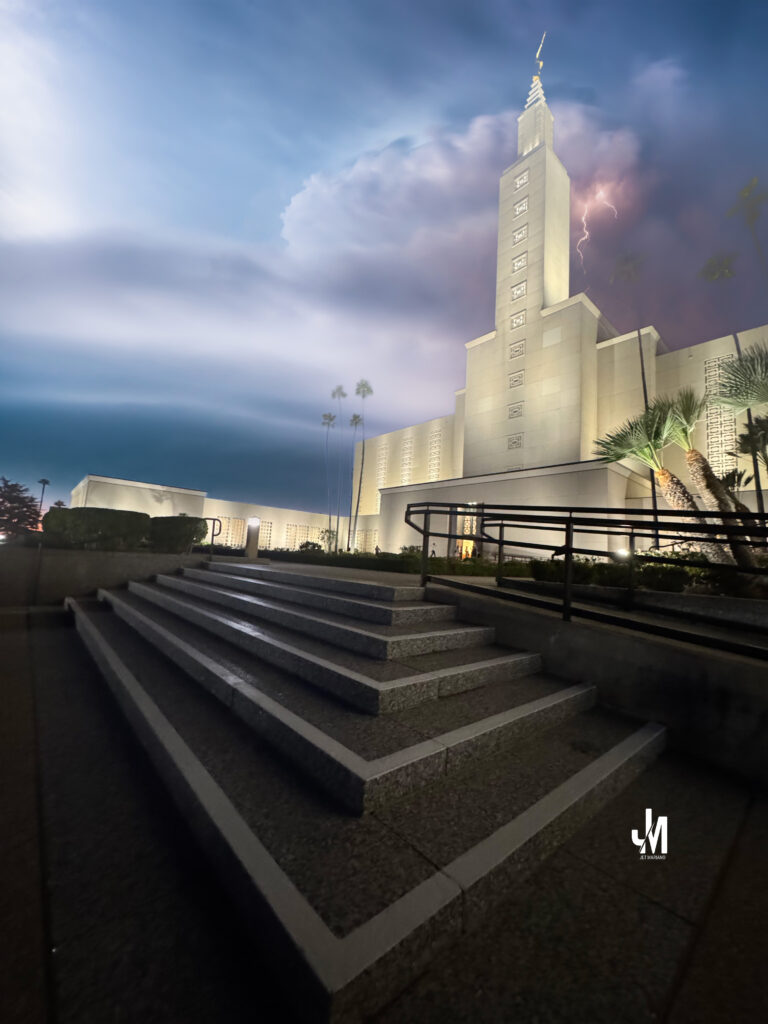
    After nearly four years since moving to Utah, I returned here for proxy endowment. As I arrived at the temple grounds, news came that Jeffrey R. Holland had passed away. California had endured storms through Christmas Eve, Christmas Day, and the day after. As the rain finally lifted, light broke through lingering clouds, marking a quiet and sacred hour.

    MIT8 — “And Now I See”

    From President Jeffrey R. Holland, Oct 2025 General Conference

    Excerpt

    “Whereas I was blind, now I see.”
    John 9:25


    Intro

    On December 27, 2025, while I was inside the Los Angeles Temple performing proxy endowment work, President Jeffrey R. Holland passed away.

    As I later reflected on his final General Conference message, my thoughts returned not to sentiment, but to scripture — to the blind man healed by the Savior, and to the simple, unmistakable declaration that became the heart of Elder Holland’s witness:

    “And now I see.”


    Notes from President Jeffrey R. Holland

    President Holland anchored his message in John chapter 9, where Jesus and His disciples encounter a man blind from birth. When the disciples asked complicated questions about blame and cause, the Savior answered not with theory, but with action.

    He spat on the ground, made clay, anointed the man’s eyes, and sent him to wash in the pool of Siloam. The man obeyed. He returned seeing.

    When challenged by those who opposed Jesus, the healed man bore a witness rooted not in argument, but in experience:

    “Whether he be a sinner or no, I know not: one thing I know, that, whereas I was blind, now I see.”

    President Holland emphasized that evidence matters — lived truth over accusation, obedience over debate.


    Perspective (Direct Quotes)

    Scripture — John 9:25
    “Whereas I was blind, now I see.”

    President Jeffrey R. Holland:
    “So what if the answers to our prayers come in plain or convoluted ways? Are we willing to persevere, to keep trying to live Christ’s gospel no matter how much spit and clay it takes? It may not always be clear to us what is being done or why, and from time to time, we will all feel a little like the senior sister who said, ‘Lord, how about a blessing that isn’t in disguise?’”

    President Jeffrey R. Holland:
    “My first sight-giving, life-giving encounter with real evidence of truth did not come with anointing clay or in the pool of Siloam. No, the instrument of truth that brought my healing from the Lord came as pages in a book, yes, the Book of Mormon: Another Testament of Jesus Christ! The claims about this book have been attacked and dismissed by some unbelievers, the anger often matching the vitriol of those who told the healed man that he could not possibly have experienced what he knew he had experienced.”


    Practice (Today, Not Someday)

    Today’s practice is obedience without full explanation.

    It is accepting that the Savior may heal us through methods that seem plain, uncomfortable, or disguised.
    It is choosing to wash in the pool when instructed — even when we do not yet understand the why.

    Faith is not demanding better ingredients.
    Faith is trusting the Healer.


    Final Reflection

    President Holland taught that God’s power is not diminished by simple instruments.

    Spit and dirt.
    Clay and water.
    A book of scripture.

    What matters is not the method, but the obedience — and the courage to testify afterward.

    Inside the temple that day, I felt again the quiet power of a witness earned through experience, not argument:

    Whereas I was blind, now I see.


    Pocket I’m Keeping

    “Are we willing to persevere, no matter how much spit and clay it takes?”


    What I Hear Now

    The Savior does not always heal in ways that impress the crowd.
    But He always heals in ways that change the soul.


    Link to the Talk

    https://www.churchofjesuschrist.org/study/general-conference/2025/10/41holland?lang=eng


    © 2012–2025 Jet Mariano. All rights reserved.
    For usage terms, please see the Legal Disclaimer.
  • MIT8 – “Don’t Give Up, Boy”

    By Elder Jeffrey R. Holland, Oct 1999

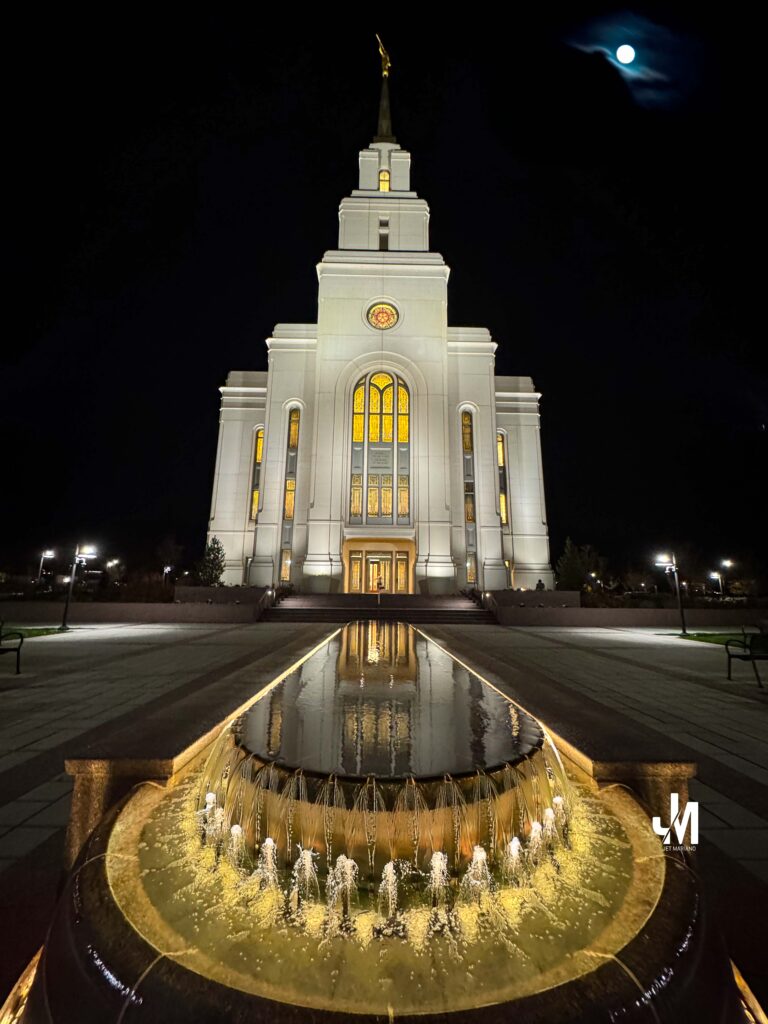
    Layton Temple beneath the final supermoon of 2025 — a quiet witness that light continues to rise, even after long nights.

    Excerpt

    “Don’t give up, boy. Don’t you quit. You keep walking. You keep trying. There is help and happiness ahead. Trust God and believe in good things to come.”


    Intro

    For the last four days, I have listened repeatedly to Elder Jeffrey R. Holland’s talk An High Priest of Good Things to Come. On December 4, 2025, standing at the Layton Temple beneath the final supermoon of the year, those words settled deeply into my heart.

    This was not a message of quick relief or easy answers. It was a message spoken to the weary, the long-suffering, and those who keep walking even when the road feels endless.


    Notes from Elder Jeffrey R. Holland

    Elder Holland shared a tender, personal account from his life — a moment when he imagined speaking to his younger self during a season of discouragement and uncertainty.

    Rather than rewriting the past, he offered reassurance. Not denial of hardship, but perspective gained through time, faith, and endurance.

    His message was simple and powerful: God was already at work. Help was already coming. And quitting was never the answer.


    Perspective (Direct Quotes)

    “In that imaginary instant, I couldn’t help calling out to him: ‘Don’t give up, boy. Don’t you quit. You keep walking. You keep trying.’”

    “There is help and happiness ahead — a lot of it — 30 years of it now, and still counting.”

    “You keep your chin up. It will be all right in the end.”

    “Trust God and believe in good things to come.”


    Practice (Today, Not Someday)

    Today, the practice is not dramatic change. It is refusal to quit.

    It is continuing to walk when answers are delayed. It is continuing to believe when outcomes are unseen. It is choosing faith not because the road is easy, but because God is faithful.

    Today, I keep walking.


    Final Reflection

    Under the rising supermoon at the Layton Temple, I felt something quiet but firm: reassurance does not erase trials, but it strengthens the traveler.

    God does not rush us through our struggles. He walks with us through them.


    Pocket I’m Keeping

    “Don’t give up. Don’t quit. Keep walking. Trust God. Good things are coming.”


    Link to the Talk

    An High Priest of Good Things to Come – Elder Jeffrey R. Holland https://www.churchofjesuschrist.org/study/general-conference/1999/10/an-high-priest-of-good-things-to-come?lang=eng

    © 2012–2025 Jet Mariano. All rights reserved.
    For usage terms, please see the Legal Disclaimer.
  • MIT8 – “Keeping the Temple Holy”

    By President Gordon B. Hinckley

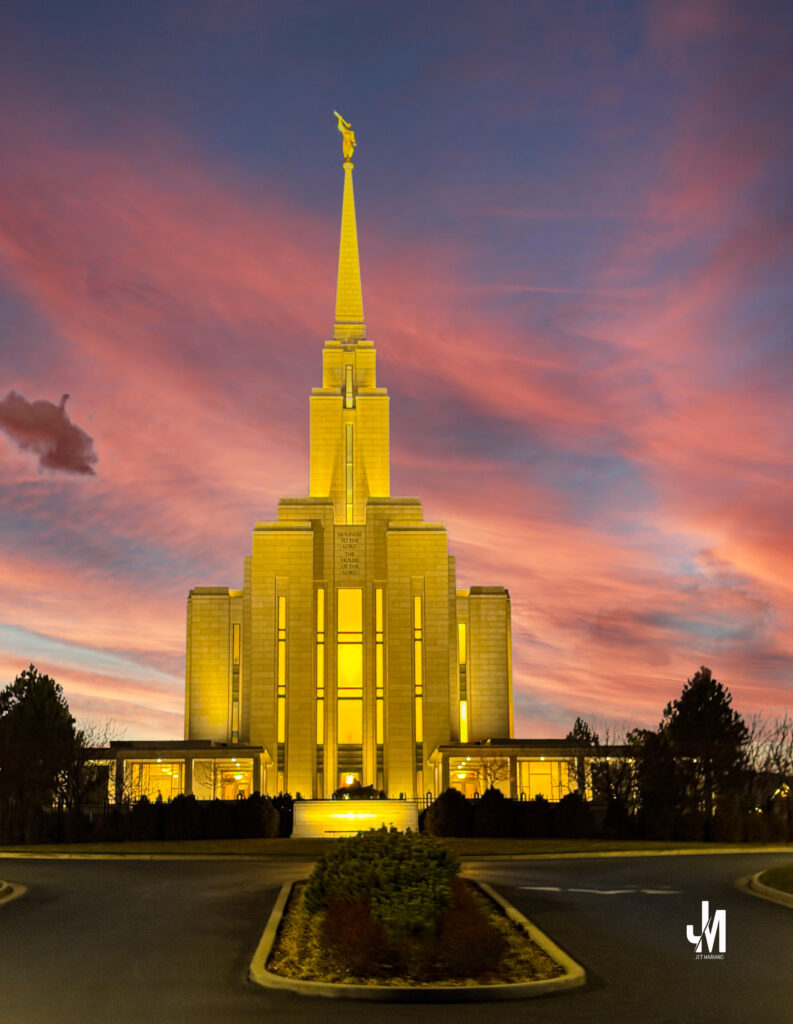
    Oquirrh Mountain Temple glowing at dusk, December 13, 2025 — a quiet reminder that holiness is preserved by preparation.

    Excerpt

    “The other card which I have is what we call a temple recommend. It represents a credit card with the Lord, making available to me many of His greatest gifts. The bank card is concerned with things of the world, the recommend with things of God.”


    Intro

    December 13, 2025. 6:00 PM. Proxy Endowment at the Oquirrh Mountain Temple.

    As the sky deepened into winter color and the temple stood illuminated against the dusk, I carried more than a recommend in my pocket. I carried a reminder. President Gordon B. Hinckley’s words returned clearly and quietly, teaching not just what a temple recommend is, but what it represents. Not a formality. Not a routine. A sacred trust.


    Notes from President Gordon B. Hinckley

    President Hinckley offered a simple but unforgettable comparison.

    He held up two cards.

    One was a bank credit card. Useful. Valuable. Governed by contracts and conditions. Issued temporarily. Revocable if misused. Owned ultimately by the bank.

    The other was a temple recommend.

    A different kind of credit entirely. A credit card with the Lord.

    Unlike financial credit, eligibility for a temple recommend is not based on wealth, status, or means. It is based on consistent personal behavior, moral worthiness, and the goodness of one’s life. It is concerned not with money, but with eternity.

    He reminded us that a recommend is not permanent. It must be renewed. Worthiness must be maintained. And sometimes, he cautioned, we rush people to the temple before they are truly prepared.

    So sacred was this matter in earlier times that Presidents of the Church personally signed every recommend themselves.


    Perspective (Direct Quotes)

    “I hold before you two credit cards. Most of you are familiar with cards such as these.”

    “The other card which I have is what we call a temple recommend. It represents a credit card with the Lord, making available to me many of His greatest gifts.”

    “Eligibility for a temple recommend is not based on financial worth. That has nothing whatever to do with it. It is based on consistent personal behavior, on the goodness of one’s life.”

    “The temple recommend which you carry, if honestly obtained, is certification of your moral worthiness.”

    “What a unique and remarkable thing is a temple recommend. It is only a piece of paper with a name and signatures, but in reality it is a certificate that says the bearer is honest, true, chaste, benevolent, virtuous.”

    “It makes one eligible for an exclusive and remarkable privilege—the privilege of entering that House which says on its wall, ‘Holiness to the Lord—the House of the Lord.’”

    “Live worthy to serve in that house. Keep it holy.”


    Practice (Today, Not Someday)

    Today I ask myself:

    Am I treating my temple recommend as a privilege or as a routine?

    Am I living in a way that quietly honors what it certifies?

    Worthiness is not proven at the interview table alone. It is practiced daily in private choices, honest dealings, clean thoughts, and deliberate restraint. Today, not later. Now, not eventually.


    Final Reflection

    Standing before the Oquirrh Mountain Temple, I was reminded that holiness is not accidental. It is cultivated. A recommend is renewed on paper every two years, but it is renewed in the soul every single day.

    The Lord does not rush holiness. He invites preparation.


    Pocket I’m Keeping

    “Entering the temple is a privilege to be earned and not a right that automatically goes with Church membership.”


    Link to the Talk

    Keeping the Temple Holy – President Gordon B. Hinckley https://www.churchofjesuschrist.org/study/general-conference/1990/04/keeping-the-temple-holy?lang=eng

    © 2012–2025 Jet Mariano. All rights reserved.
    For usage terms, please see the Legal Disclaimer.
  • MIT8 – Divine Love – President Russell M. Nelson

    Where the sun breaks through, grace follows. Even in heavy days, God still sends light

    Excerpt

    Divine love is perfect and infinite—but never detached from law, covenant, or personal responsibility. President Nelson teaches that God’s love lifts us, but it also leads us.


    Intro

    There are many ideas in the world about love—“unconditional love,” “love accepts everything,” “love is all that matters.” But President Russell M. Nelson gently corrects this. Divine love is deeper, higher, and holier than the world’s definition. It is love that lifts, but also directs. Love that embraces, but also invites repentance, covenant keeping, and discipleship.


    Notes From the Speaker

    President Nelson teaches:

    • Divine love is perfect—complete and free of selfishness.
    • Divine love is infinite—extending to all who ever lived or will live.
    • Divine love is enduring—God keeps covenant and mercy “to a thousand generations.”
    • Divine love is universal—He sends rain on the just and unjust, and invites all to come unto Him.

    But he also clarifies something rarely discussed:

    “While divine love can be called perfect, infinite, enduring, and universal, it cannot correctly be characterized as unconditional.”

    Not unconditional—in the worldly sense.

    Divine love includes law.
    Divine love invites us to rise.
    Divine love calls us home through covenant.


    Perspective (Direct Quotes)

    “God so loved the world, that he gave his only begotten Son.”

    “The Lord keepeth covenant and mercy with them that love him and keep his commandments.”

    “He denieth none that come unto him.”

    Divine love is not passive.
    It moves.
    It sacrifices.
    It teaches.
    It commands.

    And it changes us.


    Practice (Today, Not Someday)

    • Love God by keeping commandments.
    • Love others in ways that lift them toward Christ, not just toward comfort.
    • Pray with real intent, trusting that His love is shaping you—not indulging you.
    • Stand firm when the world pushes to redefine love into permission.
    • Anchor your identity in God’s love, not the world’s applause.

    Final Reflection

    Divine love is not a soft pillow—it is a guiding compass.
    It doesn’t remove the need for obedience; it empowers it.
    It doesn’t eliminate consequences; it helps us grow through them.
    It does not excuse sin; it rescues us from sin.

    President Nelson’s message reminds me that God’s love is best understood not when everything feels easy, but when we recognize that His love shapes us into something greater than we could ever create alone.


    Pocket I’m Keeping

    God’s love is infinite, but His blessings are predicated on my willingness to keep commandments and walk the covenant path. His love always points me toward the next step.


    What I Hear Now (Direct Quotes)

    “Divine love cannot be correctly characterized as unconditional.”

    “He inviteth all to come unto him.”

    “The Father and the Son are one—in purpose and love.”


    Link to the Talk

    Divine Love — Russell M. Nelson (2003)

  • MIT8 – Love and Law – President Dallin H. Oaks

    Balanced Rock, Arches National Park — a place where the wind is strong, the foundation is narrow, and the rock stands only because the base holds firm. A reminder that in discipleship, love and law work the same way.

    Excerpt

    We cannot choose one and ignore the other. In the Lord’s plan, love and law stand together. They do not compete. They complete each other.


    IntroWhere the Path Narrows, the Balance Appears

    The walk toward Balanced Rock reminded me that the gospel path often asks us to hold two eternal truths at the same time. Love on one side. Law on the other. And somewhere in the middle is the place where disciples learn to stand steady. President Oaks teaches that real discipleship is not one-sided. It is “loving” and “lawful” at the same time.

    As I stood in front of that massive rock balanced on a narrow pedestal, I felt it — the weight, the tension, and the steadiness that only God can create. The same steadiness He tries to build within us.


    Notes From President Oaks

    • God’s love is perfect, eternal, and unchanging.
    • But His love does not override His laws.
    • Salvation comes through the Atonement, but exaltation comes through obedience.
    • True love never asks us to ignore commandments.
    • Real charity is anchored in truth, not permissiveness.
    • “The love of God does not supersede His laws and His commandments.”

    PerspectiveThe Rock and the Law

    We often hear the world say, “Love is all that matters.”
    But President Oaks reminds us that love without law becomes drift, and law without love becomes harshness.

    Balanced Rock became a symbol of that message for me.
    The top looks impossible, almost defying gravity. Yet it stands. Why? Because the foundation beneath it holds firm.

    Love lifts.
    Law steadies.
    And together, they create a foundation strong enough for eternity.

    Sometimes we want everything to be easy. Sometimes we want the Lord to remove the tension. But President Oaks teaches that growth happens in that tension — the balancing, the choosing, the returning, the trying again.


    Practice (Today, Not Someday)

    • When I feel pulled by emotion, I anchor myself in the commandments.
    • When I feel weighed down by commandments, I remind myself of God’s love.
    • When someone hurts me, I choose charity instead of judgment.
    • When life feels unsteady, I remember that balance is part of discipleship.
      Today, I practice holding both — loving deeply while obeying faithfully.

    Final Reflection

    The Lord’s path is not a straight line. It is a balance.
    Not the balance the world teaches, but the balance the Lord shapes within us — a heart full of charity and a life aligned with His laws.

    Standing there under Balanced Rock, I remembered something simple and quiet:
    Discipleship isn’t about choosing between love and law. It’s about learning to walk with both.


    Pocket I’m Keeping

    “When we understand both love and law, we grow closer to the Savior whose life embodied both perfectly.”


    What I Hear Now (Direct Quotes)

    • “The love of God does not supersede His laws.”
    • “Because of His love, He cannot change the commandments.”
    • “Real love for the Lord is shown through obedience.”
    • “The gospel is a message of love, but it is also a message of law.”

    Link to the Talk

    https://www.churchofjesuschrist.org/study/general-conference/2009/10/love-and-law

    Photo Caption (BTS)

    Balanced Rock, Arches National Park. A place where the wind is strong, the foundation is narrow, and the rock stands only because its base holds firm. A reminder that in discipleship, love and law work the same way.

  • MIT8 – If It’s to Be, It’s Up to Me — and God’s Timing

    Milky Way rising behind Delicate Arch in Moab, Utah, photographed by Jet Mariano. A visual reminder of faith, effort, and timing.

    Excerpt
    If it’s to be, it’s up to me — but only when my feet move in faith and God’s timing directs the path. Today, through hymns, impressions, and a memory of Delicate Arch under the Milky Way, I was reminded that blessings unfold when effort meets revelation.


    Intro: The Path Is Action + Timing
    This morning I woke up peacefully with a single impression:
    “If it’s to be, it’s up to me.”

    That sentence framed my entire Sabbath. Each hymn, each thought, each scripture, even the Sunday School lesson seemed orchestrated around one doctrine I’ve lived for decades:

    Faith is a principle of action — but blessings come in God’s timing.

    I’ve worked since I was 12 years old and didn’t enter the IT world until age 37. Nothing was wasted. Every phase prepared me for the next. Today reminded me again: God’s plan is not passive, but it’s not instant either. It is effort + grace. Movement + revelation. Timing + trust.


    Notes From Elder Dale G. Renlund
    Elder Renlund teaches in Abound with Blessings:

    “Most blessings that God desires to give us require action on our part—action based on our faith in Jesus Christ. Faith in the Savior is a principle of action and of power.”

    He adds:

    “Faith in Christ requires ongoing action for the blaze to continue. Small actions fuel our ability to walk along the covenant path… But oxygen flows only if we figuratively keep moving our feet.”

    His examples are profound:

    • Make the bow before the revelation comes
    • Build the tools before the instructions arrive
    • Bake the cake before the miracle of flour appears

    Faith requires movement.
    But miracles require God’s timing.


    Perspective — Elder Christofferson’s Vending Machine Warning
    Elder D. Todd Christofferson adds the perfect balance:

    “We ought not to think of God’s plan as a cosmic vending machine where we (1) select a desired blessing, (2) insert the required sum of good works, and (3) the order is promptly delivered.”

    It does not work that way.

    Blessings are not:

    • purchased,
    • demanded,
    • or dispensed on schedule.

    As I wrote in last night’s Predicated blog:

    “Blessings from heaven are neither earned by frenetically accruing ‘good deed coupons’ nor by helplessly waiting to see if we win the blessing lottery. No.”

    True faith is not transactional — it is transformational.


    Practice (Today, Not Someday): The Delicate Arch Lesson
    My photograph of the Milky Way rising behind Delicate Arch is a visual sermon about faith and action.

    The hike is 3 miles round trip, with over 600 feet of elevation climb. During summer, the Milky Way rises behind the arch for only a brief window. If I waited for perfect conditions or perfect timing, I would miss it.

    So I climbed early.
    Walked in the dark.
    Prepared my gear.
    Positioned myself.
    And waited for heaven to align.

    Only then did the Milky Way rise — after I moved my feet.

    Some blessings don’t appear until we climb.
    Some revelation doesn’t rise until we prepare.
    Some miracles don’t unfold until we act in faith.

    That hike is my life:
    from working at 12,
    to breakthroughs at 37,
    to every step since.
    Effort + timing.
    Action + grace.
    Faith + patience.


    Final Reflection
    “If it’s to be, it’s up to me” is not self-reliance without God.
    It’s my action combined with His timing.
    My discipline combined with His direction.
    My relentless faith combined with His perfect plan.

    Today reminded me that the Lord isn’t a vending machine dispensing blessings on demand. He’s a Father who blesses according to eternal purpose. Sometimes He asks me to climb in the dark. Sometimes He asks me to wait. But He always keeps His promises.


    Pocket I’m Keeping
    Move my feet — and trust His timing.
    Climb faithfully — and let Him reveal the Milky Way.


    What I Hear Now (Direct Quotes)
    “Faith in the Savior is a principle of action and of power.” — Elder Renlund
    “Blessings require movement — oxygen flows only if you keep your feet moving.”
    “God is not a cosmic vending machine.” — Elder Christofferson
    “Make the bow before the revelation comes.”

    © 2012–2025 Jet Mariano. All rights reserved.
    For usage terms, please see the Legal Disclaimer.
  • Marked in Time — “Pedicated”

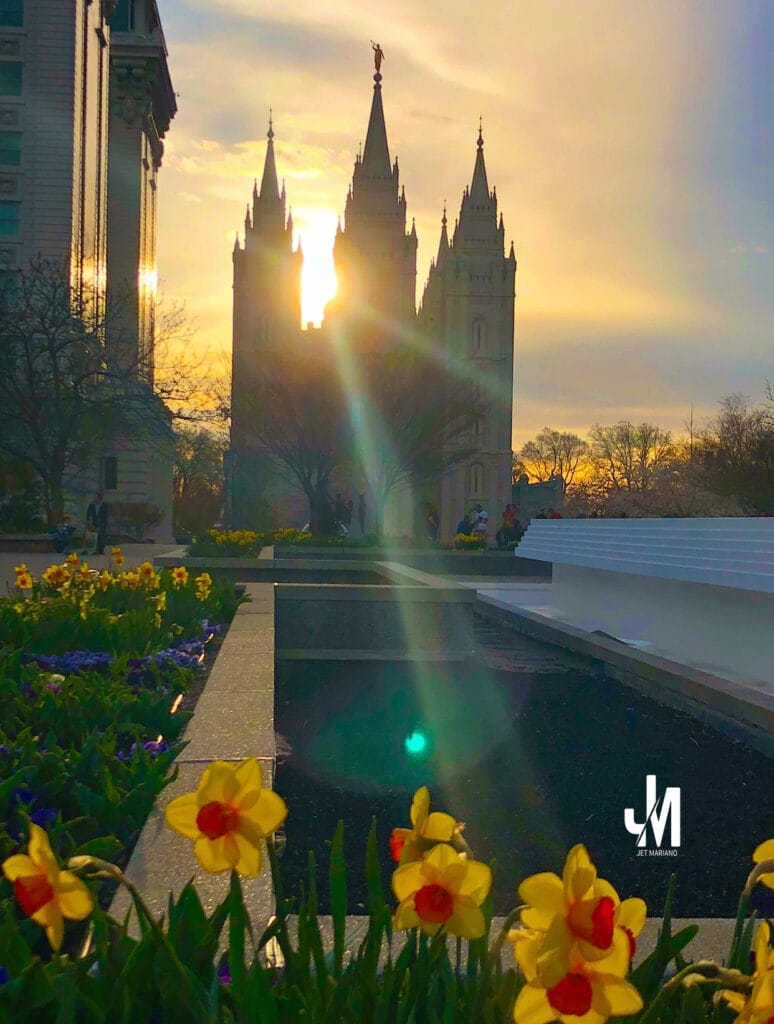
    The scripture that framed my entire night:

    “There is a law, irrevocably decreed in heaven before the foundations of this world, upon which all blessings are predicated—
    And when we obtain any blessing from God, it is by obedience to that law upon which it is predicated.”
    (D&C 130:20-21)

    Salt Lake Temple • Long Exposure • f/11 • ISO 64 • 15s • 14–24mm on a spider tripod
    A night when stillness spoke louder than motion.

    Excerpt

    Blessings are predicated on law — but not in the way a vending machine dispenses what we demand. They arrive through becoming, trusting, and walking with God in His timing.


    Intro

    The word predicated has been echoing in my mind since my time in the temple today. It comes from Doctrine and Covenants 130, where the Lord teaches that every blessing is tied to a law. Not earned, not purchased, not demanded — but predicated. As I reflected on the week’s experiences, the people I’ve tried to help, and my own quiet questions, this truth settled deeply: God’s timing shapes God’s blessings.


    Notes from the Temple & Talks

    As I sat with the scriptures open, the Spirit reminded me that obedience is not a transaction but a relationship. Elder Dale G. Renlund explains:

    “Blessings from heaven are neither earned by frenetically accruing ‘good deed coupons’ nor by helplessly waiting to see if we win the blessing lottery.… Blessings are never earned, but faith-inspired actions on our part, both initial and ongoing, are essential.”

    Those words matched what I’ve lived this week — acting where I can, helping who I can, trusting that small efforts still move heaven’s work forward.

    Elder D. Todd Christofferson warns against the temptation to expect blessings on our timeline:

    “Some misunderstand the promises of God to mean that obedience to Him yields specific outcomes on a fixed schedule.… We ought not to think of God’s plan as a cosmic vending machine… where the order is promptly delivered.”

    This is not how God works — and yet, He always works.


    Perspective (Direct Quotes)

    D&C 130:20–21 teaches:
    “There is a law, irrevocably decreed in heaven before the foundations of this world, upon which all blessings are predicated… And when we obtain any blessing from God, it is by obedience to that law upon which it is predicated.”

    Elder Renlund adds:
    “The truth is much more nuanced but more appropriate for the relationship between a loving Heavenly Father and His potential heirs.”

    Elder Christofferson clarifies:
    “…not every blessing predicated on obedience to law is shaped, designed, and timed according to our expectations.”


    Practice (Today, Not Someday)

    Today I will trust the process.
    I will obey not to earn, but to become.
    I will keep acting in faith, helping where I can, and letting the Lord handle the timing of what I cannot control.
    I will let small acts of discipleship be enough — because they are.


    Final Reflection

    Elder Christofferson offers a truth that speaks to moments of uncertainty, impatience, or pleading:

    “So, in the midst of this refiner’s fire, rather than get angry with God, get close to God. Call upon the Father in the name of the Son. Walk with Them in the Spirit, day by day. Allow Them over time to manifest Their fidelity to you. Come truly to know Them and truly to know yourself. Let God prevail.”

    This is the heart of predicated.
    Blessings unfold as we walk with Him — not as we demand from Him.
    They arrive in due time, in His way, shaped by His love and our readiness.


    Pocket I’m Keeping

    Obedience prepares me, trust steadies me, and God’s timing refines me.


    What I Hear Now

    “Let God prevail.”
    “Blessings are never earned, but faith-inspired action is essential.”
    “Not every blessing comes according to our expectations.”

    © 2012–2025 Jet Mariano. All rights reserved.
    For usage terms, please see the Legal Disclaimer.
  • Where the Light Learns to Let Go

    The sky opened for a moment and the light answered back.

    The wheel glowed in violet as dusk settled over Santa Monica, and a single strike of lightning cut through the horizon like a quiet reminder that beauty and power can share the same frame. Some nights arrive without warning, and all you can do is stand still and let the moment write its own story.

    When the day surrendered, the sky burned one last time.

    The sun dropped behind the pier like a slow farewell, turning the whole horizon into fire. The wheel stood still against it, a quiet witness to the ending of another day. Some places remind you that even the most ordinary moments can shine when the light chooses to pass through them.

    When the night finally claimed the pier, the colors refused to die.

    The wheel spun in its own quiet galaxy, throwing violet and blue across the water like it was painting the ocean awake. The last light of sunset slipped under the horizon, but the pier kept glowing as if to say: even when the day ends, there is still something worth staying for.

    © 2012–2025 Jet Mariano. All rights reserved.
    For usage terms, please see the Legal Disclaimer.

  • MIT8 – “If You Can Dream It, You Can Do It”

    Sleeping Beauty Castle at Night — Reflections of Patience and Light

    Sleeping Beauty Castle, Disneyland — long exposure, reflection pond perfectly still under holiday lights.
    © Jet Mariano bottom right

    Excerpt
    Dreams are born in imagination, but they come to life through patience. This photo reminds me that what seems impossible is often just waiting for stillness — the moment when faith, timing, and light all come together.


    Intro
    At Disneyland, I stood before Sleeping Beauty’s Castle surrounded by soft laughter, bright music, and winter lights. I had dreamed of this shot for years — the castle glowing like ice, perfectly mirrored in the reflection pond.

    The challenge wasn’t the camera. It was patience. I waited for the crowd to thin and for the water to still. When the noise finally faded, I clicked the shutter. Thirty seconds of silence turned imagination into reality.


    Notes from the Scene
    📍 Disneyland, Anaheim, California
    Tripod. Manual mode. I pointed my camera using the LCD screen toward the brightest light on the castle to achieve perfect focus. Once the image looked sharp, I turned my Nikon 14-24mm 2.8G lens from AF to M and my camera to full manual. This prevents the lens from “hunting” in the dark — a trick learned through countless nights of trial.

    After years of practice, I trusted the settings: 30-second shutter, f/11, ISO 2400. The result was this reflection — not luck, but learning.


    Perspective
    Walt Disney once said, “If you can dream it, you can do it.”
    That line carries truth beyond photography. In every art, in every calling, we are dreamers learning to wait for our moment of light.

    The dreamer in us sees what could be. The doer in us practices until it becomes real. And sometimes, all we need is faith that stillness will come.


    Practice
    If you want to capture your dream, prepare your heart and your craft before the light arrives. Keep learning, keep refining, and when the world quiets — act.


    Final Reflection
    Dreams don’t come to the impatient. They come to those who wait, who watch, who trust their settings.
    The castle may belong to Disneyland, but the reflection — that belongs to every dreamer who believes.


    Pocket I’m Keeping
    Dreams start in the heart, but patience brings them into focus. ✨


    Photo Caption (BTS)
    📸 Sleeping Beauty Castle, Disneyland — long exposure, reflection pond perfectly still under holiday lights.
    © Jet Mariano bottom right

    © 2012–2025 Jet Mariano. All rights reserved.
    For usage terms, please see the Legal Disclaimer.
  • MIT8 – “Let Virtue Garnish Thy Thoughts Unceasingly”

    (President Gordon B. Hinckley, April 2007 General Conference)
    Read the full talk →

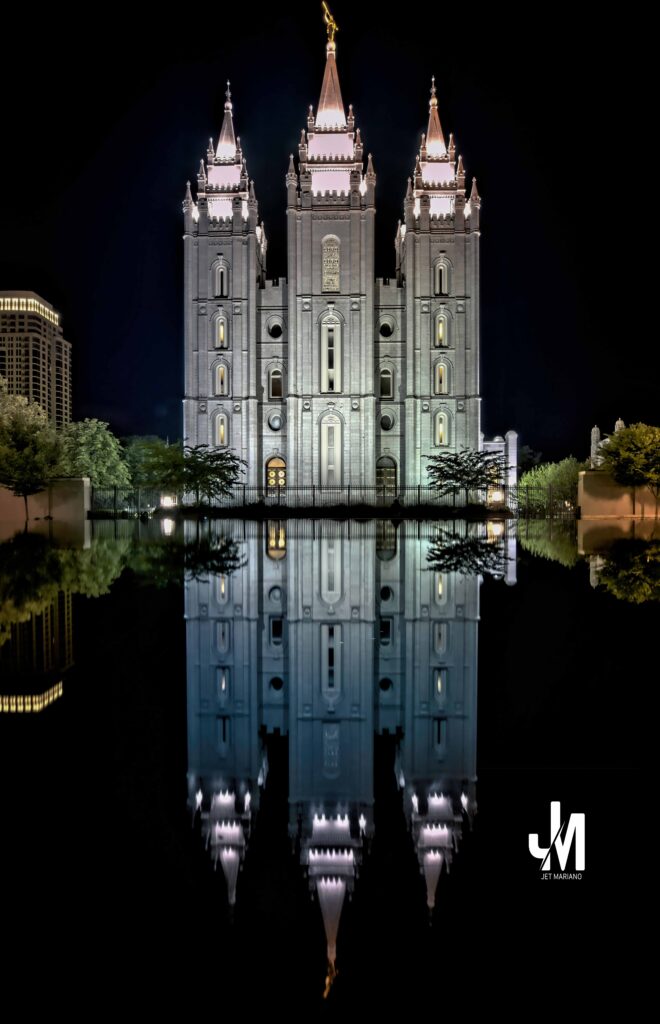
    Oquirrh Mountain Temple under the waxing gibbous moon — November, 2025. I waited patiently until light met stillness.

    Excerpt:
    President Hinckley’s counsel reaches across time: “Let virtue garnish thy thoughts unceasingly; then shall thy confidence wax strong in the presence of God.” The promise that follows is profound—“The Holy Ghost shall be thy constant companion.” These are not poetic lines; they are spiritual laws. Virtue invites confidence, and confidence invites the Spirit.


    When I listened to this talk again—over fifty times between last night and this morning—the Spirit emphasized one word: virtue.

    What is virtue?
    Virtue means to fill your mind with morally clean, righteous, and excellent thoughts until goodness becomes your reflex. To garnish is to equip or arm your thoughts, so when fear, doubt, or temptation step onto the stage of your mind, they find no audience. We control the stage. We choose which act plays. As I sat inside the Oquirrh Mountain Temple, I realized: darkness never conquers light that is armed with virtue.

    President Hinckley connected virtue to a simple, practical four-point program—a pattern that turns righteousness into rhythm:

    1. Pray.
      Prayer is the bridge to our Heavenly Father. “Speak with Him,” President Hinckley said. “Express the gratitude of your heart.” Prayer is not repetition—it is relationship. It invites light to dwell where confusion once lived.
    2. Study.
      “Resolve now that you will get all the education you can.” The glory of God is intelligence. I remember my own pursuit—working full-time in IT while carrying a full course load at LACC and DeVry. It was exhausting, but education was revelation in motion. To study is to worship with the mind.
    3. Pay Tithing.
      “Glorious is the promise of the Lord concerning those who pay their tithes.” Temporal faith builds spiritual independence. Each tithe is a declaration that God’s economy governs my heart more than the world’s uncertainty.
    4. Attend Your Meetings.
      There is no substitute for partaking of the sacrament. Sunday worship keeps us anchored when weekday storms rise. It renews the covenant that allows virtue to flow back into thought and action.

    President Hinckley’s bridge between virtue and the four-point program is clear once you live it: each step disciplines the mind and purifies the heart.
    Prayer keeps thoughts upward.
    Study keeps them expanding.
    Tithing keeps them consecrated.
    Worship keeps them renewed.
    Together, they garnish the mind with virtue—unceasingly.

    He promised, “Each of you is a creature of Divinity. You are literally a daughter or son of the Almighty. There is no limit to your potential. If you will take control of your lives, the future is filled with opportunity and gladness.”

    As I waited outside the Oquirrh Temple for the waxing gibbous moon to rise above the spire, I thought of those words. The moon appeared quietly, reflecting light it does not create—just as we reflect heaven’s virtue when we live this four-point pattern.


    Final Reflection:
    Virtue is not perfection—it is direction. It is the steady alignment of thought toward holiness until confidence replaces fear. In that light, President Hinckley’s four steps are not separate commandments; they are one continuous motion toward the presence of God.

    © 2012–2025 Jet Mariano. All rights reserved.
    For usage terms, please see the Legal Disclaimer.

  • MIT8 – “Confidence in the Presence of God”

    November 8, 2025 – Oquirrh Temple Reflections

    Joshua Tree National Park – The Milky Way at 2 AM. 30 sec exposure, f/11, ISO 2400. Manual focus locked on the brightest star to prevent lens hunting. A quiet lesson in light, patience, and faith.

    Excerpt
    We all will experience illness, disappointment, temptation, and loss. These challenges can knock our self-confidence. However, disciples of Jesus Christ have access to a different kind of confidence — the confidence that comes from covenants, virtue, and the Spirit.


    Intro
    While I sat in the Celestial Room of the Oquirrh Temple, I heard a quiet assurance: “In due time.” It echoed the nudges I felt early Friday morning. I had come seeking peace, but what I received was perspective — that confidence before God comes not from circumstance, but from virtue and covenant faithfulness.


    Notes from President Nelson (April 2025 General Conference)
    From his talk “Confidence in the Presence of God”:

    “We all will experience illness, disappointment, temptation, and loss. These challenges can knock our self-confidence. However, disciples of Jesus Christ have access to a different kind of confidence.”

    “When we make and keep covenants with God, we can have confidence that is born of the Spirit. The Lord told the Prophet Joseph Smith that our confidence can ‘wax strong in the presence of God.’ Imagine the comfort of having confidence in the presence of God!”

    President Nelson continued:

    “When I speak of having confidence before God, I am referring to having confidence in approaching God right now! I am referring to praying with confidence that Heavenly Father hears us, that He understands our needs better than we do.”

    He reminded us that confidence is the byproduct of charity and virtue.

    “Let thy bowels be full of charity… and let virtue garnish thy thoughts unceasingly; then shall thy confidence wax strong in the presence of God.”

    He also promised:

    “Regular worship in the house of the Lord increases our capacity for both virtue and charity. Thus, time in the temple increases our confidence before the Lord. Increased time in the temple will help us prepare for the Second Coming of our Savior, Jesus Christ.”

    And finally:

    “Then, as we go to our Heavenly Father with increasing confidence, we will be filled with more joy, and your faith in Jesus Christ will increase. We will begin to experience spiritual power that exceeds our greatest hopes.”


    What Is Virtue?
    This is what I learned in the Celestial Room of the Oquirrh Temple:
    If you let virtue — morally clean and excellent thoughts, kindness, and all that is positive — fill your mind, then the bad actors on the stage of your mind like doubt, fear, and depression will evaporate.

    Why? Because we control the stage of our mind.

    We can divert our thoughts to virtue: our favorite Church talk, a meaningful scripture, or a motivating experience. These are our arsenal to protect the mind from intrusive darkness.

    As Elder Boyd K. Packer taught:

    “The mind is like a stage… There is always some act being performed. Virtue determines which act takes the spotlight.”

    Darkness will never have power over light. When virtue becomes our daily focus, we begin to understand what it means to “garnish our thoughts unceasingly.”


    Perspective
    D&C 124 teaches, “Let virtue garnish thy thoughts unceasingly.” To “garnish” means to arm or equip. Virtue, then, is our spiritual armor — the unseen force that steadies the mind and protects confidence.

    In IT, confidence is also earned — through repetition, study, and mistakes turned into mastery. When knowledge becomes daily practice, it forms character; and character, in time, becomes wisdom — the quiet confidence that endures.


    Practice
    Virtue doesn’t silence thoughts; it trains them. It replaces anxious noise with light. It equips us to approach God not as strangers but as sons and daughters who trust His timing — His due time.


    Final Reflection – Light in One of the Darkest Places
    The photo above was taken at Joshua Tree National Park — one of the darkest places on earth. Out there, you can hardly see your own hands.

    To capture the Milky Way, I did what years of practice taught me:

    • Mounted my camera on a tripod
    • Pointed the lens toward the brightest star in the Milky Way using the LCD screen
    • Let the autofocus lock in until the stars were sharp
    • Then switched both the 14–24mm f/2.8G lens from AF to M and the camera to Manual so the lens wouldn’t “hunt” in the dark
    • Set the exposure to 30 seconds, f/11, ISO 2400
    • Hit the 30-second timer and walked into the frame, shining a small LED flashlight toward the Milky Way

    I became both the subject and the seeker — trusting the focus, the settings, and the process. The sky didn’t suddenly change; the Milky Way was there the whole time. The difference was confidence built from quiet, repeated attempts.

    Faith works the same way. We may feel surrounded by darkness, but if we’ve prepared, practiced, filled our minds with virtue, and kept showing up in God’s house, the light eventually appears — and our confidence, in His presence, slowly waxes strong.


    Pocket I’m Keeping
    Virtue will free you from anxious, troublesome thoughts. In time, it becomes confidence — the kind that lets you stand in God’s presence without fear.

    What I Hear Now

    “In due time.”
    “Charity and virtue open the way.”

    Full talk: Confidence in the Presence of God – President Russell M. Nelson (April 2025)

    © 2012–2025 Jet Mariano. All rights reserved.
    For usage terms, please see the Legal Disclaimer.

error: Content is protected !!