
Tag: holiness

  • MIT8 – “Keeping the Temple Holy”

    By President Gordon B. Hinckley

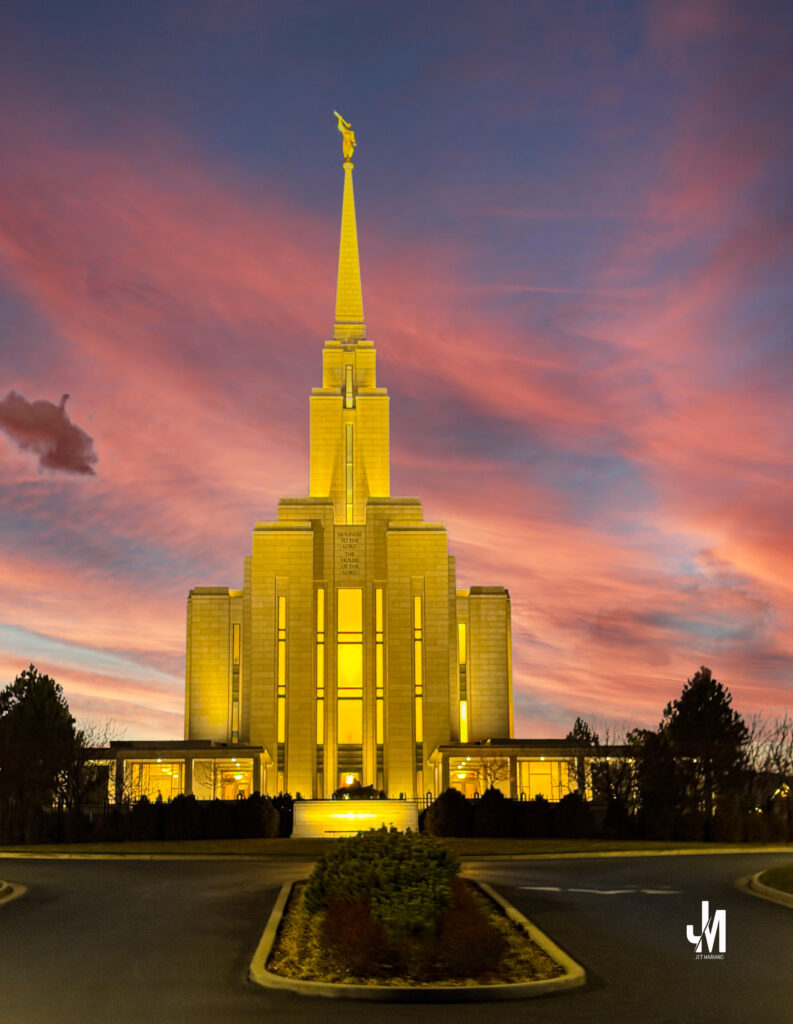
    Oquirrh Mountain Temple glowing at dusk, December 13, 2025 — a quiet reminder that holiness is preserved by preparation.

    Excerpt

    “The other card which I have is what we call a temple recommend. It represents a credit card with the Lord, making available to me many of His greatest gifts. The bank card is concerned with things of the world, the recommend with things of God.”


    Intro

    December 13, 2025. 6:00 PM. Proxy Endowment at the Oquirrh Mountain Temple.

    As the sky deepened into winter color and the temple stood illuminated against the dusk, I carried more than a recommend in my pocket. I carried a reminder. President Gordon B. Hinckley’s words returned clearly and quietly, teaching not just what a temple recommend is, but what it represents. Not a formality. Not a routine. A sacred trust.


    Notes from President Gordon B. Hinckley

    President Hinckley offered a simple but unforgettable comparison.

    He held up two cards.

    One was a bank credit card. Useful. Valuable. Governed by contracts and conditions. Issued temporarily. Revocable if misused. Owned ultimately by the bank.

    The other was a temple recommend.

    A different kind of credit entirely. A credit card with the Lord.

    Unlike financial credit, eligibility for a temple recommend is not based on wealth, status, or means. It is based on consistent personal behavior, moral worthiness, and the goodness of one’s life. It is concerned not with money, but with eternity.

    He reminded us that a recommend is not permanent. It must be renewed. Worthiness must be maintained. And sometimes, he cautioned, we rush people to the temple before they are truly prepared.

    So sacred was this matter in earlier times that Presidents of the Church personally signed every recommend themselves.


    Perspective (Direct Quotes)

    “I hold before you two credit cards. Most of you are familiar with cards such as these.”

    “The other card which I have is what we call a temple recommend. It represents a credit card with the Lord, making available to me many of His greatest gifts.”

    “Eligibility for a temple recommend is not based on financial worth. That has nothing whatever to do with it. It is based on consistent personal behavior, on the goodness of one’s life.”

    “The temple recommend which you carry, if honestly obtained, is certification of your moral worthiness.”

    “What a unique and remarkable thing is a temple recommend. It is only a piece of paper with a name and signatures, but in reality it is a certificate that says the bearer is honest, true, chaste, benevolent, virtuous.”

    “It makes one eligible for an exclusive and remarkable privilege—the privilege of entering that House which says on its wall, ‘Holiness to the Lord—the House of the Lord.’”

    “Live worthy to serve in that house. Keep it holy.”


    Practice (Today, Not Someday)

    Today I ask myself:

    Am I treating my temple recommend as a privilege or as a routine?

    Am I living in a way that quietly honors what it certifies?

    Worthiness is not proven at the interview table alone. It is practiced daily in private choices, honest dealings, clean thoughts, and deliberate restraint. Today, not later. Now, not eventually.


    Final Reflection

    Standing before the Oquirrh Mountain Temple, I was reminded that holiness is not accidental. It is cultivated. A recommend is renewed on paper every two years, but it is renewed in the soul every single day.

    The Lord does not rush holiness. He invites preparation.


    Pocket I’m Keeping

    “Entering the temple is a privilege to be earned and not a right that automatically goes with Church membership.”


    Link to the Talk

    Keeping the Temple Holy – President Gordon B. Hinckley https://www.churchofjesuschrist.org/study/general-conference/1990/04/keeping-the-temple-holy?lang=eng

    © 2012–2025 Jet Mariano. All rights reserved.
    For usage terms, please see the Legal Disclaimer.
  • Marked in Time — “According to the Desire of [Our] Hearts” (Neal A. Maxwell)

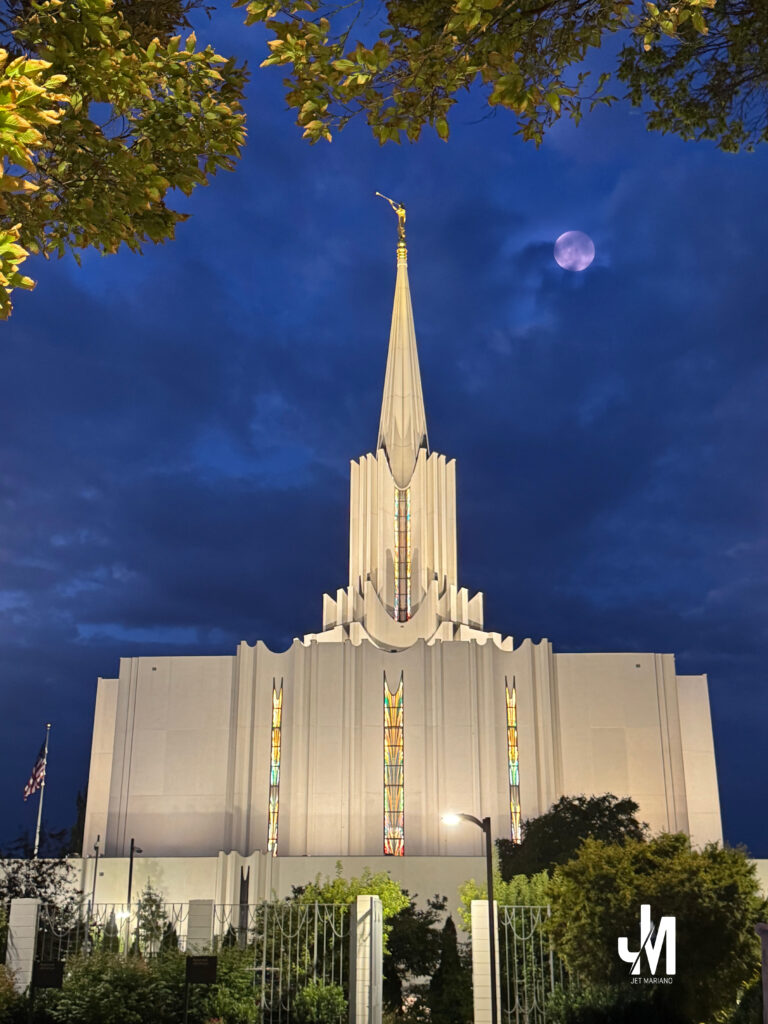
    Waxing gibbous moon peeking through stormy blue over the Jordan River Utah Temple, Friday night (9/5/25), framed by leaves and looking East South East of the sky.

    lle’s “preconditioning,” included the Power of Now reference, and linked the YouTube clip you gave me:


    Excerpt
    Desire steers destiny. Elder Neal A. Maxwell teaches that God judges “according to the desire of [our] hearts”—and helps us train those desires toward Him.


    Intro
    Maxwell reframes agency at its core: desires are the drivers. Genes, circumstances, and environments matter, but—as he reminds us—“there remains an inner zone in which we are sovereign, unless we abdicate.” In that sacred space lies our real agency.

    Eckhart Tolle explains the other side of the equation in what he calls preconditioning:

    “Mental and emotional filters: our minds are filled with ingrained narratives, beliefs, and emotional patterns that act like lenses through which we view the world.”

    (The Power of Now; also shared in his YouTube talk on preconditioning)

    Those filters shape perception, just as culture, family patterns, and past wounds bend behavior. Yet, as Maxwell insists, they cannot erase that sovereign inner zone. What we persistently desire is who we become—and what we receive.


    Straight line (what he’s saying)
    • Desire is more than preference; it’s a real longing that directs agency and outcomes.
    • God mercifully considers our desires, works, and degrees of difficulty—yet won’t force us.
    • Satan desires our misery; wrong desires make us our own victims.
    • Lukewarmness flattens the soul; righteous desires must be relentless, daily.
    Education of desire = learn truth and learn to love it; small acts create spiritual momentum.
    “Do you,” President Brigham Young asked, “think that people will obey the truth because it is true, unless they love it? No, they will not” (Journal of Discourses, 7:55).
    • Some desires must dissolve (envy, self-pity); weak righteous desires can grow strong.
    • Parents teach and model, but each soul must choose; God’s arm is stretched out still.
    • In process of time, holy desires produce holy works.
    • Preconditioning may set the stage—but the sovereign inner zone decides the play.


    Final reflection
    My outcomes track my appetites. When I aim my wants at ease or applause, I drift. When I aim them at Jesus, momentum returns. Desire is today’s steering wheel. Elder Maxwell’s reminder of the inner zone keeps me accountable: I can’t blame culture, genes, or preconditioning. They explain, but they don’t excuse. Tolle helps me name the filters that fog my lens, but Maxwell reminds me that God still waits on what I choose to desire.


    Pocket I’m keeping
    • Pray, then plan by desire: “More holiness give me” → schedule one aligned act.
    • Replace envy with intercession: bless the person I’d be tempted to compare with.
    • Feed the flame daily—scripture, sacrament, service—before screens.
    • Name one mis-aimed desire and starve it for a week.
    • Measure progress by direction and devotion, not dopamine.


    What I hear now
    If I train my want-to, God will shape my able-to. Even a spark—“I desire to believe”—is enough for Him to begin multiplying light.


    Link to the talk
    According to the Desire of [Our] Hearts” — Elder Neal A. Maxwell


    © 2012–2025 Jet Mariano. All rights reserved.
    For usage terms, please see the Legal Disclaimer.
error: Content is protected !!