15 seconds to run into position. No retake. No guarantee. Just trust… and move. Standing here at Daybreak, I realized something— the moment may feel rushed, uncertain, even forced… but the placement is never random. Like Joseph, what once didn’t make sense now feels guided. It was not timing. It was not chance. It was God placing me exactly where I needed to be.
Excerpt Sometimes what feels like a setback is actually God positioning us exactly where we need to be.
Intro There was a time I looked back at a loss in my career and felt the weight of it. It didn’t make sense. It felt like something was taken away.
But looking at Joseph’s story, I see it differently now.
Notes from the Scriptures He sent a man before them, even Joseph, who was sold for a servant. Psalm 105:17
When Joseph revealed himself to his brothers, he acknowledged the devastating decision they had made decades earlier: “I am Joseph your brother, whom ye sold into Egypt.” But he immediately explained how that decision had helped God fulfill his purposes for their family: “Now therefore be not grieved, nor angry with yourselves, that ye sold me hither: for God did send me before you to preserve life” (Genesis 45:4-5). He concluded, “So now it was not you that sent me hither, but God” (Genesis 45:8).
Perspective Joseph stood in front of the very people who caused his suffering—and saw purpose instead of pain.
I’ve had moments where I questioned why something had to happen in my career. At the time, it felt like a loss I didn’t deserve.
But if that door hadn’t closed… I wouldn’t be here.
A full-time opportunity in Utah. A place to rebuild. A place to grow stronger—spiritually, physically, and mentally.
Daily discipline. Clean living. Boxing training that keeps me sharp and grounded. Time to think, to reflect, to reconnect with God.
And the quiet blessings that don’t make noise—but change everything.
Looking back now, I can say with peace:
It was not them. It was God.
Practice (Today, Not Someday) Today, I will trust that not everything that feels like loss is truly loss.
I will move forward with faith, knowing that God may be preparing something I cannot yet see.
Final Reflection Joseph didn’t just survive what happened to him—he understood it.
And when I look at my own path, I see that some of the hardest moments were actually turning points.
God didn’t just fix things later.
He was already there… guiding it from the beginning.
Pocket I’m Keeping What I thought was a setback… was actually a setup.
What I Hear Now “So now it was not you that sent me hither, but God” (Genesis 45:8)
Link to the Talk / Scripture Genesis 45 Psalm 105:17
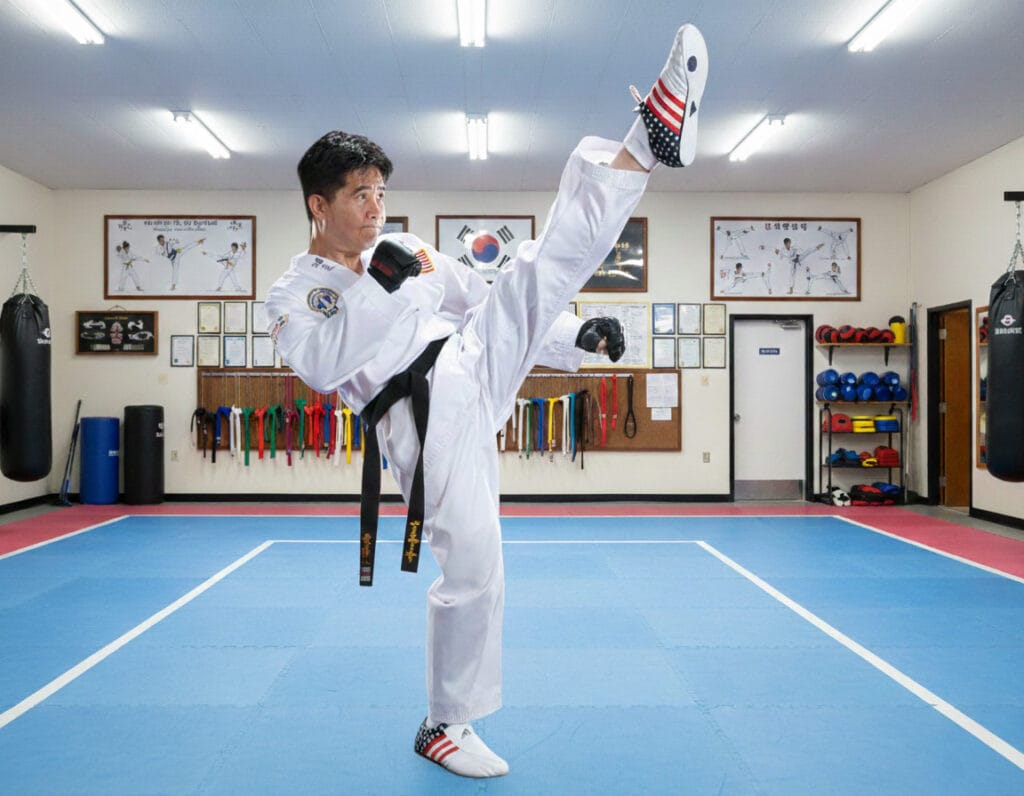
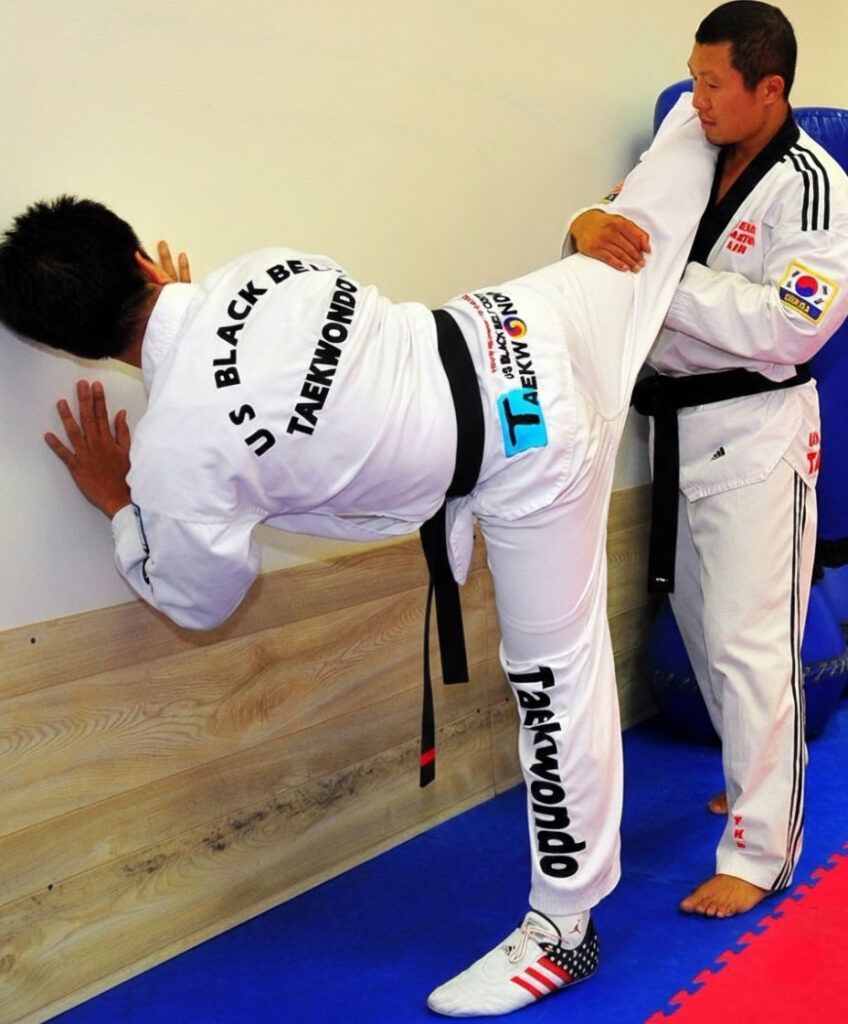
Before I earned my black belt, I had to execute every kick with precision. Discipline before promotion. Alignment before advancement. Not shrinking is formed long before the test.
Excerpt
“As we confront our own trials and tribulations, we too can plead with the Father … that we ‘might not shrink’ (D&C 19:18). Not shrinking is much more important than surviving. Moreover, partaking of a bitter cup without becoming bitter is likewise part of the emulation of Jesus.” — Elder Neal A. Maxwell
Intro
I thought I understood what it meant not to shrink.
I survived hunger at 14. I survived selling food to passengers just to eat. I survived a near-death experience in 1996. I survived panic attacks and insomnia. I survived being told I might never work in a high-stress IT environment again.
But this week, after lap after lap, mitts that escalated from 4 to 10 sets, 87 squat jumps from Tyson cards, mountain climbers, pushups, and 12 nonstop rounds of heavy bag combinations, I understood what Elder Maxwell meant. Not shrinking is more important than surviving.
I have survived many things.
When hunger, anxiety, and loneliness visit, I move. This is how I train my body so my spirit does not shrink.
But survival is not the same as not shrinking.
Notes from the Talk
Elder Maxwell did not ask merely to survive chemotherapy.
He asked not to shrink.
Not to retreat. Not to recoil. Not to become bitter.
The Savior Himself said:
“…and would that I might not drink the bitter cup, and shrink— Nevertheless, glory be to the Father…” (D&C 19:18–19)
Not shrinking is not loud strength. It is quiet submission.
Perspective
When I was 14 and hungry, movement became survival. If I exercised, I could forget hunger.
When doctors questioned my future after my NDE, I refused to shrink. I sought a second opinion. I rebuilt my life.
When anxiety and insomnia threatened my stability, I trained harder. I cleaned up my diet. I disciplined my schedule.
Even today, when loneliness creeps in, I move. When silence feels heavy, I train. When desire rises, I redirect it into discipline.
This week I completed 87 squat jumps through Tyson cards. Not to prove something to anyone. Not to impress younger men. But because discipline has been my medicine for decades.
But here is the paradox I am learning:
It is easier for me to outwork discomfort than to sit still with it.
Surviving built my endurance.
Not shrinking requires surrender.
Practice (Today, Not Someday)
For me, not shrinking today looks like:
Training without ego. Competing without needing validation. Continuing IT responsibilities with integrity even when exhausted. Feeling loneliness without immediately escaping it. Submitting my will when outcomes do not match my expectations.
I once believed not shrinking meant pushing harder.
Not shrinking begins in submission, not in strength.
Now I am learning it sometimes means staying still without fear.
Final Reflection
Surviving builds muscle.
Not shrinking builds character.
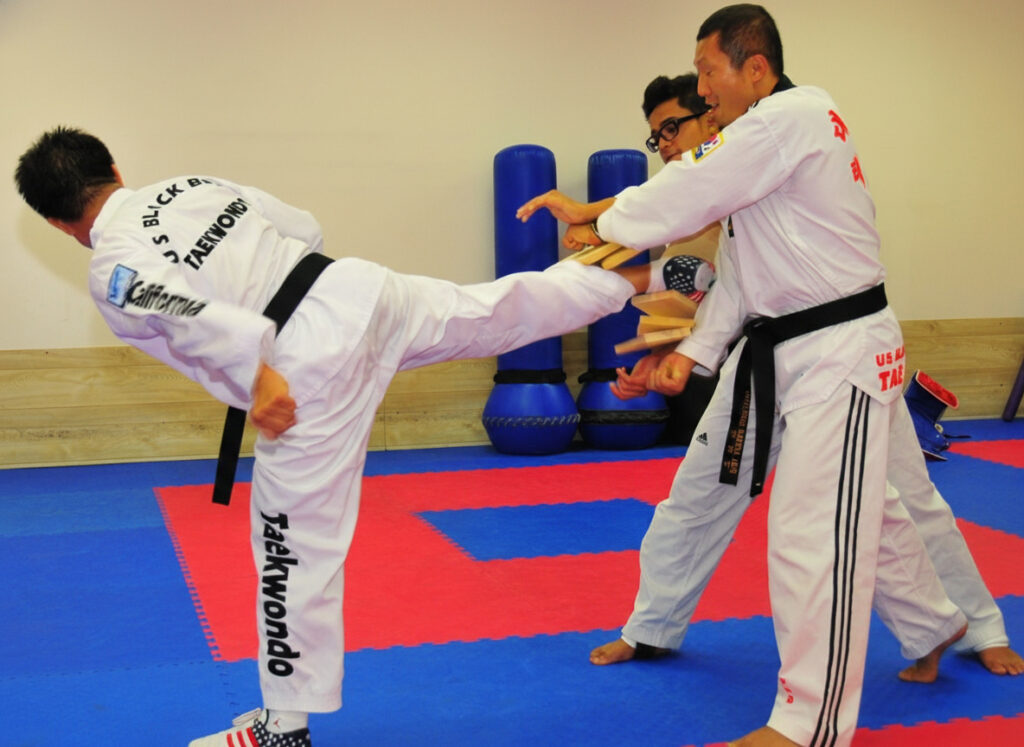
Back kick board break during black belt testing. Commitment through resistance. Not shrinking means driving through the barrier, not recoiling from it.
I survived poverty. I survived medical predictions. I survived anxiety.
But the deeper test is partaking of the bitter cup without becoming bitter.
To trust God’s timing. To accept outcomes I cannot control. To allow my will to be swallowed up in the will of the Father.
That is not weakness.
That is discipleship.
Pocket I’m Keeping
“I just don’t want to shrink.”
Not from hunger. Not from fear. Not from loneliness. Not from aging. Not from silence.
What I Hear Now
“Strong faith in the Savior is submissively accepting of His will and timing in our lives—even if the outcome is not what we hoped for or wanted.”
Intro From the streets of the Philippines to enterprise systems in the United States, my IT journey has been shaped by work, faith, and persistence.
If you are starting from nothing, keep going — progress often begins long before anyone notices.
Early Grit
At twelve years old, I helped support my family by selling newspapers at midnight, shining shoes, washing dishes, and doing whatever work I could find. I didn’t know what IT was back then. I just knew how to work.
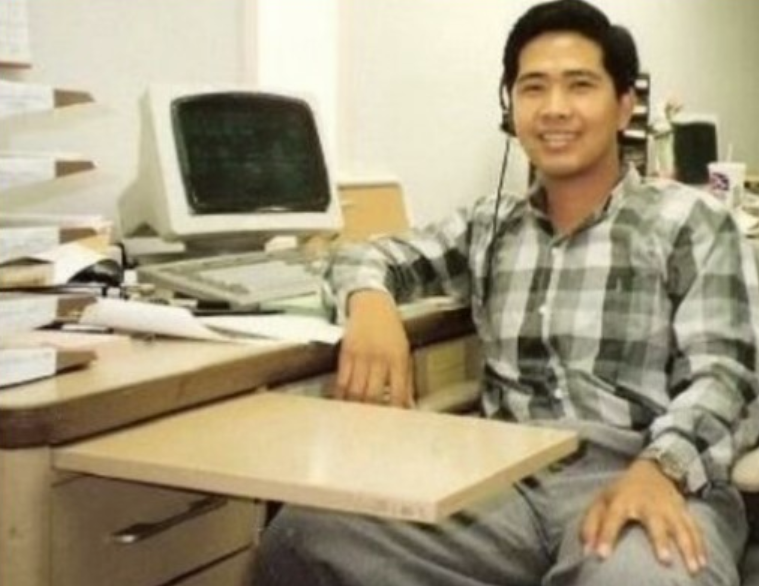
Early 1990s at All Electronics. Long days, multiple bus rides, and the first spark of curiosity about computers.
From Survival to Skill
When I immigrated to the U.S. in 1990, survival came first. I worked warehouse jobs, midnight shifts, and eventually landed a customer service role at All Electronics.
This photo was taken during that time.
From 6:30 in the morning until 3 in the afternoon, I answered calls nonstop — sometimes hundreds in a day. Getting to work meant taking multiple buses across the city. After my shift ended, I took another bus to my second job — either working the drive-through at Taco Bell or selling auto parts at O’Reilly in Reseda.
It was exhausting. But those years built my endurance.
That computer behind me was just part of my job then. I didn’t know it yet, but it would become the doorway to my future.
Later, I bought my own computer and started learning the only way I knew how — by breaking it and fixing it over and over again. Windows 3.0, autoexec.bat, and config.sys became my teachers. Night after night, I stayed with problems until they made sense.
Breakthrough
No one wanted to hire me without experience, so I created my own. I fixed computers for neighbors and small businesses for free. That’s how I learned.
In the early days of IT, skills were learned the hard way. There were no structured learning paths — just curiosity, manuals, broken machines, and persistence.
Eventually, USC took a chance on me — and I made sure I was ready. I supported hundreds of users, worked on migrations, and found my place in IT.
From USC, new doors opened quickly. I was recruited by GTE — now known as Verizon — and not long after, an aerospace company in Carson offered me a six-figure role. It was a moment that reminded me how far persistence can take you.
But in 2003, I made a decision that shaped the rest of my career. I left corporate America and built my own IT consulting company.
The City of West Covina became one of my first major clients — along with firefighters and the police department. USC later brought me back as a senior consultant. Opportunities followed: Microsoft projects, the Claremont Colleges, law firms, American Samoa, and Fortune 500 environments.
Over time, I expanded the business by hiring developers, engineers, and support staff — building not just systems, but people.
Back to Corporate America
The 2008 recession changed everything. It was a time when, as they say, big fish eat small fish. Consulting work slowed, and I knew it was time to pivot again.
My first step back into corporate America was Payforward, a startup company where I helped migrate infrastructure to Amazon Web Services during the early days of cloud adoption. Working in a startup environment sharpened my ability to move fast, solve problems with limited resources, and adapt quickly.
From there, I joined The Church of Jesus Christ of Latter-day Saints as a Support Email Engineer — a worldwide organization operating at global scale. It was there that my PowerShell scripting became more refined and reliable. We supported enterprise messaging systems while the organization expanded into Azure and AWS, strengthening both my automation skills and my understanding of cloud infrastructure.
After that, I moved into the financial sector at City National Bank. That environment introduced me to enterprise-grade infrastructure and security architecture — multiple datacenters, blade server systems, layered “brick-by-brick” firewall protection, application performance monitoring (APM), and the operational discipline required to keep banking systems secure and resilient. It was where infrastructure stopped being just systems and became architecture.
Later, I joined PIMCO (Pacific Investment Management Company), one of the most demanding global environments I had experienced. Technologies like Citrix VDI, AWS, Azure, and enterprise security platforms such as Duo, CyberArk, Arctic Wolf, Palo Alto, and SIEM monitoring were part of daily operations. Mailboxes could reach sizes close to 1 TB, and migrations happened across global regions — North America (NA), Europe, the Middle East, and Africa (EMEA), and Asia-Pacific (APAC).
Like Payforward, these environments required regular PCI-DSS and HITRUST audits. My PowerShell automation matured even further, and I learned how to operate inside highly regulated financial systems where security, compliance, and reliability were non-negotiable.
These experiences prepared me for the infrastructure work I continue to do today.
Where I Am Today
Today I work as an Infrastructure Engineer in Utah. I automate with PowerShell, document systems, support enterprise infrastructure, and mentor others who are starting their own IT journeys.
My work now includes provisioning ERP computers into Intune, managing VMware environments, and maintaining a Cisco Meraki network with a 10GB fiber backbone across MDM and multiple IDF locations. I also support Cisco UCS, Fibre Channel connectivity, Veeam backups, end-of-life transitions, Microsoft Defender, and Azure infrastructure.
Looking back, nothing about this path was easy. But every long bus ride, every second job, and every broken computer taught me something I still use today.
I didn’t fall into IT. I worked my way into it.
Everything I document today in my technical notes traces back to those early days of learning by doing.
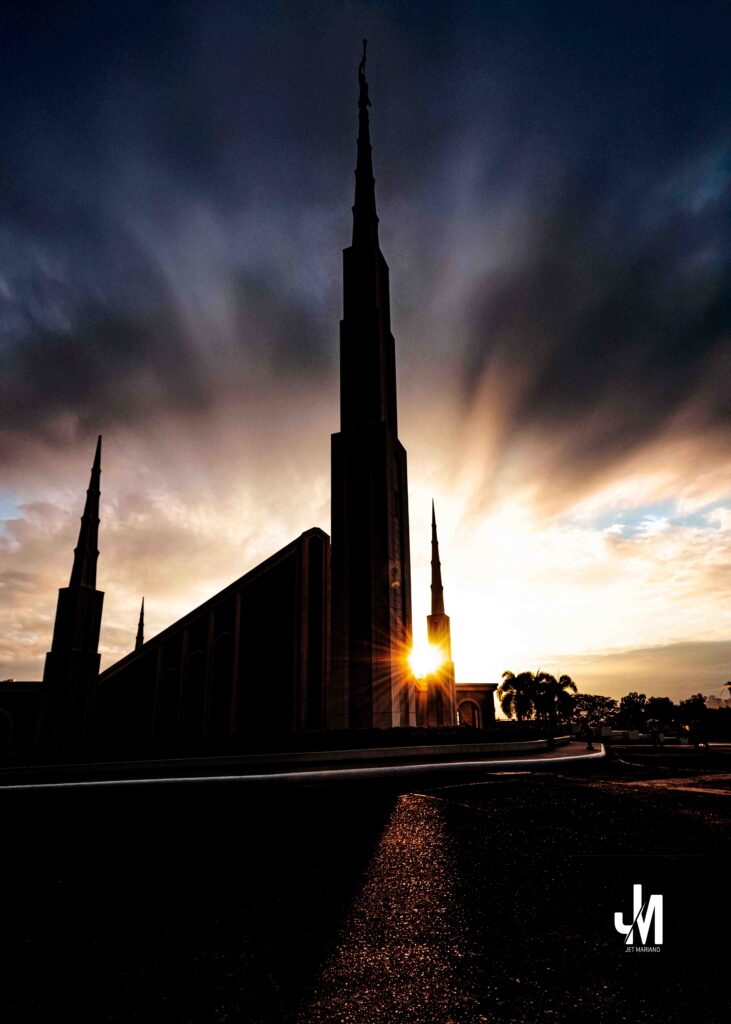
Manila Philippines Temple — I waited for the exact second the sun aligned with the spire. The light pierced through just as if Heaven itself whispered, “I’m still here.”
Excerpt
The sun hid behind the spire—then broke through. That light reminded me of a different storm long ago, when a screen turned blue, and I learned that faith and persistence are built the same way: line upon line, brick by brick.
Intro
November 1999. The world was bracing for Y2K. I was working for an aerospace company in Carson, California, getting ready to drive my parents to LAX for their flight to the Philippines. Before leaving, I decided to double-check our Veritas backup on the Exchange 5.5 server running on Windows NT 4.0. Then came the dreaded BSOD—Blue Screen of Death.
My shift was supposed to end at 4 PM Friday. I didn’t go home until Monday morning. No sleep, no shortcuts—just brick-by-brick rebuilding until email was restored. I missed saying goodbye to my parents, but I kept the company connected.
Notes from Elder Maxwell
“You’ve all been in a storm… when you couldn’t see the sun but you knew it was still there. Likewise, in the stormy and dark moments of life know that the Son of God is always there. His light will never go out.”
That quote became my anchor—both in IT and in life.
Perspective
That night taught me more than any certification. There was no Google, no AI, no online forums—just manuals, backups, and faith that the system could rise again. Today, AI fixes in seconds what once took days. But the light that kept me going then still burns now: the belief that persistence itself is a form of faith.
Practice (today, not someday)
When systems—or souls—crash, don’t panic. Pause, breathe, and build.
Keep working, even if it’s one file or one prayer at a time.
Remember: the Light is constant, even if the screen goes dark.
Final Reflection
The Manila Temple photo symbolizes that memory. When the sun broke through the spire, I felt the same quiet assurance I knew in 1999: He never left me. The blue screen, the missed flight, the fatigue—it was all part of learning that perseverance is light in motion.
Pocket I’m Keeping
The Light never goes out—only our view of it does.
What I Hear Now
“Faith is not seeing the light; it’s working until it returns.”
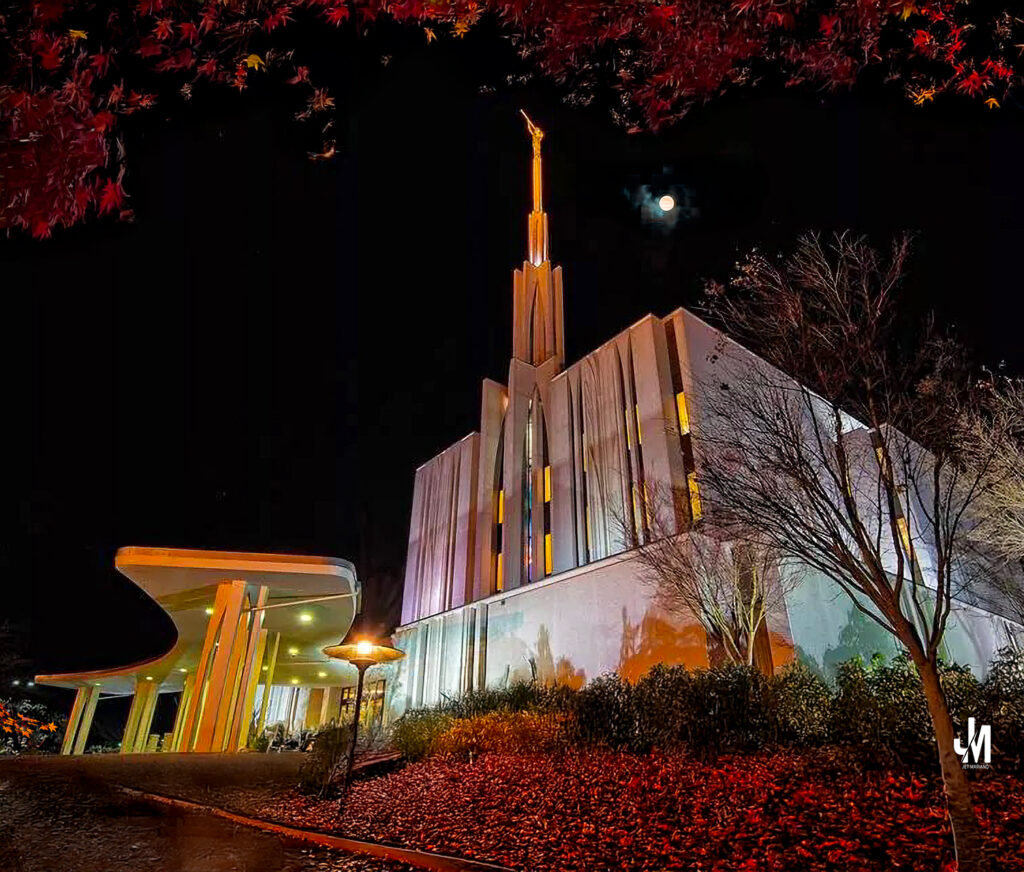
Seattle Washington Temple — 14°F, suit and tie, icy pavement underfoot. I slipped once, stood again, and framed this shot while the moon played peek-a-boo above the spire. My camera gear cushioned the fall, my faith kept me standing.
Excerpt
Sometimes the light we chase nearly costs us everything. But when we stand back up—cold, bruised, and trembling—we find not just the shot, but the story that defines us.
Intro
It was 14°F in Seattle. I was dressed in a suit and tie for a wedding when the moon began to play peek-a-boo behind the temple spire. I scouted the icy pavement for the right angle, slipped hard, and hit the ground. My camera backpack broke the fall. Still, I stayed—shot after shot—until my legs began to stiffen from the cold. Gathering what energy I had left, I ran toward the temple’s visitor center. Kind hands brought me into a heated room and warmed me back to life. That night reminded me why I rarely back down—from freezing weather, failing systems, or storms that test the soul. The temple stood unshaken, and so did I.
Why I kept going: It wasn’t skill—it was discipline. A simple, healthy routine and a promise to avoid quick fixes helped me stay steady. I’m not the smartest; I’m just “never say die.” I started from zero, and service keeps me moving.
Notes from {Speaker}
Courage isn’t the absence of cold; it’s pressing the shutter before the light fades.
Sometimes the miracle isn’t surviving—it’s still choosing to serve after you do.
The temple teaches us that endurance and grace can share the same frame.
Perspective
In IT, storms don’t always come from the sky—they come from critical outages, failed updates, and people relying on you at impossible hours. I’ve faced those too—sometimes while boarding flights or crossing oceans. I was in the Philippines before COVID and still handled tickets for a U.S. client. At Incheon Airport, I restored a VM. In Western Samoa, I fixed email for a company thousands of miles away. Once, 29,000 feet above ground, my soft-phone rang mid-flight—Tahiti users couldn’t send email. I helped them anyway. You could call me a workaholic. I call it love for helping people.
Practice (today, not someday)
When fatigue hits, serve once more—small acts reignite large faith.
Write down one storm you’ve survived and what it taught you.
Find a temple—or a quiet place—and let stillness thaw your heart.
Final Reflection
My life has felt like a series of tours of duty—local government, universities, law firms, manufacturing, perinatal, and home builders—each relying on me as a “Swiss knife” of IT. After the 2012 recession, I lost clients but not calling. I passed the business to my son and returned to corporate life in 2014.
“Vacation?” I can’t recall one. Every trip seemed to bring a new emergency. But I’ve learned to see service as my rest—because helping others is where my soul finds warmth. I’ve done this since before Google or AI existed, when documentation came from books and discipline.
Through it all, the pattern holds—stand a little longer, look for the moon, run for warmth when you must, and let the temple remind you that light is never lost to the cold.
Pocket I’m Keeping
Light is rarely free; it asks something of us.
What I Hear Now
“If the only thing you take into the storm is faith, it will be enough.” “Composition comes back after compassion—first for yourself, then for others.”
Link to the Talk
My IT Journey — the long road that led to that frozen night at the Seattle Temple.
Some victories don’t need spotlights when they’ve already made their mark in the heart.
My son earned his Master’s in Cybersecurity—an achievement forged through discipline, persistence, and his own quiet fire. While others chase trends, he’s built a foundation. And while I never asked him to follow in my footsteps, he chose to walk beside them in his own way.
This moment reminds me that legacy isn’t loud. It’s built in silence—line by line, late night by late night, passed through keyboards, keystrokes, and countless system logs. And while the world sees just a photo, I see a journey… a reflection of years of sacrifice, faith, and fierce intention.
They say when you see a man on top of the mountain, he didn’t fall there.
He planned the climb, stumbled on jagged trails, and kept going even when the sky turned gray.
This post isn’t just about photography, or starting a new role, or PowerShell scripts. It’s about finding your footing again when life shakes your routine—whether you’re debugging a script, chasing stars at 2AM, or collecting a laptop that brings back a hundred memories.
You’ll find stories about IT challenges, career shifts, Milky Way photography, emotional storms—and most of all, how to rise above the blues when everything feels heavy.
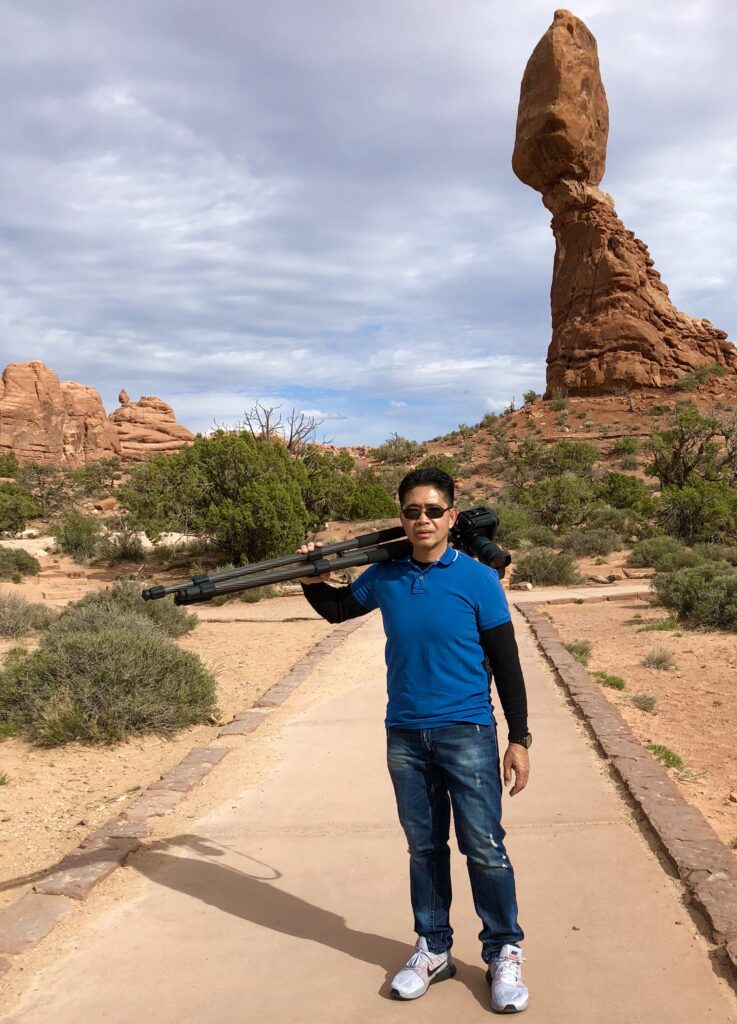
Carrying the gear, chasing the stars—because purpose isn’t found at the summit, it’s carried every step.
⛰️ New Job, New Mountain
They say starting a new job is like standing at the foot of a mountain. The view is exciting—but the climb? Uncertain.
No one really tells you what it feels like to start over. You’re learning people, process, and pace all at once. Even if you’re an expert, you’re blind on day one. And if you’re in IT, like me, the terrain can feel like a minefield.
Pros:
A fresh start
The chance to sharpen or add new skills
A clean slate to prove your value again
Cons:
Culture shock
Pressure to perform quickly
Emotional whiplash, especially when you’re still letting go of the last place
I’ve lived this cycle more than ten times—moving from job to job, project to project. From my first IT gig where I got fired after just a few days (yes, really), to roles in telecom, manufacturing, finance, education, government, and now infrastructure engineering—every restart brought unexpected lessons.
That early firing? It broke me. But it built me too. It taught me to expect the unknowns. It made this scripture real to me:
“For of him unto whom much is given much is required.” – Luke 12:48
And that’s what they don’t tell you: Starting a job doesn’t just mean you’re on probation— it means you’re learning the language, the culture, the personalities, and the systems. Sometimes you’re expected to run before you even learn where the shoes are.
So how do I handle it?
Soft skills. Empathy. Active listening. And above all, humility.
The technical side is always tough, but people are the real challenge. Knowing how to adapt, how to read the room, and when to ask versus when to figure it out—those are the survival tools.
“If ye are prepared ye shall not fear.” – D&C 38:30 That verse? It’s more than a motto. It’s how I show up—every first day, every new login, every fresh deployment.
I’ve seen people not make it past the 90-day mark. Sometimes they didn’t fit. Sometimes the job was the problem. Sometimes—let’s be honest—they oversold their résumé, got lucky at the interview, and then the real work revealed the truth.
Others just get carried by the blues—barely holding it together until their tank runs empty.
That’s why preparation matters. You don’t go to war without gear. You don’t climb a mountain without checking your boots. And you don’t start a new role without anchoring your mindset.
Finally, land where you love. A job shouldn’t just pay the bills — it should fuel your purpose. When you love what you do, it’s a win-win: You rise, and so does the company.
But if you’re stuck in a rut just to make ends meet… eventually, it drains more than your energy — it drains your spirit.
So don’t just look for a job. Climb toward work that gives you life.
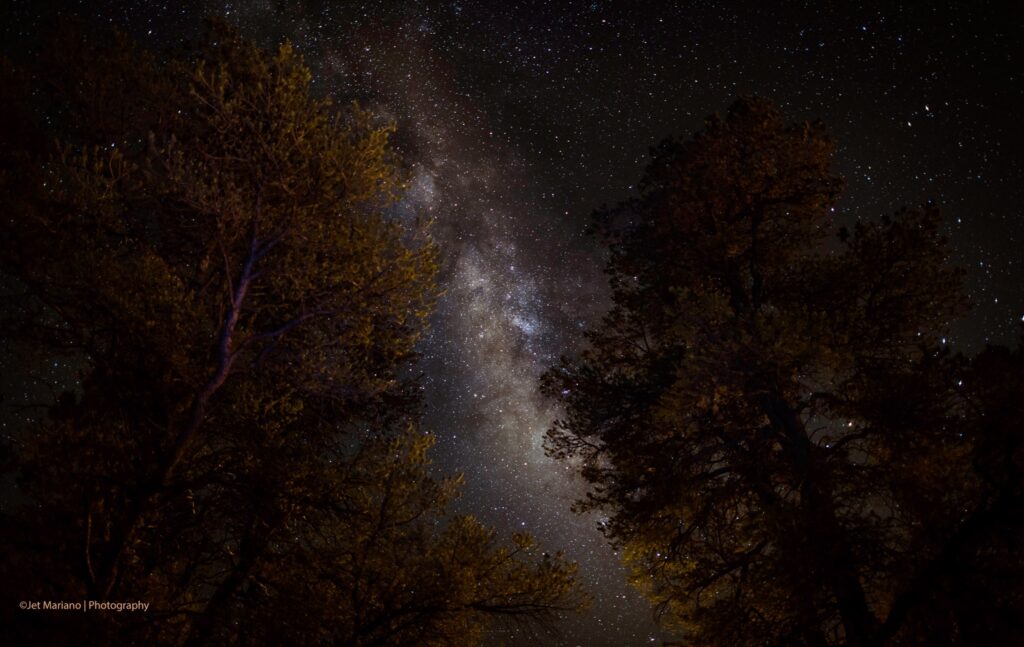
A glimpse of the heavens through earthly shadows—chasing the Milky Way isn’t just about light, it’s about learning to see in the dark.
🌌 Chasing the Milky Way
There’s something sacred about standing in the desert with the Milky Way overhead.
I’ve chased it from Joshua Tree in California to Grand Canyon in Arizona, Monument Valley in Utah, and Moab—and every time, I feel the same awe.
My process is disciplined and deliberate. I survey the area in daylight, using the PhotoPills app to map the galactic core. Then I visualize my composition, mark the safest route from the car, and prep all my gear.
Primary lens: Nikon 14-24mm f/2.8G
Backup: Nikon 24mm f/1.4G
Tripod, remote shutter, red LED headlamp
Pre-focus and manual mode to avoid lens hunting
ISO, shutter speed, aperture—all dialed in
Everything is anticipated—just like in IT. One missed step, and the whole shot—or system—can fail. Just seeing the Milky Way with your own eyes is breathtaking—but to compose it meaningfully, that takes skill.
A great Milky Way shot is not just about stars— it’s about how you prepare in the dark.
🛠 When PowerShell Becomes Armor
It’s Monday morning. Your inbox is full. A user can’t log in, the SQL service is down, and your boss wants answers.
If you’re not ready, it feels like going to war without armor.
That’s where PowerShell becomes your weapon.
Let’s say you’re troubleshooting remote system uptime across 50 servers. Instead of logging in one by one:
📊 Real-time uptime scan across multiple servers using PowerShell – one script, instant clarity.
In just 10 seconds, you’ve got eyes on the entire server fleet. Who’s up. Who’s down. Who’s silent. The sharp tech doesn’t panic—he pinpoints, isolates, and executes. Fast. Focused. Fix deployed.
PowerShell isn’t just a tool—it’s your recon drone.
Like photographing the Milky Way, the best troubleshooting happens when everything is ready before chaos begins.
🎈 Rise Above the Blues
You’re not a machine. You weren’t built to be immune to fear, fatigue, or failure.
Unlike AI, we can’t predict everything. Life throws us emotional landmines—doubt, loneliness, weariness, fear and grief. And sometimes, it hits out of nowhere. A memory. A song. A walk past an empty office.
But here’s what I’ve learned:
You don’t need to erase the blues— you rise above them.
Just like launching a balloon skyward, it takes intention:
You eat clean even when you feel messy.
You work out even when your spirit is sore.
You create even when motivation lags.
And yes, you kneel—asking God for strength.
Whether you’re debugging a failed script, standing under a galaxy of stars, or simply trying to make it through a quiet night…
💪 The Endurance Factor
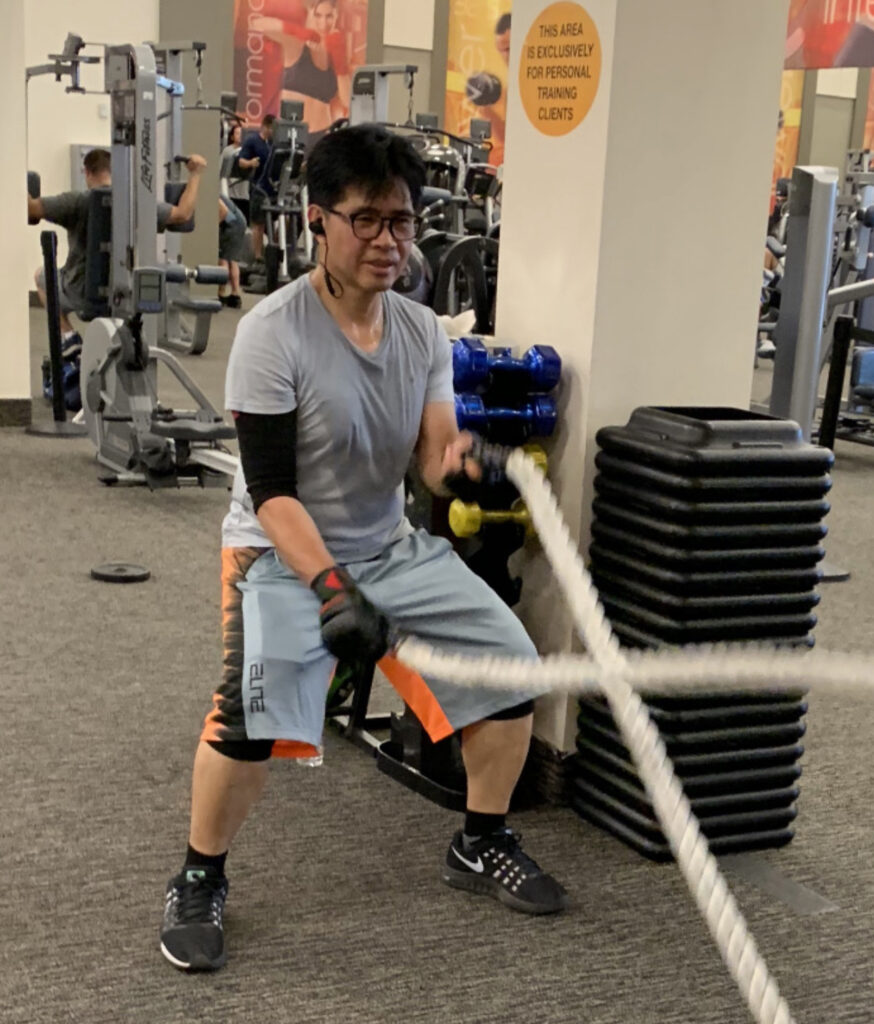
Endurance isn’t just for the gym — it’s a mindset I carry into every part of my life. Whether I’m hammering out code at 2AM or waiting patiently for the perfect light in photography, the principle is the same: lasting through the grind matters more than talent alone. Battle rope training reminds me that breakthroughs come after fatigue — in the gym, in IT, and behind the lens. Those who endure, evolve. Those who push past comfort zones, create lasting impact.
Each battle rope rep runs 180 seconds — just like a boxing round. I push through up to 6 rounds, simulating the intensity of a 12-round fight. It’s not just training — it’s conditioning for IT, for life, for the moments when quitting is easier. Endurance is the quiet strength behind every breakthrough.
🎯 Precision Under Pressure: Shooting, Striking, and Showing Up
Whether I’m at the range or on the mat, the ritual is the same: Prepare. Focus. Repeat.
When I train with my pistols, I practice daily with dummy rounds—loading, unloading, chamber checks, slide control. I break them down, clean them, reassemble them blindfolded—until every movement is instinctive.
It’s the same with MMA and air punching drills. My body is conditioned not just for strength, but discipline. Every strike, every stance, is deliberate. I don’t train to show off—I train to be ready.
You see, when it’s Monday morning and something breaks at work—your system is down, a PowerShell script fails, a teammate’s counting on you—that’s your moment. That’s your live fire.
You don’t rise to the occasion. You fall back on your training.
Whether I’m troubleshooting a crashed server, hiking a steep trail for that perfect Milky Way shot, or helping someone start their climb—discipline is the thread. I’ve learned that showing up prepared is half the victory.
Just like the range:
No second chances if you’re not ready.
Precision comes from practice.
And calm comes from confidence.
🏁 Conclusion
There are mountains I’ve climbed—in IT, in life, and in silence.
From my early days as a PC Support Specialist at USC, through roles in telecom (Verizon), manufacturing (Alcoa), local government (City of West Covina), law firms, education (The Claremont Colleges), our Worldwide Church, regional banking (City National Bank), fintech (Payforward), retail (Monster Energy), global finance (PIMCO), and now as an Infrastructure Engineer in Utah—none of those summits came easy.
Even when I chase the stars with my camera, it’s the climb that makes the view meaningful.
So to anyone out there starting over, picking up the pieces, or doubting their path:
You don’t fall on a mountaintop. You climb it. And you keep climbing. Even when you’re tired. Especially when you’re tired.