Tag: marked in time

  • “Peacemakers Needed” – President Russell M Nelson

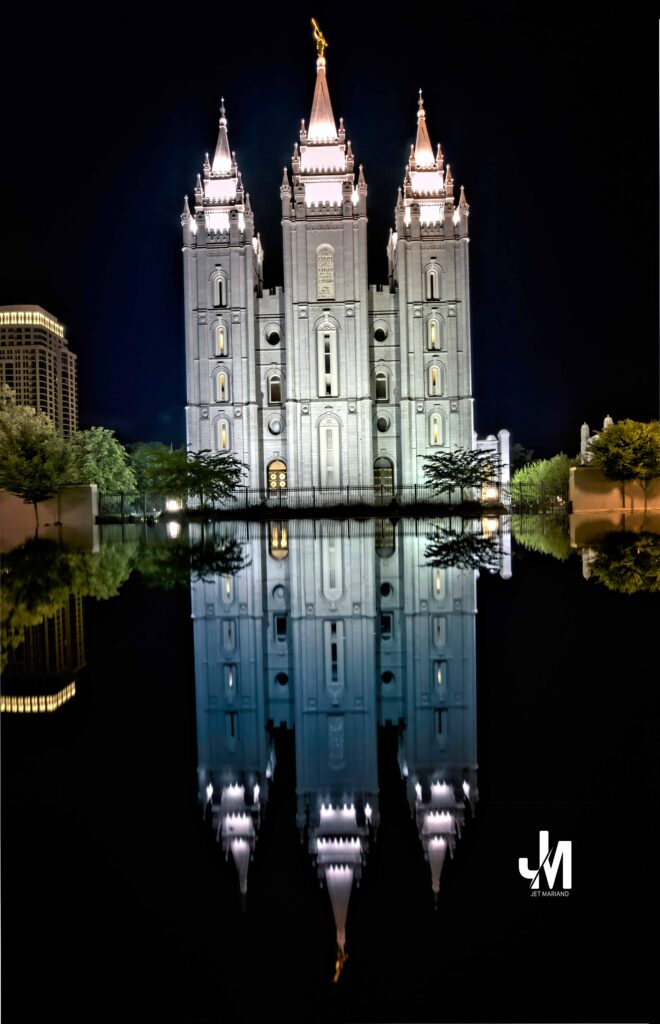
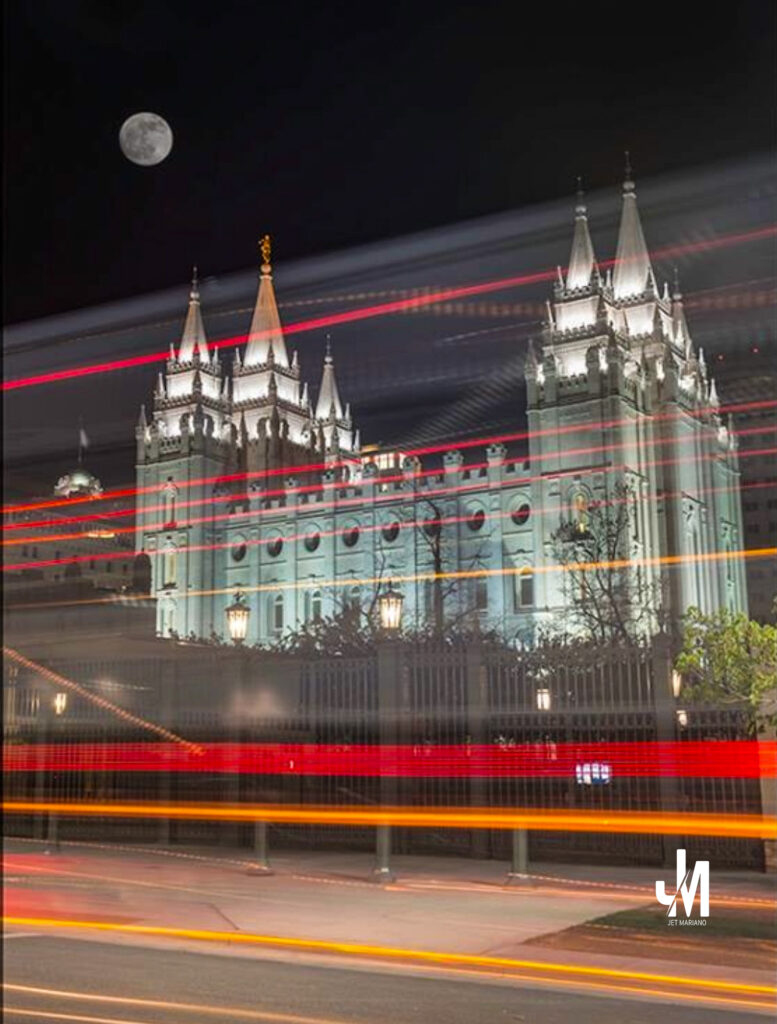
    Salt Lake Temple, sunset from the JSB window. Waiting for the flare taught me: contention is toxic—anger never persuades; hostility builds no one. Be a peacemaker.

    BTS (behind the shot): From the Joseph Smith Building, shooting through the window glass with my trusty 14–24mm f/2.8 at 14mm. I bracketed exposures and waited for the sun to flare behind Moroni without losing the cloud detail. Patience, angle, and a clean pane made the rays sing.


    Excerpt

    When words run hot, the Spirit runs quiet. President Russell M. Nelson’s call—“Peacemakers Needed”—reminds me that covenant disciples build and bless, even under fire. Today I’m choosing to cool my speech, lift my neighbors, and let charity do the heavy lifting.


    Intro

    The world feels loud. But on the temple roofline tonight, light broke through and stitched the sky together. President Nelson’s sermon lands the same way: direct, steady, hopeful. Peacemakers aren’t passive; they’re disciplined disciples who speak higher and holier. This post is my small practice at that.


    Notes from President Nelson (Sep 2023)

    • Contention is toxic and common—even at home.Anger never persuades. Hostility builds no one. Contention never leads to inspired solutions. Regrettably, we sometimes see contentious behavior even within our own ranks… spouses and children belittled, angry outbursts used to control, ‘silent treatment,’ youth who bully, and employees who defame colleagues.”
    • Contention is evil.Make no mistake about it: contention is evil! Jesus Christ declared that those who have ‘the spirit of contention’ are not of Him but are ‘of the devil’… Those who foster contention are taking a page out of Satan’s playbook.”
    • What people really need from us. “If a couple in your ward gets divorced… a missionary returns early… a teenager doubts his testimony—they do not need your judgment. They need to experience the pure love of Jesus Christ in your words and actions.”
      “If a friend on social media has strong views that violate everything you believe in, an angry, cutting retort will not help. Build bridges of understanding.”
    • Peacemaking is a covenant choice. We can choose contention or reconciliation; charity is the antidote and the temple empowers us to cast the adversary out of our relationships.
    • Our standard of speech: If anything is “virtuous, lovely, of good report, or praiseworthy,” say that—to faces and behind backs.

    Perspective

    Peacemaking isn’t “peace at any price.” It’s covenant keeping with our mouths, our posts, and our reactions. The temple in view—Salt Lake—reminds me: God gathers, builds, and refines. If I’m with Him, my words should too.


    Practice (today, not someday)

    • Pause before post. If it won’t lift, it won’t live on my feed.
    • Bridge the gap. Ask one sincere question where I disagree.
    • Name the good. Offer one specific, praiseworthy sentence to someone who needs it.
    • Close the loop. Repair one relationship where my words cooled the room.

    Final Reflection

    Light rays don’t fight the clouds—they pass through and transform them. Peacemakers do the same with hard moments. Charity takes the sharpness out of sentences and puts strength back into souls.


    Pocket I’m Keeping (one-liner)

    “Charity is the antidote to contention.”


    What I Hear Now (direct quotes from President Nelson)

    • Anger never persuades. Hostility builds no one. Contention never leads to inspired solutions.
    • Contention is a choice. Peacemaking is a choice.
    • Make no mistake about it: contention is evil!
    • “If there is anything virtuous, lovely, of good report, or praiseworthy we can say about another… that should be our standard of communication.
    • Now is the time to bury your weapons of war. The pure love of Christ is the answer to the contention that ails us today.”

    Link to the talk

    President Russell M. Nelson — “Peacemakers Needed.” (Official text/video on ChurchofJesusChrist.org)

    © 2012–2025 Jet Mariano. All rights reserved.
    For usage terms, please see the Legal Disclaimer.
  • Marked in Time — Sep 15, 2025 “Grounded, Rooted, Established, and Settled”

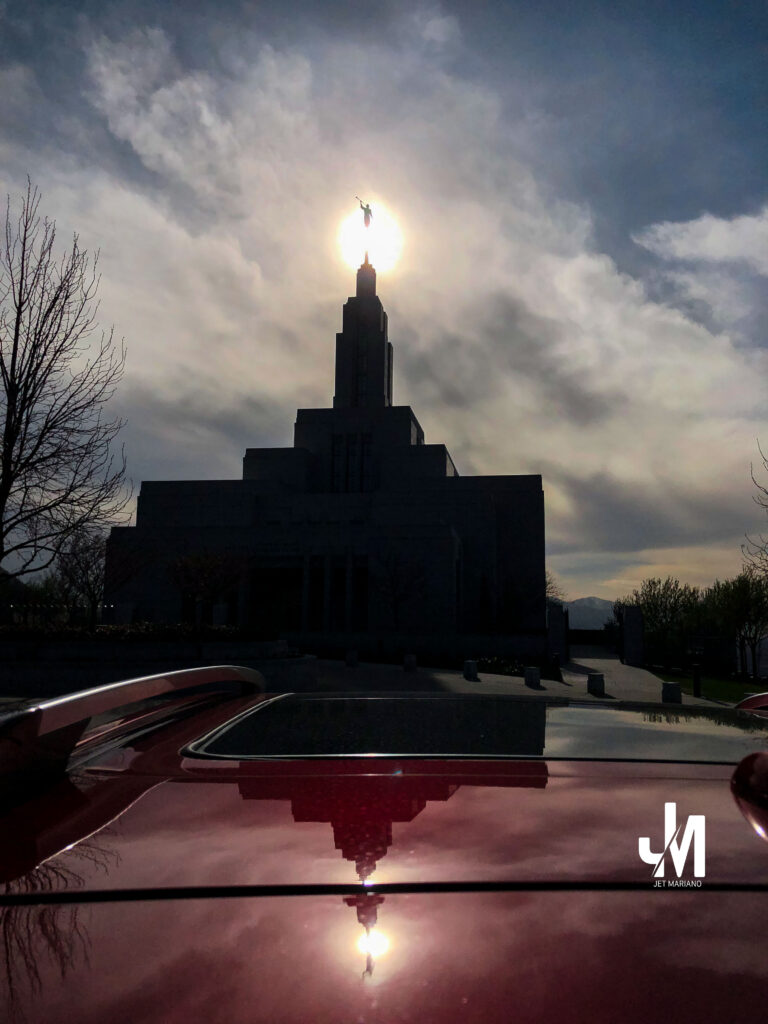
    Sun crowns the Angel Moroni and echoes in the red-car reflection—heaven above, witness below. Today I’m choosing to be “grounded, rooted, established, and settled.” Elder Neal A. Maxwell’s devotional was given 44 years ago today (Sept 15, 1981); I’ve listened to and reread it more than forty times since last night, and it still steadies me.
    Behind the shot (BTS)
    iPhone only. I walked the grounds, lining up angles until the sun sat directly behind Moroni. I waited for the clouds to thin, then chose the red car as my foreground to mirror the spire and add a second “sun.” Composing a photograph isn’t easy—it takes patience, timing, and a little inspiration.

    Excerpt
    When life feels hot and hurried, deep roots matter. Elder Neal A. Maxwell taught us to become “grounded, rooted, established, and settled.” Today I’m practicing that—quietly, covenant by covenant—so the sun doesn’t scorch my faith.


    Intro
    What a coincidence—September 15. On this date in 1981, Elder Neal A. Maxwell delivered a devotional that feels tailor-made for our moment. He urged a discipleship with depth, the kind that survives heat and headlines: grounded, rooted, established, and settled. He reminded us that God’s curriculum is deliberate—patience, meekness, love, self-discipline—and that routine isn’t pedestrian; it’s providential. Real growth happens “in process of time” and “according to the flesh”—ordinary days doing eternal work. If the world’s scaffolding falls away, what stands? Holy ground and holy habits. I want those roots.


    Straight line
    • Deep roots > fast leaves (Colossians 2:6–7).
    • After we’ve “suffered a while,” grace “stablish[es], strengthen[s], settle[s]” (1 Peter 5:10).
    • The seed survives the sun when nourished “with great diligence, and with patience” (Alma 32).
    • Ordinary days are eternal classrooms; portable skills—meekness, charity, self-discipline—rise with us.


    Notes from Elder Maxwell (Sep 15, 1981)
    • Growth without roots scorches. Disciples withstand heat because they are grounded—not trending.
    • Scaffolding and applause fall away; covenant habits remain.
    • God’s curriculum forms eternal, portable skills we’ll need forever.
    • Routine can be resplendent: quiet covenant keeping outlasts headlines.
    • Keep gospel perspective: our basic circumstances are strikingly similar—we are God’s children, accountable, loved, and capable of steady growth.


    Perspective (directly from the devotional)
    “A hundred years from now, today’s seeming deprivations and tribulations will not matter then unless we let them matter too much now. A hundred years from now, today’s serious physical ailment will be but a fleeting memory.”

    “A thousand years from now, those who now worry and are anguished because they are unmarried will, if they are faithful, have smiles of satisfaction on their faces in the midst of a vast convocation of their posterity. The seeming deprivation which occurs in the life of a single woman who feels she has no prospects of marriage and motherhood properly endured is but a delayed blessing, the readying of a reservoir into which a generous God will pour all that he hath. Indeed, it will be the Malachi measure: ‘there shall not be room enough to receive it’ (Malachi 3:10).”


    Practice (today, not someday)
    • Choose one root to deepen: scripture before screens; prayer with listening; sacrament with intent.
    • Trade hurry for holy: slow the reply, soften the tone, serve someone nearby.
    • Write one “settled” choice: the commandment I will keep even when the sun is hot.
    • Plant a small habit that outlasts headlines: five minutes of gratitude, one quiet act of mercy, one bridge-building conversation.


    Final reflection
    I can’t cool the world’s weather, but I can deepen my roots. If I will be grounded in Christ, the same sun that scorches shallow soil will ripen real fruit. Ordinary days, kept with covenants, become the very ground where God “stablishes, strengthens, and settles” the soul.


    Pocket I’m keeping
    • Deep roots before bright leaves.
    • Perspective over panic.
    • Ordinary days are eternal classrooms.
    • Meekness travels well—now and forever.


    What I hear now
    “Rooted and built up in him, and stablished in the faith” (Colossians 2:7).
    “After that ye have suffered a while… stablish, strengthen, settle you” (1 Peter 5:10).
    “Nourished by your faith with great diligence, and with patience” (Alma 32:41).


    Link to the talk
    BYU Devotional, Elder Neal A. Maxwell, September 15, 1981 (searchable on speeches.byu.edu).

    © 2012–2025 Jet Mariano. All rights reserved.
    For usage terms, please see the Legal Disclaimer.
  • Marked in Time — Sep 14, 2025 “The Enmity of All Flesh Shall Cease”

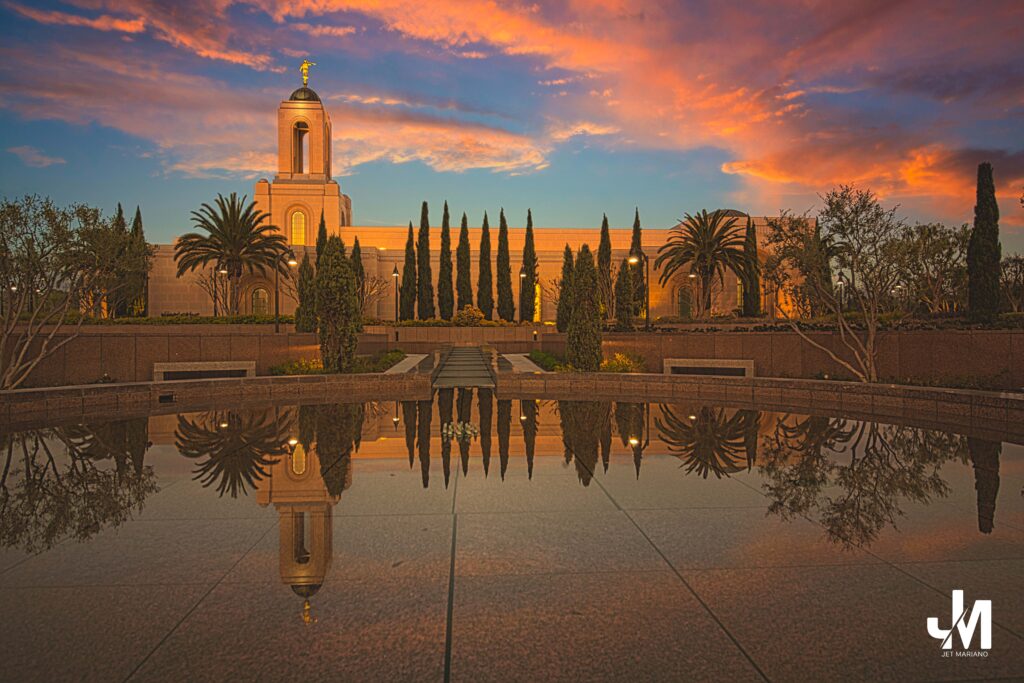
    I waited for silence—no wind, no fountain—then the temple doubled in the pond. “The enmity of all flesh shall cease” (D&C 101:26).
    BTS: [x trips], [y minutes/hours] of watching the surface until the last ripple

    disappeared.

    Intro
    News this week was hard to take. A familiar U2 refrain kept circling my mind—“How long?” When the world feels loud and unsteady, I go back to the Lord’s promises. In 1833, as Saints were driven from their homes in Missouri, the Savior described what His return will bring (see Doctrine and Covenants 101:23–34): we will see Him together; all things will become new; the enmity of all flesh will cease; Satan will lose his hold; sorrow will yield to life; and truth will be revealed in full. That is not wishful thinking—it’s a covenant future.


    Straight line

    • Begin living heaven’s law now. When the Savior appeared in the Americas, He warned plainly: “He that hath the spirit of contention is not of me” (3 Nephi 11:29).
    • It really can happen. After His ministry, the record reports: “There was no contention among all the people” for many years (4 Nephi 1:13).
    • Zion prepares the way. Elder D. Todd Christofferson taught that the Lord will return to a people prepared to receive Him—Zion: “of one heart and one mind,” righteous, with “no poor among them” (April 2019, Preparing for the Lord’s Return).
    • Preparation looks practical. Lower our voices. Lift burdens. Trade hot takes for holy listening. Replace talking points with personal service.
    • Practice the peace you’re praying for. The future promise is sure; the daily choice is mine.

    Final reflection
    I can’t rush His timetable, but I can reduce contention in my sphere. If I want a world where enmity ends, I can start with my words, my replies, my assumptions—and my willingness to build bridges where the world builds walls.


    Pocket I’m keeping

    • Live heaven’s law now.
    • No contention—beginning with me.
    • Zion = one heart, one mind, no poor.
    • Practice peace: listen, serve, reconcile.
    • Hope is a covenant, not a mood.

    What I hear now
    “The enmity of man, and the enmity of beasts … yea, the enmity of all flesh, shall cease” (D&C 101:26).


    Link to the talk
    “Preparing for the Lord’s Return,” General Conference, April 2019


    © 2012–2025 Jet Mariano. All rights reserved.
    For usage terms, please see the Legal Disclaimer.

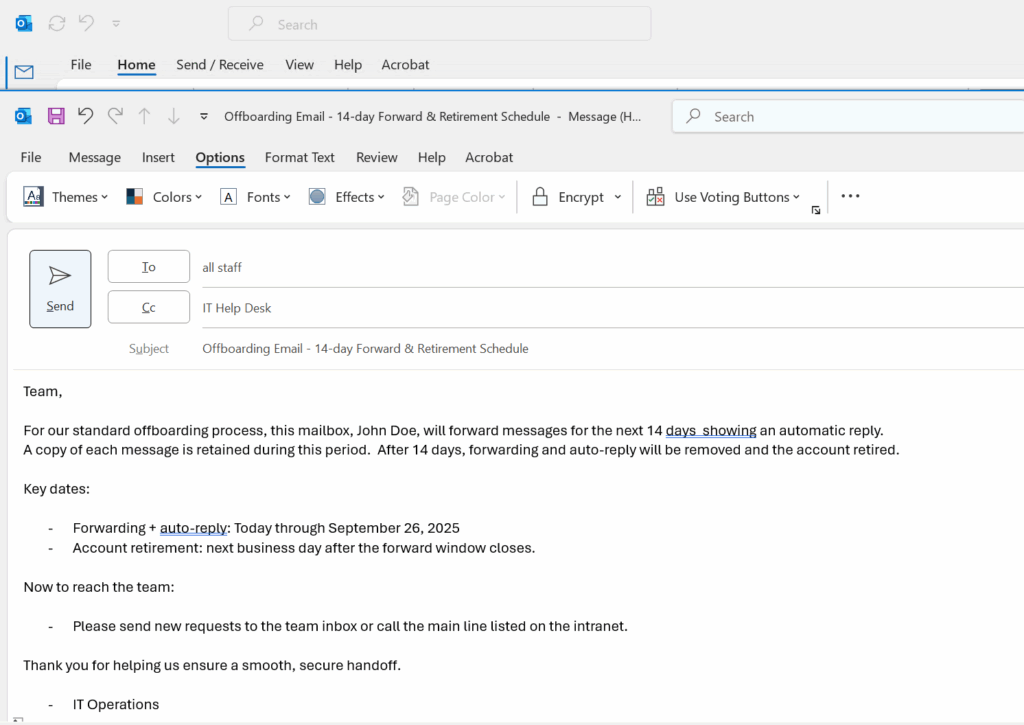
  • Marked in Time — Sep 24, 2025 Email Offboarding: Forward for 14 Days → Then Retire the Mailbox (No Shared Mailboxes)

    Clean handoff: 14-day forward then retired the mailbox. using powershell

    Excerpt

    A simple, low-risk offboarding pattern: enable a 14-day forward to the supervisor with an auto-reply, keep copies in the mailbox, then remove forwarding and retire the account. No shared mailboxes, no drama.

    Photo suggestion

    Something neutral and professional: a close-up of a keyboard lock icon, or a soft sunset over a temple (if you want to keep the page’s visual theme).
    Caption idea: “Quiet handoffs, clean closures.”


    Context (redacted)

    Policy: No shared mailbox conversions. For leavers, enable a 2-week mail forward to the supervisor, show a clear auto-reply, then delete the user so the mailbox soft-deletes and later hard-deletes. Team files live in SharePoint/Teams; local working data is archived to encrypted USB for short-term retention.


    Before (T0) — Enable 14-Day Forward + Auto-Reply

    Goal: Forward new messages for two weeks and keep a copy in the mailbox for audit/review; clearly inform senders.

    Replace with your addresses before running:
    $User = "[email protected]"
    $Supervisor = "[email protected]"

    # Admin sign-in
    Import-Module ExchangeOnlineManagement -ErrorAction SilentlyContinue
    Connect-ExchangeOnline
    
    # Vars
    $User       = "[email protected]"
    $Supervisor = "[email protected]"
    $Days       = 14
    $Now        = Get-Date
    $End        = $Now.AddDays($Days)
    
    # Enable mailbox-level forwarding (keep a copy)
    Set-Mailbox -Identity $User `
      -ForwardingSmtpAddress $Supervisor `
      -DeliverToMailboxAndForward $true
    
    # Schedule auto-replies for the same window
    $InternalMsg = @"
    This mailbox is no longer monitored.
    For assistance, please contact $Supervisor or call the main line.
    "@
    
    $ExternalMsg = @"
    Thanks for your message. This mailbox is no longer monitored.
    Please email $Supervisor for assistance.
    "@
    
    Set-MailboxAutoReplyConfiguration -Identity $User `
      -AutoReplyState Scheduled `
      -StartTime $Now `
      -EndTime $End `
      -InternalMessage $InternalMsg `
      -ExternalMessage $ExternalMsg `
      -ExternalAudience All
    

    Parallel housekeeping (same day):

    • Reset the user’s password, revoke sign-in sessions, and (optionally) block sign-in during the transition.
    • Transfer/confirm ownership of OneDrive/SharePoint/Teams files needed by the team.
    • Archive any local workstation data to an encrypted USB (BitLocker To Go) if policy allows.

    After (T+14) — Remove Forwarding → Retire Account

    Goal: Stop forwarding, disable auto-reply, and delete the user (soft-delete mailbox). Optionally hard-delete the mailbox once soft-delete is visible.

    Import-Module ExchangeOnlineManagement -ErrorAction SilentlyContinue
    Connect-ExchangeOnline
    
    $User = "[email protected]"
    
    # Remove mailbox-level forwarding & auto-reply
    Set-Mailbox -Identity $User -ForwardingSmtpAddress $null -DeliverToMailboxAndForward $false
    Set-MailboxAutoReplyConfiguration -Identity $User -AutoReplyState Disabled
    
    # Delete the user in Entra ID (do this in the portal or via Graph)
    # Entra admin center → Users → select user → Delete
    # After directory sync, the mailbox will be in "soft-deleted" state (up to 30 days)
    
    # Optional: Permanently delete the mailbox once soft-deleted
    $Soft = Get-Mailbox -SoftDeletedMailbox -ErrorAction SilentlyContinue |
            Where-Object {$_.PrimarySmtpAddress -eq $User}
    if ($Soft) {
      Remove-Mailbox -PermanentlyDelete -Identity $Soft.ExchangeGuid -Confirm:$false
    }
    

    Lessons Learned

    • Clarity beats complexity. Forward + auto-reply for a defined window avoids confusing senders and helps the team capture anything urgent.
    • Keep a copy while forwarding. It preserves context during the transition.
    • No shared mailbox needed. If policy prohibits it, you can still do a clean, auditable handoff.
    • Document the timestamps. Password reset, token revocation, forward on/off, user deletion, and any permanent mailbox purge.

    Pocket I’m Keeping

    • Short window, clear message, clean cutover.
    • Files belong in SharePoint/Teams; email is a temporary bridge.
    • Quiet, consistent process reduces friction and drama.

    © 2012–2025 Jet Mariano. All rights reserved.
    For usage terms, please see the Legal Disclaimer.

  • Marked in Time Sep 10, 2025 — Finding Joy in the Journey

    San Diego California Temple — made on an early iPhone. Daylight reminds me it’s less about the lens and more about the eye and the feeling. This house is family to me—my firstborn was sealed here on 12/12/12 at 12:00 PM.

    Excerpt
    President Thomas S. Monson teaches that joy is not in the distant future but in the daily moments we cherish with gratitude and love.


    Intro
    Life changes—sometimes suddenly, often gradually. President Thomas S. Monson reminds us that we cannot pile up tomorrows and expect joy to wait. Joy is in the journey now—in gratitude, in kindness, in cherishing those around us before it is too late.


    Straight line (what he’s saying)
    Change is constant; the key is learning what matters most.
    • Childhood, family time, and simple daily joys vanish if we postpone them.
    • Don’t wait for tomorrows that never come; love must be shown today.
    Never let a problem to be solved become more important than a person to be loved.
    • Gratitude transforms lack into abundance; ingratitude blinds us to God’s gifts.
    • Challenges will come, but we choose whether to cherish or neglect the people we love.
    • Christ’s example—serving, forgiving, and loving to the end—shows us how to live joyfully.


    Final reflection
    Time never stands still. My regrets are not about things I did, but things I left undone—words unsaid, kindness unshown. President Monson’s reminder echoes: joy is not about someday; it is about today.


    Pocket I’m keeping
    • Hug my family more, speak my love more.
    • Write the note, send the message, make the call—today.
    • Guard against letting stress eclipse people.
    • Give thanks deliberately, even for the small, ordinary blessings.
    • Joy = gratitude in motion.


    What I hear now
    Joy is a daily decision, not a future destination. If I train my heart to see God’s gifts in every moment, life itself becomes the journey worth rejoicing in.


    Link to the talk
    “Finding Joy in the Journey – President Thomas S. Monson

    © 2012–2025 Jet Mariano. All rights reserved.
    For usage terms, please see the Legal Disclaimer.

  • Marked in Time Sep 9, 2025 – Repent of Our Selfishness

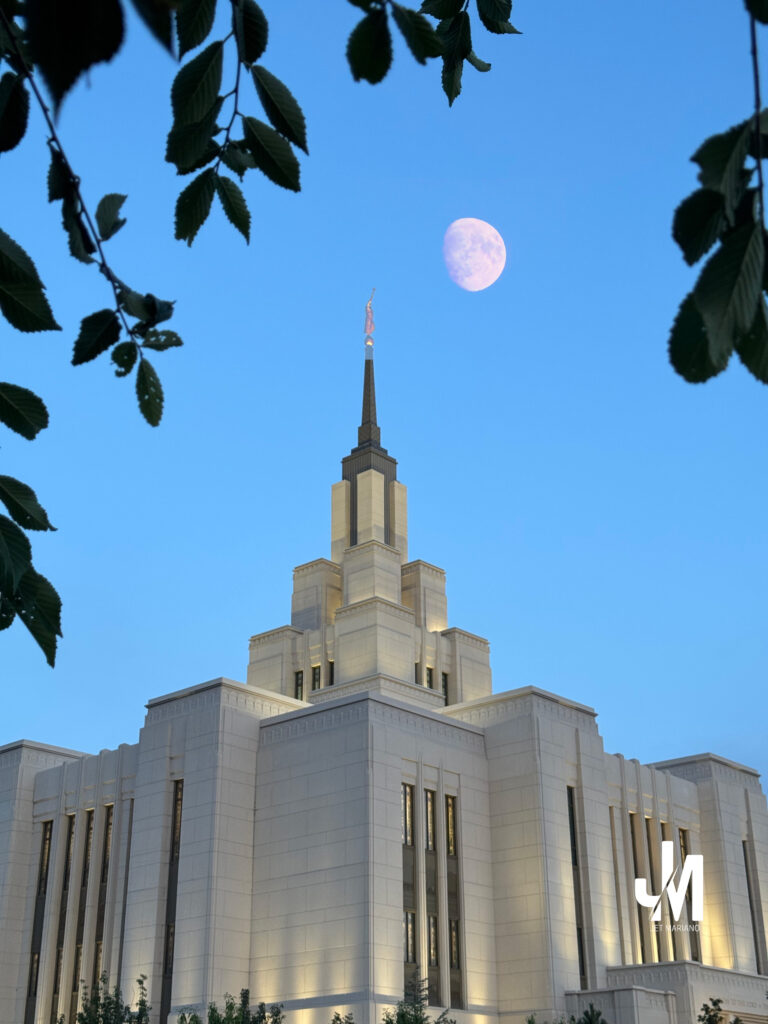
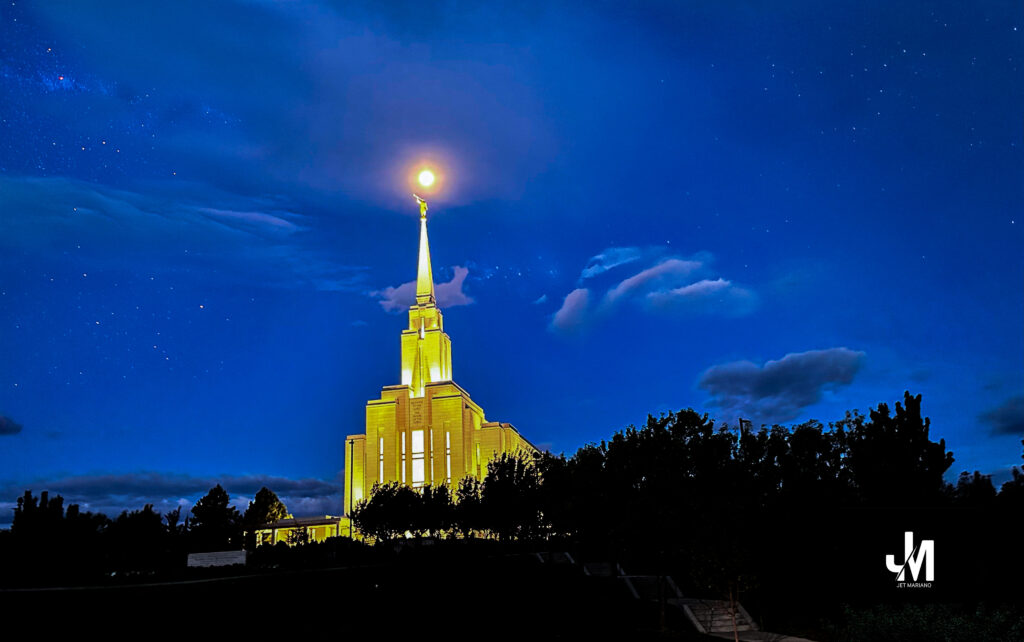
    Waning gibbous, waiting: I timed the moon to rest behind the Angel Moroni atop the Oquirrh Mountain Temple—quiet light on a higher call.

    Excerpt
    Selfishness is not just a flaw—it’s self-destruction in slow motion. Elder Neal A. Maxwell teaches that meekness is the real cure, for it doesn’t just mask selfishness but dissolves it.

    Intro
    Joseph Smith urged that selfishness be “not only buried, but annihilated.” Elder Maxwell builds on that: selfishness shrinks the soul, corrodes society, and detonates commandments. Like Copernicus reminding the world it wasn’t the center of the universe, we too must learn—we are not the center. Meekness and unselfish discipleship are the only antidotes.


    Straight line (what he’s saying)
    • Selfishness = self-destruction in slow motion. It narrows life until others no longer matter.
    • Appetite and ego can never fill emptiness; zero multiplied by anything is still zero.
    • Selfishness masks itself as swagger but is as provincial as goldfish in a bowl.
    • Joseph Smith: selfish feelings must be annihilated, not moderated.
    • Common forms: puffing credit, resenting others’ success, withholding kindness, rudeness, and abuse.
    • Cultural consequence: when selfishness spreads, societies decline—without mercy, without love, past feeling.
    • Selfishness detonates the Ten Commandments: it fuels envy, adultery, dishonesty, even murder.
    • Cain’s “I am free” after slaying Abel = ultimate selfish blindness.
    • Today: people strain at gnats (small issues) while swallowing camels (grave sins like abortion).
    • Followers share accountability with leaders in cultural decline; excuses won’t save.
    • True freedom comes from unselfishness—serving, forgiving, and lifting others.
    • Christ Himself is the supreme contrast: He did not look out for “number one.”


    Final reflection
    Selfishness corrodes both heart and culture. The cure is meekness—choosing to notice, to yield, to bless. When I dissolve selfish wants, space opens for Christlike love. The world says “look out for number one”; Jesus says, “lose yourself and you’ll find life.”


    Pocket I’m keeping
    • Before big actions: quietly ask, “Whose needs am I meeting?”
    • Practice daily meekness: count to 10 before speaking, let the Spirit filter words.
    • Replace envy with gratitude; bless the success of others.
    • Sow unselfishness in family life—ordinary duties cultivate extraordinary love.
    • Remember: selfishness shrinks, meekness expands.


    What I hear now
    Unselfishness frees me under a “freer sky,” as Chesterton said. Meekness is not weakness—it’s strength without selfishness. When I choose it, selfishness dissolves and discipleship deepens.


    Link to the talk
    “Repent of [Our] Selfishness” — Elder Neal A. Maxwell

    © 2012–2025 Jet Mariano. All rights reserved.
    For usage terms, please see the Legal Disclaimer.

  • Marked in Time — “Think Celestial!” (President Russell M. Nelson)

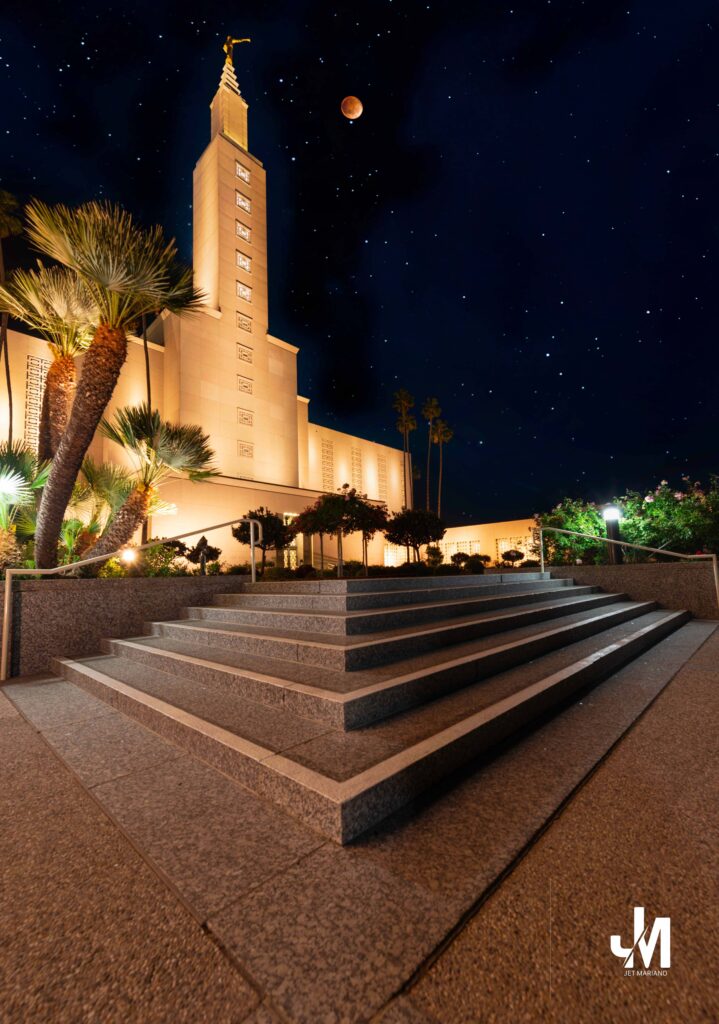
    Super Blood Moon over the Los Angeles California Temple — not visible in America last night, so I pulled this in-camera Nikon double exposure from my archives (Oct 2014). Thinking celestial means taking the long view: steps, stars, and a witness in the heavens.

    Excerpt
    President Nelson invites us to “think celestial”—to take the long, eternal view where today’s choices shape forever.


    Intro
    President Russell M. Nelson taught that God’s plan is “fabulous,” that our choices matter eternally, and that the Savior’s Atonement makes that plan possible. His invitation: adopt the practice of “thinking celestial.”


    Straight line (what he’s saying)
    • “The baseless notion that we should ‘eat, drink, and be merry …’ is one of the most absurd lies in the universe.”
    • “I invite you to adopt the practice of ‘thinking celestial’! … ‘to be spiritually-minded is life eternal.’”
    • “Mortality is a master class” in choosing what matters most. “Your choices today will determine … where you will live throughout all eternity, the kind of body … [and] those with whom you will live forever.”
    • “Only men and women who are sealed … in the temple, and who keep their covenants, will be together throughout the eternities.”
    • If we choose telestial laws now, we choose a telestial glory then.
    • “How and where and with whom do you want to live forever? You get to choose.”
    • “Take the long view—an eternal view. Put Jesus Christ first … your eternal life is dependent upon your faith in Him and in His Atonement.”
    • “When you are confronted with a dilemma, think celestial! … When the pressures of life crowd in upon you, think celestial!”


    Final reflection
    Thinking celestial reframes today: my calendar becomes covenant practice, my setbacks become schooling, and my worship becomes preparation for where—and with whom—I want to live forever.


    Pocket I’m keeping
    • Begin with the end in mind (celestial family).
    • Choose temple time and covenant keeping first.
    • Guard agency—avoid anything that becomes a “god.”
    • Pray beyond a shopping list; seek revelation.
    • Take the long view when hurt, hurried, or tempted.


    What I hear now
    Tonight I’m posting an archival blood-moon shot and taking the eternal view. The moon changes phase; covenants point to permanence. Think celestial.


    Link to the talk
    “Think Celestial!” — President Russell M. Nelson.


    © 2012–2025 Jet Mariano. All rights reserved.
    For usage terms, please see the Legal Disclaimer.

  • Marked in Time — “According to the Desire of [Our] Hearts” (Neal A. Maxwell)

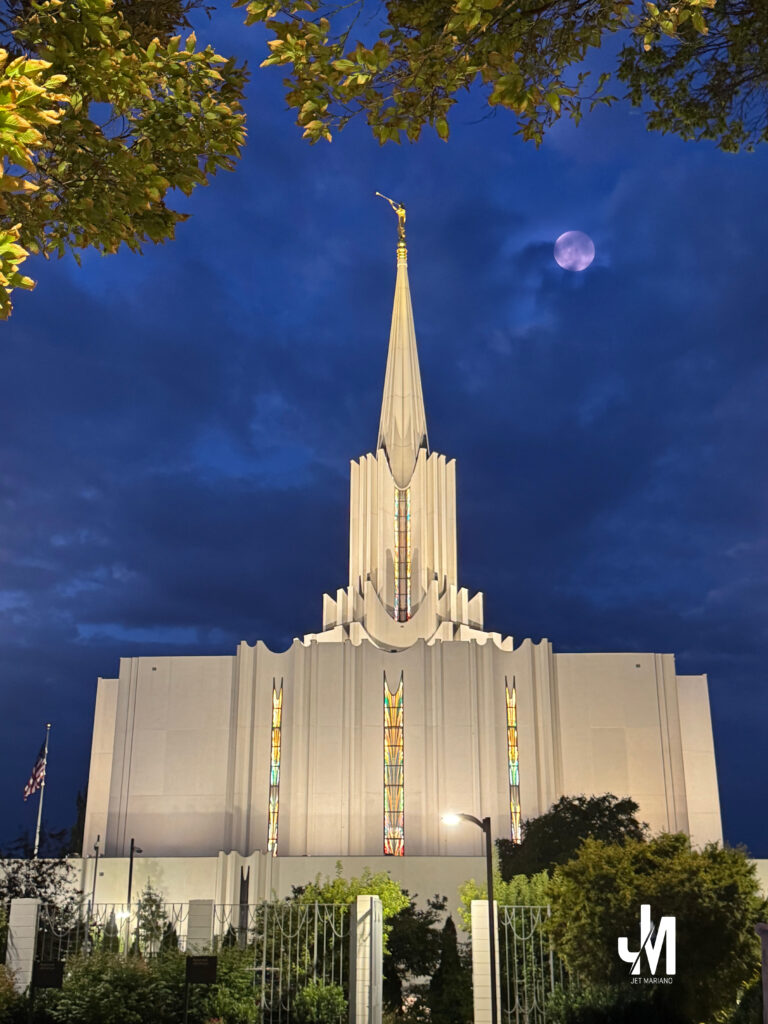
    Waxing gibbous moon peeking through stormy blue over the Jordan River Utah Temple, Friday night (9/5/25), framed by leaves and looking East South East of the sky.

    lle’s “preconditioning,” included the Power of Now reference, and linked the YouTube clip you gave me:


    Excerpt
    Desire steers destiny. Elder Neal A. Maxwell teaches that God judges “according to the desire of [our] hearts”—and helps us train those desires toward Him.


    Intro
    Maxwell reframes agency at its core: desires are the drivers. Genes, circumstances, and environments matter, but—as he reminds us—“there remains an inner zone in which we are sovereign, unless we abdicate.” In that sacred space lies our real agency.

    Eckhart Tolle explains the other side of the equation in what he calls preconditioning:

    “Mental and emotional filters: our minds are filled with ingrained narratives, beliefs, and emotional patterns that act like lenses through which we view the world.”

    (The Power of Now; also shared in his YouTube talk on preconditioning)

    Those filters shape perception, just as culture, family patterns, and past wounds bend behavior. Yet, as Maxwell insists, they cannot erase that sovereign inner zone. What we persistently desire is who we become—and what we receive.


    Straight line (what he’s saying)
    • Desire is more than preference; it’s a real longing that directs agency and outcomes.
    • God mercifully considers our desires, works, and degrees of difficulty—yet won’t force us.
    • Satan desires our misery; wrong desires make us our own victims.
    • Lukewarmness flattens the soul; righteous desires must be relentless, daily.
    Education of desire = learn truth and learn to love it; small acts create spiritual momentum.
    “Do you,” President Brigham Young asked, “think that people will obey the truth because it is true, unless they love it? No, they will not” (Journal of Discourses, 7:55).
    • Some desires must dissolve (envy, self-pity); weak righteous desires can grow strong.
    • Parents teach and model, but each soul must choose; God’s arm is stretched out still.
    • In process of time, holy desires produce holy works.
    • Preconditioning may set the stage—but the sovereign inner zone decides the play.


    Final reflection
    My outcomes track my appetites. When I aim my wants at ease or applause, I drift. When I aim them at Jesus, momentum returns. Desire is today’s steering wheel. Elder Maxwell’s reminder of the inner zone keeps me accountable: I can’t blame culture, genes, or preconditioning. They explain, but they don’t excuse. Tolle helps me name the filters that fog my lens, but Maxwell reminds me that God still waits on what I choose to desire.


    Pocket I’m keeping
    • Pray, then plan by desire: “More holiness give me” → schedule one aligned act.
    • Replace envy with intercession: bless the person I’d be tempted to compare with.
    • Feed the flame daily—scripture, sacrament, service—before screens.
    • Name one mis-aimed desire and starve it for a week.
    • Measure progress by direction and devotion, not dopamine.


    What I hear now
    If I train my want-to, God will shape my able-to. Even a spark—“I desire to believe”—is enough for Him to begin multiplying light.


    Link to the talk
    According to the Desire of [Our] Hearts” — Elder Neal A. Maxwell


    © 2012–2025 Jet Mariano. All rights reserved.
    For usage terms, please see the Legal Disclaimer.

  • Marked in Time — “Preparing to Stand on Holy Ground”

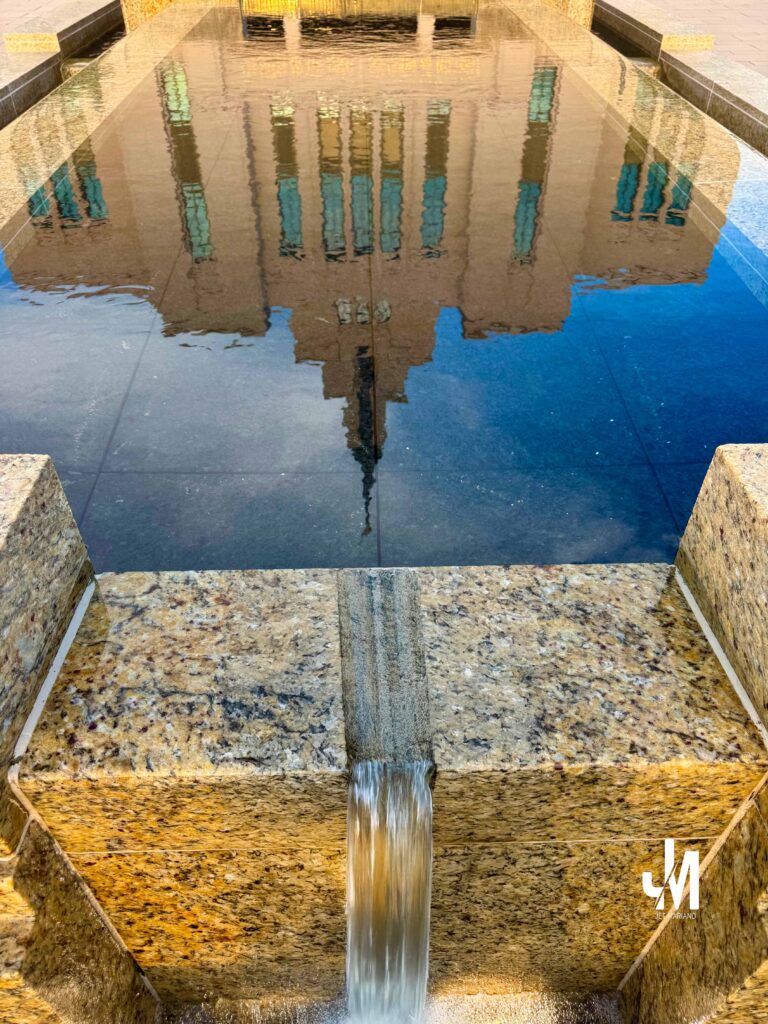
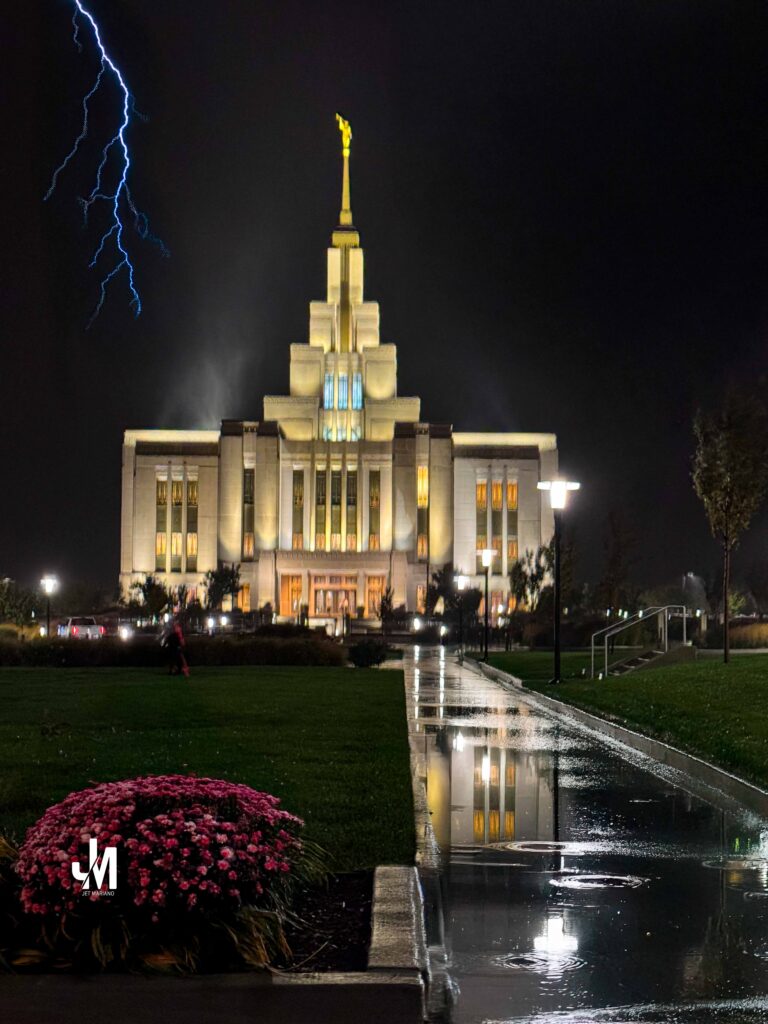
    Reflections before reverence — a quiet stream “washes the edge” as the Saratoga Springs Utah Temple rises in the pool, a reminder to lay down our “shoes” and step onto holy ground.

    Excerpt
    Moses removed his shoes; I can remove my impurities. How I’m preparing my heart to meet God—at the temple and at home.


    Intro
    “Draw not nigh hither: put off thy shoes from off thy feet, for the place whereon thou standest is holy ground” (Exodus 3:5).
    Elder Ulisses Soares: “Taking off our worldly shoes is the beginning of stepping onto holy ground and being transformed in higher and holier ways.” — “Reverence for Sacred Things,” Apr 2025


    Straight line (what he’s saying)
    • Holy spaces (temples, homes, dedicated places) call for removing impurity before we approach.
    • The Lord’s pattern repeats: printing office “holy, undefiled”; temple “mine holy house”; Missouri temple where the pure in heart shall see God—holiness is both place and people.
    • Small, intentional acts (like forgiving in the parking lot) are today’s “shoe removal.”
    • We don’t make ourselves holy; we offer our will. Christ’s Atonement does the sanctifying.
    • Holiness is practical: reverence, clean hands/heart, focus, and meekness that lets the Spirit teach.


    Final reflection
    I arrive at holy ground with dust on my soul—hurry, annoyance, stray pride. God isn’t asking for theatrics; He’s asking for shoes—the little impurities I can actually take off.


    Pocket I’m keeping
    Pause before entry (temple or prayer): breathe, confess, forgive, then go in.
    Language fast: no sarcasm or sharp words on holy days.
    Clean gatekeeping: music, media, and thoughts that fit the space I’m entering.
    Offer the will: “Lord, here are my shoes today—take hurry, take resentment.”
    Home altar: make my living room reverent before I ask for revelation.


    What I hear now
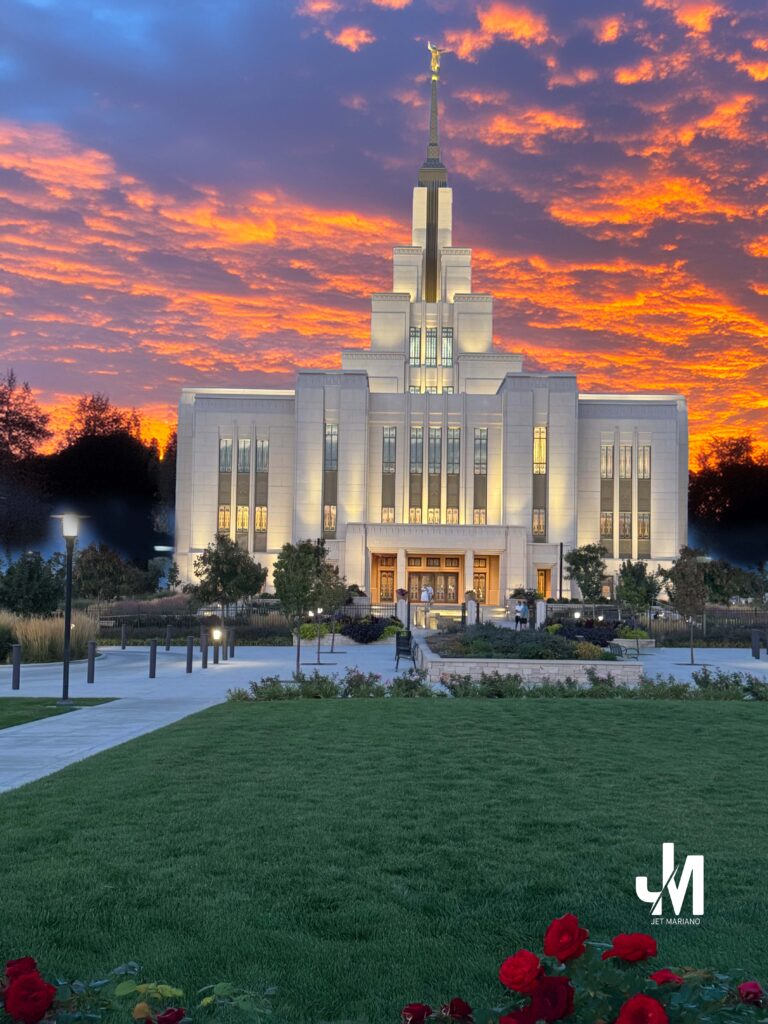
    Saratoga Springs Temple at sunset, the waxing gibbous rising—before the doors or the camera, I’ll take off the day’s dust. Then let Him make the moment holy.


    Link to the talk
    Exodus 3:5 • Elder Ulisses Soares, “Reverence for Sacred Things” (Apr 2025) • Doctrine and Covenants 94:12; 95:16; 96:2; 97:15–16 • Moroni 10:32–33 (“Yea, come unto Christ… be perfected in him… sanctified in Christ… become holy, without spot.”)

    © 2012–2025 Jet Mariano. All rights reserved.
    For usage terms, please see the Legal Disclaimer.
  • Marked In Time: “The Tugs and Pulls of the Word” – Neal A. Maxwell

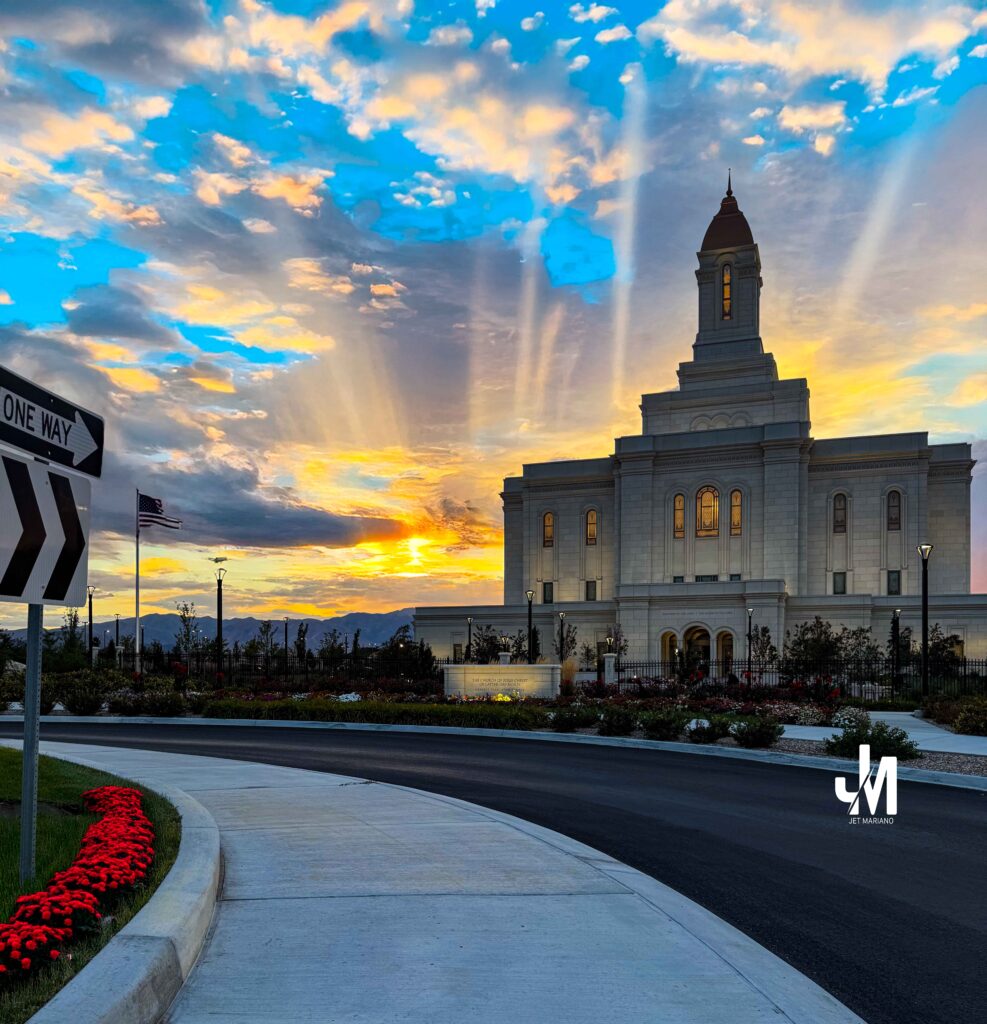
    When the sky sings, even the moon waits its turn. Saratoga Springs Temple at dusk.

    Excerpt
    Many aren’t in transgression—they’re in diversion. The world tugs; disciples choose differently. My notes and how I’ll apply them this week.


    Intro
    Elder Neal A. Maxwell warns that diversion wastes “the days of [our] probation.” God’s plan isn’t pleasure—it’s happiness. The difference is discipleship.


    Straight line (what he’s saying)
    • The lures are old; the amplification is new—tech, media, hype.
    • Diversion builds “personalized prisons”: “of whom a man is overcome…”
    • Mortal honors are transient—“they have their reward.”
    • Remedies: Holy Ghost, family, worship/prayer/scripture, wise friends, Joseph-in-Egypt reflex (flee).
    • “Far country” is measured by fidelity, not miles—return is possible; resilience is covenant DNA.
    • God prizes who we become more than rank—our real résumé is ourselves.
    • See things as they really are/will be; give glory to God.


    Final reflection
    My risk isn’t rebellion; it’s drift—scrolls, refreshes, small hungers for applause. Diversion is bondage with nicer branding.


    Pocket I’m keeping
    • Access the Spirit first (scripture, prayer, sacrament), then apps.
    • Family first—real talk over parallel scrolling.
    • Choose friends/inputs that aim at Zion.
    • Flee fast; repent resiliently.
    • Measure worth by being (meek, patient, submissive), not spotlight.


    What I hear now
    Say “stand aside” to the world. Post the image, close the tab, sit with gratitude. The moon keeps rising; I don’t need every notification to matter. Souls > stars > stats.


    Link to the talk
    “The Tugs and Pulls of the World” — Neal A. Maxwell.

    © 2012–2025 Jet Mariano. All rights reserved.
    For usage terms, please see the Legal Disclaimer.
  • Marked in Time — “Consecrate Thy Performance” (Neal A. Maxwell)

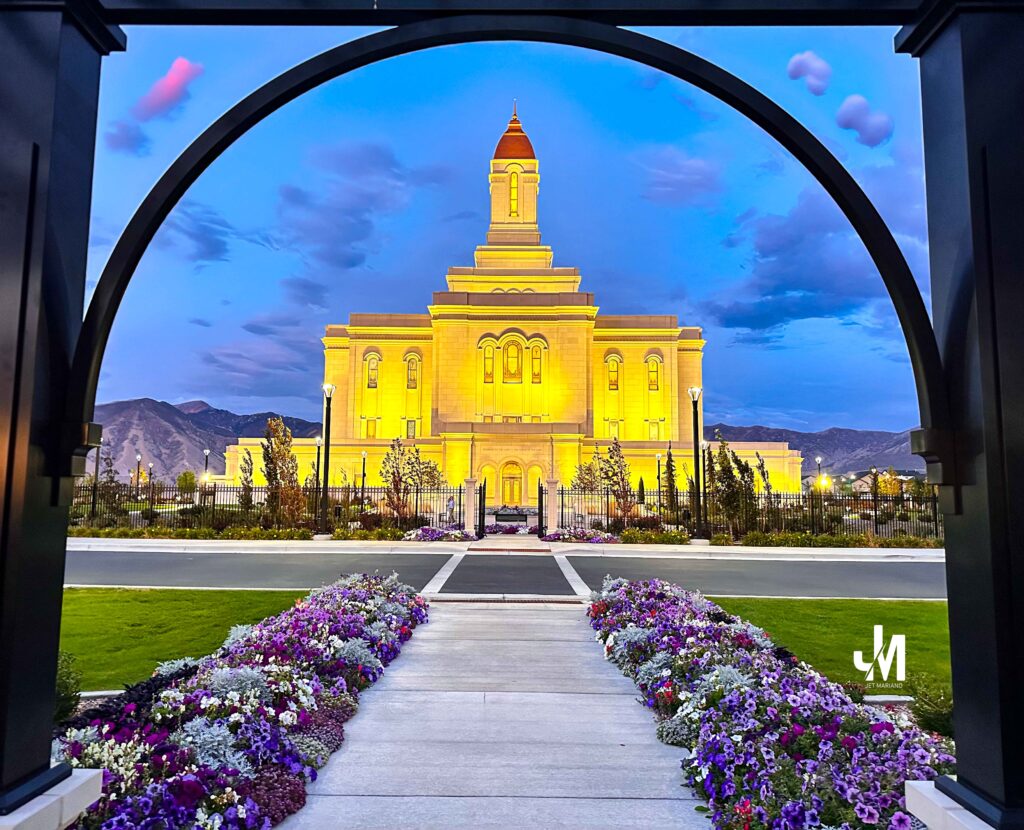
    “Heart, soul, and mind.” When we offer all, He consecrates our performanc. Saratoga Springs Temple · waxing gibbous moon

    Excerpt
    Consecration isn’t giving things as much as yielding self. When heart, soul, and mind align with God, He consecrates our efforts for lasting good.


    Intro
    Elder Neal A. Maxwell teaches that ultimate consecration is our will swallowed up in the Father’s. Step by step, His grace is sufficient, and our performances are consecrated “for the lasting welfare of [our] souls.”


    Straight line (what he’s saying)
    • Consecration = yielding will to the Father—one stepping-stone at a time.
    • We often “keep back part” (skills, status, habits); partial surrender still diverts.
    • Worth is fixed; assignments change—He must increase, we decrease.
    • Good things can crowd out the first commandment; beware lesser gods.
    • Acknowledge His hand; avoid the “my power, my hand” trap.
    • Discipleship polishes us (rough stone rolling): contact, friction, meekness.
    • Surrendering the mind is victory; God teaches higher ways.
    • Jesus is the pattern—never lost focus; Gethsemane above all other miracles.


    Final reflection
    My hardest “part” isn’t money—it’s control. God wants a consecrated person more than a perfect portfolio. Yielded work beats impressive work.


    Pocket I’m keeping
    • Ask daily: “Lord, is it this?”—take the next small stone.
    • Worship before work; name His hand first.
    • Hold assignments lightly; hold Jesus tightly.
    • Trade applause for alignment.
    • Measure by love, patience, meekness.


    What I hear now
    I’ll hand Him today’s schedule, camera, and keyboard—and let Him aim them. Consecration is hourly trust; even detours can be consecrated.


    Link to the talk
    “Consecrate Thy Performance” — Neal A. Maxwell.

    © 2012–2025 Jet Mariano. All rights reserved.
    For usage terms, please see the Legal Disclaimer.
  • Marked in Time — “If Thou Endure Well” (Neal A. Maxwell)

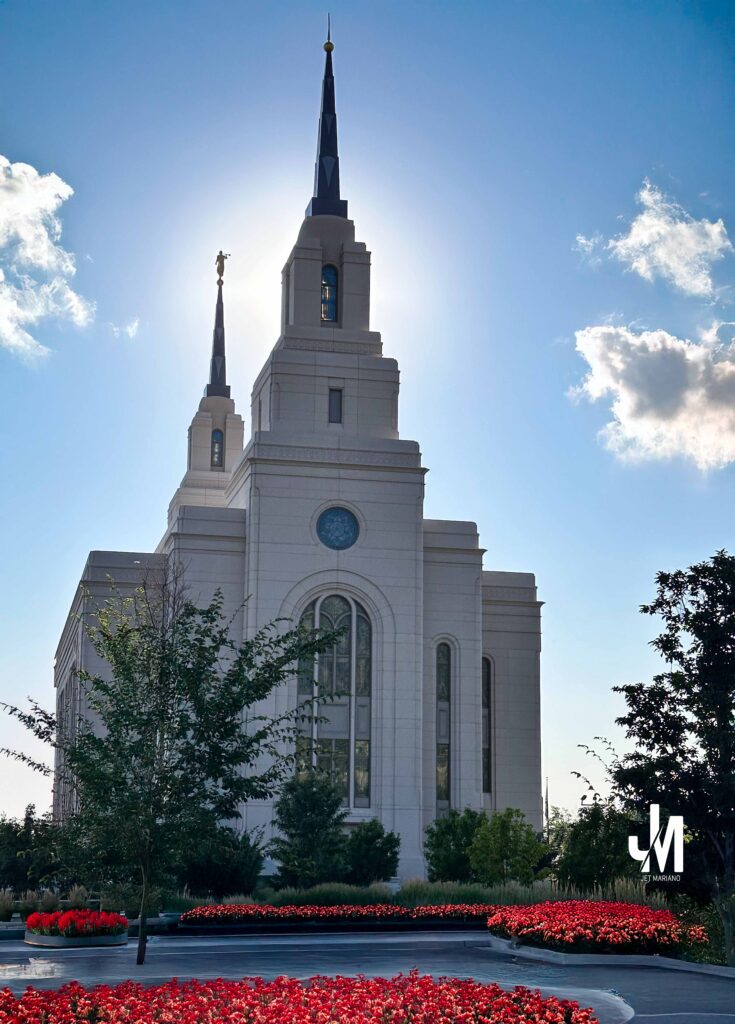
    Saratoga Springs Utah Temple with a rising waxing gibbous moon.

    Excerpt
    None of us is immune from trial. Elder Neal A. Maxwell teaches that if we endure well, today’s struggles are shaped into tomorrow’s blessings. Here’s my mark-in-time takeaway and how I’m applying it.


    Intro
    I listened again to Elder Neal A. Maxwell’s devotional “If Thou Endure Well.” The sentence that stayed with me: None of us can or will be immune from the trials of life. However, if we learn to endure our struggles well, they will be turned into blessings in eternity. That’s both bracing and kind—God doesn’t waste pain when we place it in His hands.


    Straight line (what he’s saying)
    • Mortality guarantees opposition; surprise is optional.
    • Enduring well ≠ grim hanging-on; it’s faithful submission, patience, and continuing to choose light.
    • Timing is part of God’s tutoring—deliverance sometimes tarries so discipleship can deepen.
    • Gratitude and meekness change how trials shape us. They don’t shorten the storm, but they change the sailor.
    • The Lord consecrates affliction to our gain when we refuse cynicism and keep covenant routines (scripture, prayer, sacrament, service).


    Final reflection
    Enduring well is a decision repeated—quietly—over and over. It’s choosing not to narrate my trial as abandonment, but as apprenticeship. It’s trusting that God is doing more with my life than I can see from the shoreline.


    Pocket I’m keeping
    • Expect opposition; practice patience on purpose.
    • Pair prayers with small, durable acts (keep the next covenant, serve the next person, take the next right step).
    • Measure “progress” by faithfulness, not by ease.


    What I hear now
    Tonight’s images—reflections, a quiet bench, a waxing gibbous over the spire—feel like a lesson in waiting. I can’t rush the moon to its mark, but I can keep framing, steady my hands, and choose light again. If I endure well, God will finish the alignment.


    Link to the talk
    Full devotional: “If Thou Endure Well” — Neal A. Maxwell (BYU Speeches).

    © 2012–2025 Jet Mariano. All rights reserved.
    For usage terms, please see the Legal Disclaimer.
  • “In Him All Things Hold Together” Elder Neal A Maxwell

    Syracuse Utah Temple at blue hour beneath a setting first-quarter moon. I lingered long; the nudge lingered longer. In Him, the night—and I—held together.

    Intro
    I lingered at the Syracuse Utah Temple until the first-quarter moon slid above the spire and the stars came on. The nudge I felt there was the longest I’ve ever carried from any temple—it stayed even while I was shooting. Elder Neal A. Maxwell’s cadence kept pacing me:

    In Christ all things hold together.” (Colossians 1:17)

    And he widened the frame of my night with this:

    I wish to talk about your unfinished journey. It is the journey of journeys… The trek awaits—whether one is rich or poor… married or single, a prodigal or an ever faithful. Compared to this journey, all other treks are but a brief walk in a mortal park or are merely time on a telestial treadmill.” —Elder Neal A. Maxwell

    The temple path made that “journey of journeys” feel less abstract and more immediate—boots on stone, heart in hand.


    The straight line
    Perishable skills expire; portable virtues don’t. The Lord is shaping “men and women of Christ”—meek, patient, full of love (Mosiah 3:19). When life frays, covenants are the stitching; Christ is the seam that actually holds me together.


    Final Reflection (Maxwell, in his own words)

    “These attributes are eternal and portable… Being portable, to the degree developed, they will go with us through the veil of death.”
    “Since He is risen from the grave, let us not be dead as to the things of the Spirit… In him all things hold together.”

    Standing beside the flower bed and the pale stone, I felt why: if I let Him order my heart, He will also order my steps.


    Another line the night underlined
    Elder Maxwell ties the sky to our discipleship:

    “At Christmastime we celebrate a special star… placed in its precise orbit long before it shone so precisely… ‘All things must come to pass in their time’ (D&C 64:32). His overseeing precision pertains not only to astrophysical orbits but to human orbits as well… our obligation to shine as lights within our own orbits.” —Elder Neal A. Maxwell (see Philippians 2:15)

    Insight: The moon over Syracuse wasn’t an accident; neither is where God has set me. If I stay in my covenant orbit—quiet, steady, on time—He’ll handle the timing and the alignment.


    What I hear now

    • Let Christ carry what’s flying apart. Pray first: “Hold this together in Thee.”
    • Choose portable over perishable. Practice a trait before a technique.
    • Shine in your current orbit. Steward the people and places already set around you; heaven runs on precision and timing.
    • Serve quietly. Authority of example > argument.
    • Take the yoke & learn (Matt. 11:29). Small obediences teach His large qualities.
    • Return, then refine. Revisit the same place (and person) until the light matches the message—the nudge at Syracuse taught me that.

    © 2012–2025 Jet Mariano. All rights reserved.
    For usage terms, please see the Legal Disclaimer.
  • “I Love To See The Temple”

    Jordan River Utah Temple — filmed today around 3:15 pm on the way home from work. Summer birds, soft wind, and a steady spire through the trees… “a place of love and beauty.”

    Intro
    On the way home I pulled over where the Jordan River Temple rises above the trees and filmed a slow, quiet pass. The line kept looping: “a place of love and beauty.” With the temple in view, “I’ll prepare myself…” didn’t sound like childhood someday—it sounded like a choice for today.


    Song
    I Love to See the Temple — Janice Kapp Perry

    I love to see the temple;
    I’m going there someday
    to feel the Holy Spirit,
    to listen and to pray.
    For the temple is a house of God—
    a place of love and beauty.
    I’ll prepare myself while I am young;
    this is my sacred duty.

    I love to see the temple;
    I’ll go inside someday.
    I’ll covenant with my Father;
    I’ll promise to obey.
    For the temple is a holy place
    where we are sealed together.
    As a child of God, I’ve learned this truth:
    a family is forever.


    Final Reflection
    This children’s hymn grows up with us. “I’ll go inside someday. I’ll cov’nant with my Father; I’ll promise to obey.” The melody is simple; the promises are not. Preparation is worship. Obedience is love in motion. And “As a child of God, I’ve learned this truth: A fam’ly is forever” is more than a lyric—it’s a covenant Christ makes possible in His house.


    What I hear now

    • Prepare beats postpone. If it’s “my sacred duty,” act today.
    • Covenants quietly reorder life.I’ll promise to obey” changes calendars and priorities.
    • Keep the temple in frame. Let “a place of love and beauty” shape how I speak, serve, and schedule.
    • Family is the point. Live so “a fam’ly is forever” feels true at home, not just in song.

    © 2012–2025 Jet Mariano. All rights reserved.
    For usage terms, please see the Legal Disclaimer.

  • Free to Choose

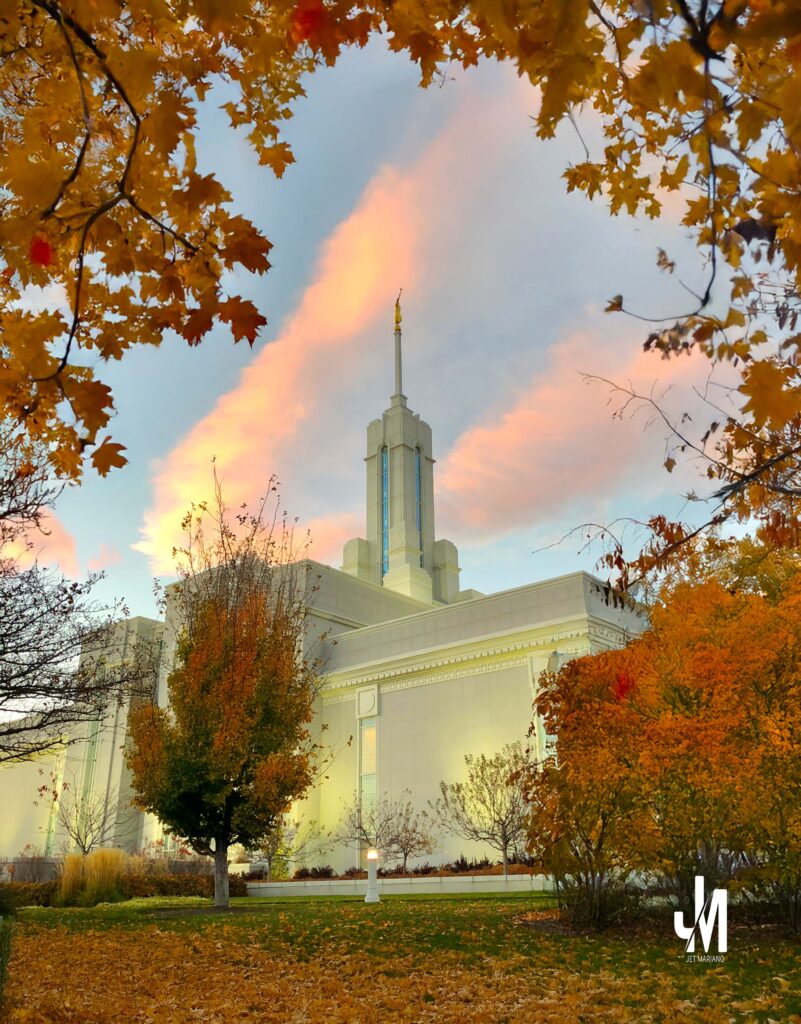
    Mount Timpanogos Utah Temple — double rainbow before the storm.

    Intro
    On the drive to my 7:30 pm proxy endowment, I played the Seminary song “Free to Choose” and felt the nudge to write. The song isn’t about doing whatever I want; it’s about turning agency toward the light—again and again. When it says:

    So I choose freedom,
    and there I learn to walk within the light…
    what leads me to free to choose again—
    and again…”

    that’s discipleship: choices that keep future choices open. And when it warns,

    “If I refuse… don’t be confused;
    …can slip and fall—
    got to stay free to choose,”

    it’s honest about missteps. Freedom shrinks when I’m captured by habits, pride, anger, or appetite; it grows when I repent and realign with Jesus Christ. That’s why the temple fits this song so well.


    Song: Free to Choose (Seminary album, 1987)

    I’m free to choose,
    to win or lose,
    no matter who
    comes and tries to turn my head around—
    and I’ll be fine.

    I’m in control;
    I’m free to choose,
    I’m free to choose.

    I’ve heard the news
    that I can choose
    the song I sing and what I want to say—
    what I got tied.

    I will set my goals,
    ’cause I’m free to choose.

    So I choose freedom,
    and there I learn to walk within the light.
    He said I’ll choose
    what leads me to free to choose again—
    and again—so when I choose,

    If I refuse,
    don’t be confused;
    just understand that I can cross the line,
    can slip and fall—
    got to stay free to choose.

    Choose what I will be;
    I am free to choose.

    So I choose freedom—
    I am free to choose.


    How the song teaches agency (my takeaway)
    “I will set my goals”—Agency is deliberate, not drift.
    “Walk within the light”—Freedom is not rebellion; it’s alignment.
    “Choose again—and again”—Agency is renewed daily on the covenant path.
    “If I refuse… can slip and fall”—Repentance restores freedom; sin constricts it.
    “Got to stay free to choose”—Guard the heart from anything that addicts, divides, or dulls the Spirit.


    Reinforced by Elder Neal A. Maxwell
    “[God] wants us to have joy. We cannot do that unless we are free to choose. But neither can we have that joy unless we are willing to be spiritually submissive day in, day out, and unless we exercise that grand and glorious freedom to choose in which people truly matter more than stars.”
    — Elder Neal A. Maxwell, “Free to Choose,” BYU Devotional, March 16, 2004

    “So, brothers and sisters, here we are in Eden, and Eden has become Babylon… Even if we leave Babylon, some of us endeavor to keep a second residence there… Babylon does not give exit permits gladly… No wonder Jesus’s marvelous invitation to leave Babylon’s slums and join Him in the stunning spiritual highlands goes largely unheeded.”
    — Elder Neal A. Maxwell, “A Wonderful Flood of Light,” BYU Devotional, March 26, 1989


    Final reflection
    Agency is God’s gift; joy is the fruit of using it His way. The world shouts for weekend commutes back to Babylon. The temple whispers, “Choose light again.” Tonight I choose freedom by choosing Christ—so I can keep choosing tomorrow.


    © 2012–2025 Jet Mariano. All rights reserved.
    For usage terms, please see the Legal Disclaimer.

  • That’s You and That’s Me

    Two open hands—one giving, one receiving. Some needs are plain to see; others we carry quietly. That’s you and that’s me.

    Intro
    Some needs are easy to spot—a hand outstretched at a corner, a face weeping in public. Others ride quietly under the surface: worry that doesn’t show, loneliness with a practiced smile, a “load” carried where no one can see. This week I kept thinking about both kinds—the visible and the hidden—and how the Lord is the One who sees them all. The photo below is the obvious kind. But I’m learning to look for the quiet kind too, including in my own life. “No one makes it all alone… we all rely on help from Home.”


    That’s You and That’s Me — Seminary album Free to Choose (1987)

    Some reach out with their hands,
    Some reach out with their eyes,
    And most try hard not to let it show,
    But it’s a thin disguise.

    Some needs can be hidden;
    Some are plain to see.
    No one makes it all alone—
    We all rely on help from Home
    To get us back to where we want to be.

    And that’s you and that’s me,
    Living off His goodness
    And learning how to be.

    And that’s you and that’s me;
    I want to be ever you—like He’s ever you and me.

    Sometimes I can’t hide it;
    Sometimes I just want to cry:
    “I need someone to share my load,”
    When no one’s on my side.

    That’s when I remember:
    You have days like these.
    No one makes it alone—
    We all rely on help from Home
    To get us back to where we want to be.

    And that’s you and that’s me,
    Living off His goodness
    And learning how to be.
    That’s you and that’s me—
    I want to be ever you, like He’s ever you and me;
    And He gives so freely and shows us how to care.

    And that’s you and that’s me,
    Living off His goodness
    And learning how to be.


    Final reflection
    The song names what discipleship looks like in real time: noticing. Some needs are loud; some are quiet. Christ meets both, and He invites us to do the same—“living of His goodness and learning how to be.” Sometimes that means coins in a palm. Sometimes it’s a steady text, a prayer in someone’s name, a ride, a listening ear, or a temple visit offered for a friend. And when the load is ours, we remember we also “rely on help from Home.” Seen or unseen, He sees—and He sends us to see.


    © 2012–2025 Jet Mariano. All rights reserved.
    For usage terms, please see the Legal Disclaimer.
  • I’d Like to Feel This Way Again

    Taylorsville Temple, pre-sunrise—benches waiting, light rising. Day 5: “I’d like to feel this way again.”

    Intro
    Before sunrise, the temple sits like a lighthouse on the ridge, and the road in feels like a small uphill each time. Taylorsville at daybreak, five mornings straight—the air cool, the world unhurried—and something true brushed past me again and again, enough to bring tears and resolve. It felt like the quiet lift this Seminary song points to—something real, not just a mood—nudging me higher. I want to live so that what I felt in those minutes before dawn can come back tomorrow, and again after that. These images (and this song) are my reminder to keep choosing the places where that feeling can find me.


    I’d Like to Feel This Way Again
    Like the snowflakes that fall on the ground,
    words in my heart sometimes don’t make a sound.

    Like spring raindrops that fall from the sky,
    tears can be joyful, escaping my eyes.

    I’d like to feel this way again;
    I’d like to feel this way tomorrow.

    Was I just lonely—did I need a friend?
    Was it convenience, a means to an end?
    Still, something touched me—I feel it, I do;

    some kind of message is trying to get through.

    I’d like to feel this way again;
    I’d like to feel this way tomorrow.

    Deep in there, words just burn within me;
    such new emotions I have known.
    Deepen their teachings; lift me higher—
    higher than all the blessings I have known.

    Sometimes the wind tries to turn me around—
    “Give up the climb, it’s so nice to come down.”
    Somehow this feeling keeps pushing me high;

    tells me it’s treasure I stumbled upon.

    I’d like to feel this way again;
    I’d like to feel this way tomorrow.
    I’d like to feel this way again;
    I’d like to feel this way forever.


    Source note
    “I’d Like to Feel This Way Again,” Seminary album Free to Choose (1987). Words & music: Ron Simpson.


    Final reflection
    For me, this lyric is about a real but delicate moment with God—quiet enough that words stumble, strong enough that tears come. The chorus isn’t chasing emotion; it’s choosing a life that welcomes the Spirit back. The questions (“Was I just lonely?”) are honest self-checks, but the fire in the words—how truth “burns within”—confirms it’s more than mood. The “wind” that tells me to turn around is the ordinary pull of ease and hurry; the climb is discipleship. And the push “higher” is grace, turning a chance moment into a new pattern. That’s why I keep coming back before sunrise. The temple on the horizon, the stillness, the scripture that settles, the small covenants kept—these are the places where that feeling returns, tomorrow, and—by His mercy—again and again.


    © 2012–2025 Jet Mariano. All rights reserved.
    For usage terms, please see the Legal Disclaimer.
  • Hot-cloning a Running Windows 11 VM in vSphere (Forensic, Redacted Runbook)

    This guide covers hot cloning a Windows 11 VM in vSphere with PowerCLI

    Goal. Create a new Windows 11 jump VM (WIN11-Jumpbox-6) by cloning a running source (WIN11-Jumpbox-2) in vCenter—without interrupting the source—and bring the clone up with a fresh identity (Sysprep), correct name, and domain join.

    Applies to. vCenter/vSphere with vSAN (or any datastore), Windows 11 guest, PowerCLI.

    Redaction note: All names below are placeholders. Replace the ALL_CAPS parts with local values.
    vCenter: VCENTER.FQDN
    Source VM: WIN11-Jumpbox-2
    New VM: WIN11-Jumpbox-6
    Target ESXi host: esxi-03.example.local
    Datastore: vsanDatastore
    Domain (optional): corp.local
    Join account: corp.local\joinaccount


    Constraints & safety

    • No source outage. Clone while the source is powered on (vCenter snapshots and clones from it).
    • Fresh identity. Use guest customization (Sysprep) so the clone receives a new SID and hostname.
    • Parameter sets. When cloning with -VM, avoid -NetworkName/-NumCPU/-MemoryGB in the same New-VM call; set those after the clone boots.
    • VMware Tools must be running in the guest for customization to apply.

    Pre-flight checks (30–60 seconds)

    # Connect
    Connect-VIServer VCENTER.FQDN
    
    # Capacity snapshot (optional)
    Get-VMHost | Select Name,
     @{N="CPU MHz Used";E={$_.CpuUsageMhz}},
     @{N="CPU MHz Total";E={$_.CpuTotalMhz}},
     @{N="Mem GB Used";E={[math]::Round($_.MemoryUsageGB,2)}},
     @{N="Mem GB Total";E={[math]::Round($_.MemoryTotalGB,2)}}
    
    Get-Datastore -Name "vsanDatastore" | Select Name,Type,State,
     @{N="CapacityGB";E={[math]::Round($_.CapacityGB,2)}},
     @{N="FreeGB";E={[math]::Round($_.FreeSpaceGB,2)}},
     @{N="Free%";E={[math]::Round(($_.FreeSpaceGB/$_.CapacityGB)*100,2)}}
    

    Rule of thumb: keep vSAN Free% ≥ 20–25% to avoid slack-space pressure during resync/rebuild.


    Method A — Clone with one-time guest customization (recommended)

    This path Syspreps the clone, renames it, and (optionally) joins the domain. It also avoids the PowerShell reserved variable $host (use $targetHost).

    # -------- Vars --------
    $srcName        = "WIN11-Jumpbox-2"
    $newName        = "WIN11-Jumpbox-6"
    $targetHostName = "esxi-03.example.local"
    $dsName         = "vsanDatastore"
    $domainFqdn     = "corp.local"                 # leave blank if no domain join
    $joinUser       = "corp.local\joinaccount"     # account allowed to join computers
    
    # -------- Objects --------
    $src        = Get-VM -Name $srcName -ErrorAction Stop
    $targetHost = Get-VMHost -Name $targetHostName -ErrorAction Stop
    $ds         = Get-Datastore -Name $dsName -ErrorAction Stop
    $pg         = ($src | Get-NetworkAdapter | Select-Object -First 1).NetworkName
    
    # -------- One-time Windows customization spec (NonPersistent) --------
    $specName = "TMP-Join-Redacted"
    $existing = Get-OSCustomizationSpec -Name $specName -ErrorAction SilentlyContinue
    if ($existing) { Remove-OSCustomizationSpec -OSCustomizationSpec $existing -Confirm:$false }
    
    # If domain join is desired
    $spec = if ($domainFqdn) {
      $joinCred = Get-Credential -UserName $joinUser -Message "Password for $joinUser"
      New-OSCustomizationSpec -Name $specName -Type NonPersistent `
        -OSType Windows -NamingScheme VMName -FullName "IT" -OrgName "Redacted" `
        -Domain $domainFqdn -DomainCredentials $joinCred
    }
    else {
      New-OSCustomizationSpec -Name $specName -Type NonPersistent `
        -OSType Windows -NamingScheme VMName -FullName "IT" -OrgName "Redacted"
    }
    
    # NIC(s) -> DHCP (switch to static if needed)
    Get-OSCustomizationNicMapping -OSCustomizationSpec $spec |
      ForEach-Object { Set-OSCustomizationNicMapping -OSCustomizationNicMapping $_ -IpMode UseDhcp | Out-Null }
    
    # -------- Clone (do NOT pass -NetworkName/-NumCPU/-MemoryGB here) --------
    $newVM = New-VM -Name $newName -VM $src -VMHost $targetHost -Datastore $ds -OSCustomizationSpec $spec
    
    Start-VM $newVM
    $newVM | Wait-Tools -TimeoutSeconds 900
    
    # -------- Post-boot tuning --------
    Set-VM -VM $newVM -NumCPU 4 -MemoryGB 8 -Confirm:$false
    Get-NetworkAdapter -VM $newVM | Set-NetworkAdapter -NetworkName $pg -Connected:$true -Confirm:$false
    

    Why this works (and common pitfalls)

    • Reserved variable. Cannot overwrite variable Host… appears when assigning to $host (PowerShell reserved). Use $targetHost.
    • Missing spec. Get-OSCustomizationSpec … ObjectNotFound indicates the named spec didn’t exist. The runbook creates a NonPersistent spec on the fly.
    • Ambiguous parameter set. New-VM : Parameter set cannot be resolved… occurs when mixing clone parameter -VM with -NetworkName/-NumCPU/-MemoryGB. Clone first, then adjust CPU/RAM/NIC after boot.

    Method B — Fallback: clone now, join inside the guest

    If guest customization is blocked (e.g., Tools not running, limited join rights), clone without customization, then rename/join inside the guest.

    # Clone without customization
    $src        = Get-VM -Name "WIN11-Jumpbox-2"
    $targetHost = Get-VMHost -Name "esxi-03.example.local"
    $ds         = Get-Datastore -Name "vsanDatastore"
    $newName    = "WIN11-Jumpbox-6"
    
    $newVM = New-VM -Name $newName -VM $src -VMHost $targetHost -Datastore $ds
    Start-VM $newVM
    $newVM | Wait-Tools -TimeoutSeconds 900
    
    # Rename to match VM name (inside guest)
    $localAdminCred = Get-Credential -Message "Local Administrator on the cloned VM"
    Invoke-VMScript -VM $newVM -GuestCredential $localAdminCred -ScriptType Powershell -ScriptText `
     'Rename-Computer -NewName "WIN11-Jumpbox-6" -Force; Restart-Computer -Force'
    
    $newVM | Wait-Tools -TimeoutSeconds 900
    
    # Optional domain join (inside guest)
    $joinCred = Get-Credential -UserName "corp.local\joinaccount"
    Invoke-VMScript -VM $newVM -GuestCredential $localAdminCred -ScriptType Powershell -ScriptText `
     'Add-Computer -DomainName "corp.local" -Credential (New-Object System.Management.Automation.PSCredential("corp.local\joinaccount",(Read-Host -AsSecureString))) -Force -Restart'
    

    Verification (quick, non-invasive)

    # Where did it land? (host, datastore, portgroup)
    Get-VM -Name "WIN11-Jumpbox-6" | Select Name,PowerState,
     @{N="Host";E={$_.VMHost.Name}},
     @{N="Datastore(s)";E={($_ | Get-Datastore).Name -join ", "}},
     @{N="PortGroup";E={(Get-NetworkAdapter -VM $_ | Select -First 1).NetworkName}}
    
    # Optional: ensure VM files are on the intended datastore
    Get-VM -Name "WIN11-Jumpbox-6" | Get-HardDisk | Select Parent,Name,FileName
    

    Post-build hygiene

    • RDP enabled; restricted to an AD group.
    • Endpoint agents (AV/EDR/RMM) register as a new device (fresh identity).
    • Patching applied; baseline GPO/Intune policies targeted; backup/monitoring added.

    Forensic addendum: errors & remediation

    • Cannot overwrite variable Host…
      Cause: attempted $host = Get-VMHost … (PowerShell reserved).
      Fix: rename the variable to $targetHost.
    • Get-OSCustomizationSpec … ObjectNotFound
      Cause: referenced a non-existent customization spec.
      Fix: create a NonPersistent spec in-line.
    • New-VM … Parameter set cannot be resolved…
      Cause: mixed -VM (clone) with create-new switches.
      Fix: keep New-VM to the clone parameter set; tune CPU/RAM/NIC after boot.

    Security & privacy guardrails

    • No real hostnames, domains, IPs, or identifying screenshots in public artifacts.
    • Least-privilege join accounts or pre-staged computer objects in AD.
    • When publishing logs, hash or redact VM names and datastore paths.

    Summary

    Hot-cloning a Windows 11 VM in vSphere is reliable for a jump host when the process (1) allows vCenter to snapshot and clone a powered-on source, (2) applies Sysprep guest customization for a clean identity, and (3) keeps New-VM to a single parameter set. The runbook above is deterministic, quiet, and free of sensitive fingerprints.

    © 2012–2025 Jet Mariano. All rights reserved.
    For usage terms, please see the Legal Disclaimer.
  • I’m Able: Climbing for Light, Capturing the Moon

    After hiking over 2,000 feet to my favorite mountain ridge, I waited in silence with my 1000mm + TC 2x lens—watching the Supermoon rise in full glory. It reminded me that some things are only visible to those willing to climb.
    From this 2K-foot summit, I waited with my 1000mm lens and 2x teleconverter. The shot was worth it. My eyes soaked in the rising Supermoon, but I wanted to remember the experience forever. It took patience, precise camera settings, and above all, an ‘I’m able’ attitude that brought me the stillness I needed. Here’s the result.

    That simple phrase didn’t just motivate me. It rejuvenated me. It reminded me that every setback I’ve endured, every delay, and every heartbreak was not the end—but a test of endurance. Like Edison, like Tesla, and like countless others who stood firm when things fell apart, I now carry this quiet fire inside me.
    No matter what the odds say—I’m able.
    And that means everything.

    I’m Able
    Poem by Jet Mariano

    I’m able—not because I’ve won,
    But because I choose to rise with the sun.
    I’m able—not from praise or might,
    But by standing up when wrong feels right.

    I’m able—through the tear-stained night,
    To cradle hope and guard the light.
    I’m able—though I walk alone,
    To make the climb and call it home.

    I’ve come to realize—I don’t need titles to prove my worth. I don’t measure myself by applause or position.
    What I carry is truth. Lived truth. Quiet truth. Hard-earned truth.
    And in those silent battles when no one’s watching, I remind myself:
    I’m able.
    And that means everything.

    © 2012–2025 Jet Mariano. All rights reserved.
    For usage terms, please see the Legal Disclaimer.

  • Before the boarding call

    Gate A21, Salt Lake City Airport — Just before takeoff to my destination, one last act of service: a restored VM and an unlocked account.

    Right before boarding at Gate A21 for a flight to the Big Apple, I found myself once again doing what I do best—helping quietly behind the scenes.
    With minutes to spare, I had just unlocked a user account and ensured a critical VM was restored.
    Even in transit, purpose doesn’t clock out. Some of the best service happens when no one sees it.

    Before Takeoff

    Poem by Jet Mariano
    A final ping, a task complete,
    Between the rows of outbound seats.
    Not all flights take off with wings—
    Some soar when hearts do faithful things.

    A gate, a call, the engine’s song,
    But even then, I can’t be gone.
    For hands that serve and souls that stay,
    Are never truly far away.

    Some journeys begin long before wheels lift from the ground. On that late July afternoon, it wasn’t just about reaching a destination—it was about leaving no soul behind. Service, even from Gate A21, has a way of grounding us in purpose.

    © 2012–2025 Jet Mariano. All rights reserved.
    For usage terms, please see the Legal Disclaimer.
error: Content is protected !!