Tag: Oquirrh Mountain Temple

  • MIT8 – “Keeping the Temple Holy”

    By President Gordon B. Hinckley

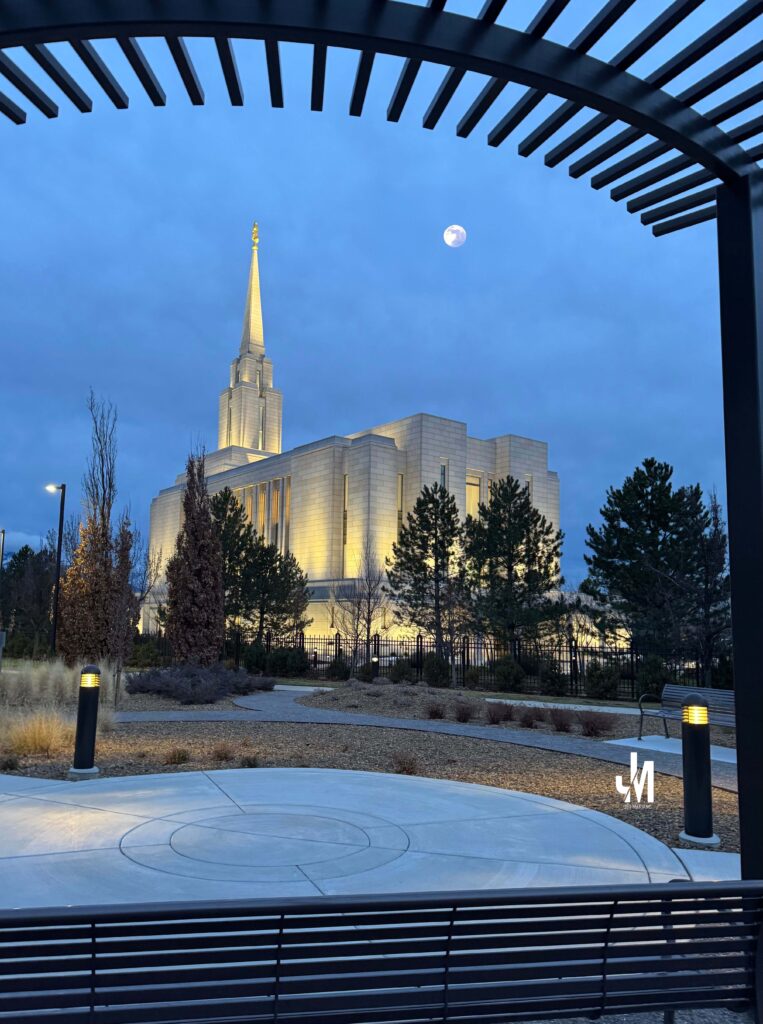
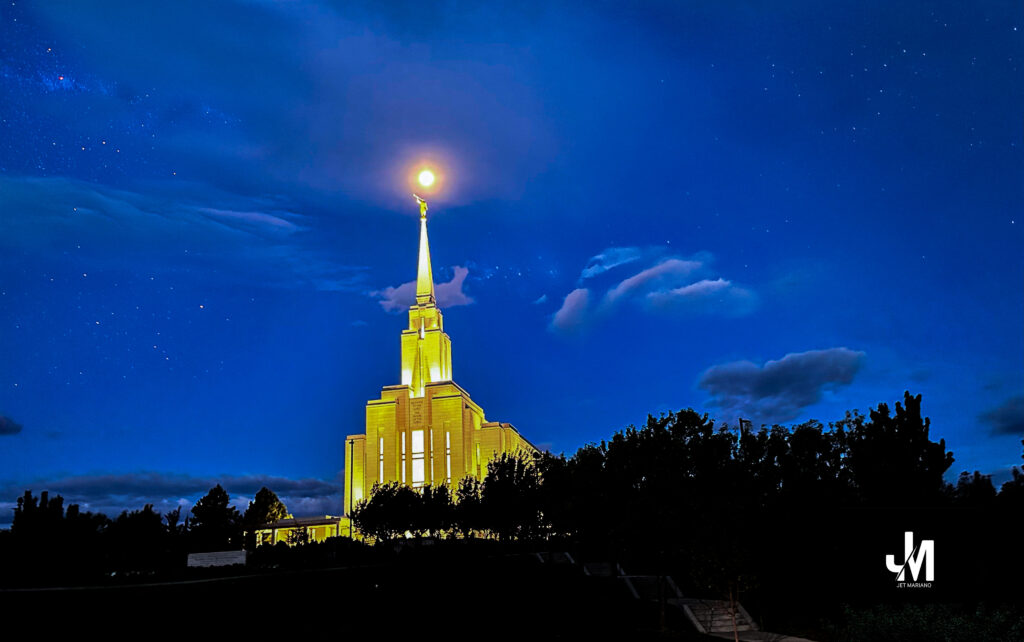
    Oquirrh Mountain Temple glowing at dusk, December 13, 2025 — a quiet reminder that holiness is preserved by preparation.

    Excerpt

    “The other card which I have is what we call a temple recommend. It represents a credit card with the Lord, making available to me many of His greatest gifts. The bank card is concerned with things of the world, the recommend with things of God.”


    Intro

    December 13, 2025. 6:00 PM. Proxy Endowment at the Oquirrh Mountain Temple.

    As the sky deepened into winter color and the temple stood illuminated against the dusk, I carried more than a recommend in my pocket. I carried a reminder. President Gordon B. Hinckley’s words returned clearly and quietly, teaching not just what a temple recommend is, but what it represents. Not a formality. Not a routine. A sacred trust.


    Notes from President Gordon B. Hinckley

    President Hinckley offered a simple but unforgettable comparison.

    He held up two cards.

    One was a bank credit card. Useful. Valuable. Governed by contracts and conditions. Issued temporarily. Revocable if misused. Owned ultimately by the bank.

    The other was a temple recommend.

    A different kind of credit entirely. A credit card with the Lord.

    Unlike financial credit, eligibility for a temple recommend is not based on wealth, status, or means. It is based on consistent personal behavior, moral worthiness, and the goodness of one’s life. It is concerned not with money, but with eternity.

    He reminded us that a recommend is not permanent. It must be renewed. Worthiness must be maintained. And sometimes, he cautioned, we rush people to the temple before they are truly prepared.

    So sacred was this matter in earlier times that Presidents of the Church personally signed every recommend themselves.


    Perspective (Direct Quotes)

    “I hold before you two credit cards. Most of you are familiar with cards such as these.”

    “The other card which I have is what we call a temple recommend. It represents a credit card with the Lord, making available to me many of His greatest gifts.”

    “Eligibility for a temple recommend is not based on financial worth. That has nothing whatever to do with it. It is based on consistent personal behavior, on the goodness of one’s life.”

    “The temple recommend which you carry, if honestly obtained, is certification of your moral worthiness.”

    “What a unique and remarkable thing is a temple recommend. It is only a piece of paper with a name and signatures, but in reality it is a certificate that says the bearer is honest, true, chaste, benevolent, virtuous.”

    “It makes one eligible for an exclusive and remarkable privilege—the privilege of entering that House which says on its wall, ‘Holiness to the Lord—the House of the Lord.’”

    “Live worthy to serve in that house. Keep it holy.”


    Practice (Today, Not Someday)

    Today I ask myself:

    Am I treating my temple recommend as a privilege or as a routine?

    Am I living in a way that quietly honors what it certifies?

    Worthiness is not proven at the interview table alone. It is practiced daily in private choices, honest dealings, clean thoughts, and deliberate restraint. Today, not later. Now, not eventually.


    Final Reflection

    Standing before the Oquirrh Mountain Temple, I was reminded that holiness is not accidental. It is cultivated. A recommend is renewed on paper every two years, but it is renewed in the soul every single day.

    The Lord does not rush holiness. He invites preparation.


    Pocket I’m Keeping

    “Entering the temple is a privilege to be earned and not a right that automatically goes with Church membership.”


    Link to the Talk

    Keeping the Temple Holy – President Gordon B. Hinckley https://www.churchofjesuschrist.org/study/general-conference/1990/04/keeping-the-temple-holy?lang=eng

    © 2012–2025 Jet Mariano. All rights reserved.
    For usage terms, please see the Legal Disclaimer.
  • MIT8 – “Let Virtue Garnish Thy Thoughts Unceasingly”

    (President Gordon B. Hinckley, April 2007 General Conference)
    Read the full talk →

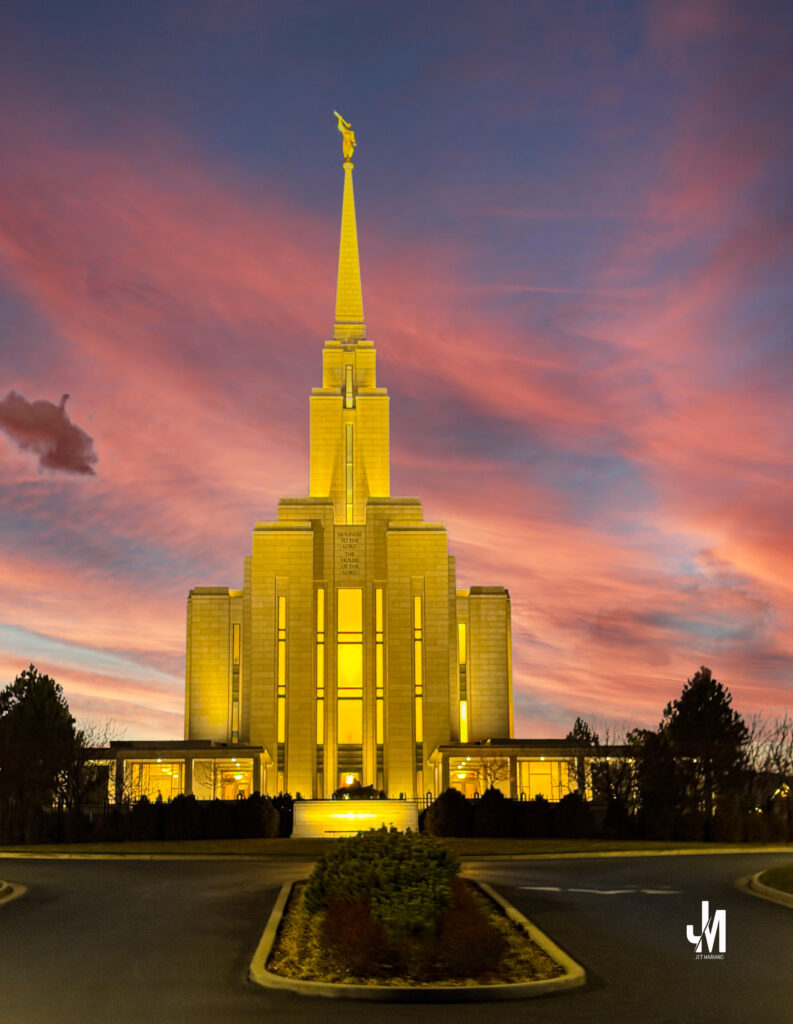
    Oquirrh Mountain Temple under the waxing gibbous moon — November, 2025. I waited patiently until light met stillness.

    Excerpt:
    President Hinckley’s counsel reaches across time: “Let virtue garnish thy thoughts unceasingly; then shall thy confidence wax strong in the presence of God.” The promise that follows is profound—“The Holy Ghost shall be thy constant companion.” These are not poetic lines; they are spiritual laws. Virtue invites confidence, and confidence invites the Spirit.


    When I listened to this talk again—over fifty times between last night and this morning—the Spirit emphasized one word: virtue.

    What is virtue?
    Virtue means to fill your mind with morally clean, righteous, and excellent thoughts until goodness becomes your reflex. To garnish is to equip or arm your thoughts, so when fear, doubt, or temptation step onto the stage of your mind, they find no audience. We control the stage. We choose which act plays. As I sat inside the Oquirrh Mountain Temple, I realized: darkness never conquers light that is armed with virtue.

    President Hinckley connected virtue to a simple, practical four-point program—a pattern that turns righteousness into rhythm:

    1. Pray.
      Prayer is the bridge to our Heavenly Father. “Speak with Him,” President Hinckley said. “Express the gratitude of your heart.” Prayer is not repetition—it is relationship. It invites light to dwell where confusion once lived.
    2. Study.
      “Resolve now that you will get all the education you can.” The glory of God is intelligence. I remember my own pursuit—working full-time in IT while carrying a full course load at LACC and DeVry. It was exhausting, but education was revelation in motion. To study is to worship with the mind.
    3. Pay Tithing.
      “Glorious is the promise of the Lord concerning those who pay their tithes.” Temporal faith builds spiritual independence. Each tithe is a declaration that God’s economy governs my heart more than the world’s uncertainty.
    4. Attend Your Meetings.
      There is no substitute for partaking of the sacrament. Sunday worship keeps us anchored when weekday storms rise. It renews the covenant that allows virtue to flow back into thought and action.

    President Hinckley’s bridge between virtue and the four-point program is clear once you live it: each step disciplines the mind and purifies the heart.
    Prayer keeps thoughts upward.
    Study keeps them expanding.
    Tithing keeps them consecrated.
    Worship keeps them renewed.
    Together, they garnish the mind with virtue—unceasingly.

    He promised, “Each of you is a creature of Divinity. You are literally a daughter or son of the Almighty. There is no limit to your potential. If you will take control of your lives, the future is filled with opportunity and gladness.”

    As I waited outside the Oquirrh Temple for the waxing gibbous moon to rise above the spire, I thought of those words. The moon appeared quietly, reflecting light it does not create—just as we reflect heaven’s virtue when we live this four-point pattern.


    Final Reflection:
    Virtue is not perfection—it is direction. It is the steady alignment of thought toward holiness until confidence replaces fear. In that light, President Hinckley’s four steps are not separate commandments; they are one continuous motion toward the presence of God.

    © 2012–2025 Jet Mariano. All rights reserved.
    For usage terms, please see the Legal Disclaimer.
  • Soul-Stretching Days: Learning to Let God Shape Me

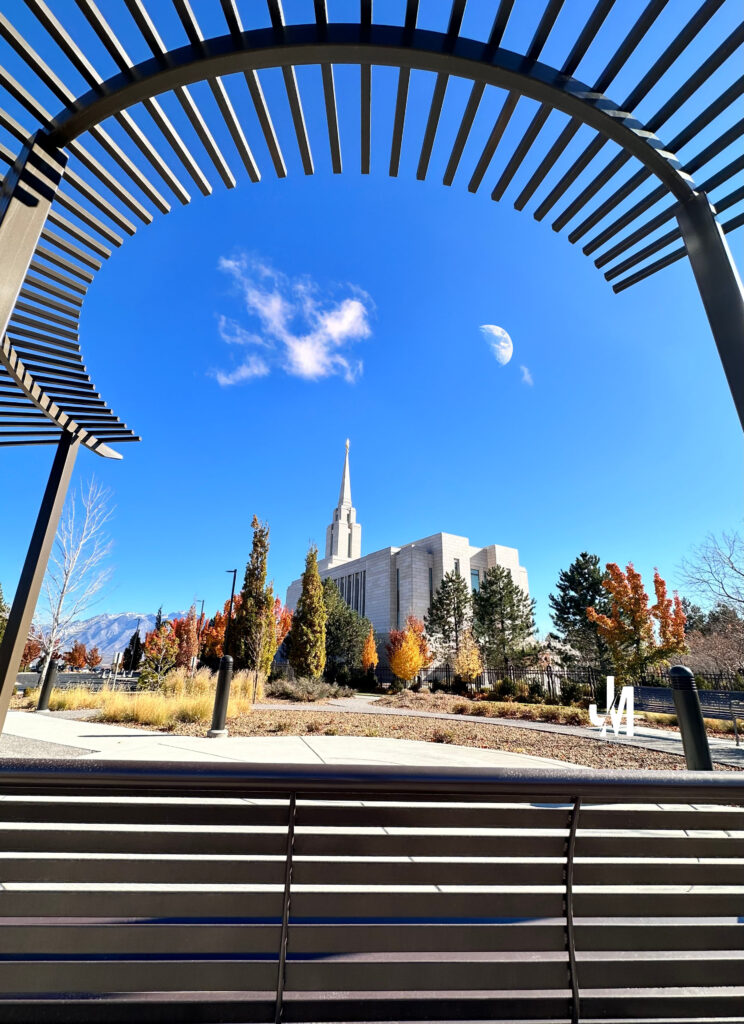
    Night setup: Nikon 14–24mm f/2.8G on tripod • Manual/Bulb • 30-second exposure • f/2.8 • ISO 2400

    Excerpt
    It struck on a day I never expected—like the day I lost my father, on my birthday. The same jolt ⚡️ twice. Bitter and sweet at once.


    Intro
    Some experiences arrive unannounced and unforgettable. The day held joy—time with loved ones, a wonderful dinner, thoughtful gifts 🎁 (I treasure shirts and cologne and keep them for years). Yet the soul-stretching overshadowed the sweetness, and the ache still lingers.


    Notes from Elder Neal A. Maxwell
    • “It takes time to prepare for eternity.”
    • God customizes our curriculum—He gives what we need, not always what we like.
    • Discipleship is daily; steady choosing matters more than dramatic moments.
    • Meekness is strength under control.
    • Cheerfully submit: trust His timing and tutoring.
    • Be grounded and settled in Christ to endure well, not just long.


    Perspective
    The lingering pain doesn’t mean I failed; it means the lesson matters. Like completed IT projects etched in memory, some days don’t fade—they shape.


    Practice (today, not someday)
    • Pause to breathe and pray before I speak.
    • Trade rumination for one small act of service.
    • Write three lines of gratitude (including a gift I’ll lovingly keep).
    • Use meek words with firm boundaries.


    Final Reflection
    Bitter because it hurt. Sweet because love showed up. Both can be true while God stretches my capacity for trust and kindness.


    Pocket I’m keeping
    “Customized by a loving Father.” Not random storms—tailored tutoring.


    What I hear now
    Be still. Do the next right thing. Let Me do the shaping.

    © 2012–2025 Jet Mariano. All rights reserved.
    For usage terms, please see the Legal Disclaimer.
  • Marked in Time Sep 9, 2025 – Repent of Our Selfishness

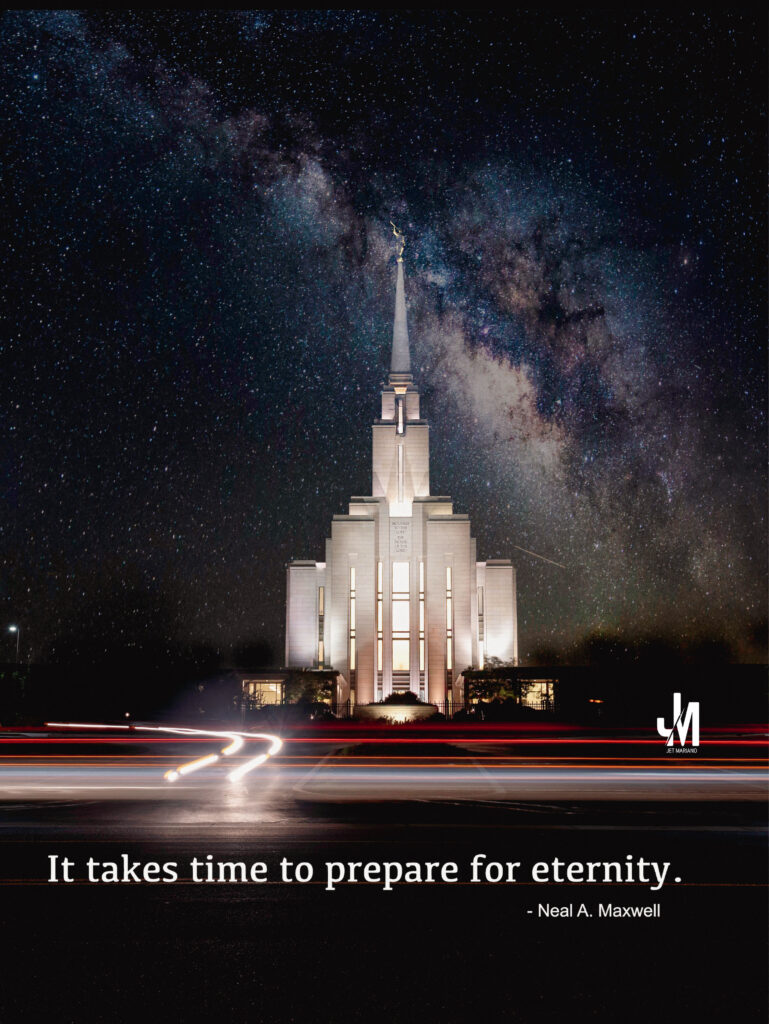
    Waning gibbous, waiting: I timed the moon to rest behind the Angel Moroni atop the Oquirrh Mountain Temple—quiet light on a higher call.

    Excerpt
    Selfishness is not just a flaw—it’s self-destruction in slow motion. Elder Neal A. Maxwell teaches that meekness is the real cure, for it doesn’t just mask selfishness but dissolves it.

    Intro
    Joseph Smith urged that selfishness be “not only buried, but annihilated.” Elder Maxwell builds on that: selfishness shrinks the soul, corrodes society, and detonates commandments. Like Copernicus reminding the world it wasn’t the center of the universe, we too must learn—we are not the center. Meekness and unselfish discipleship are the only antidotes.


    Straight line (what he’s saying)
    • Selfishness = self-destruction in slow motion. It narrows life until others no longer matter.
    • Appetite and ego can never fill emptiness; zero multiplied by anything is still zero.
    • Selfishness masks itself as swagger but is as provincial as goldfish in a bowl.
    • Joseph Smith: selfish feelings must be annihilated, not moderated.
    • Common forms: puffing credit, resenting others’ success, withholding kindness, rudeness, and abuse.
    • Cultural consequence: when selfishness spreads, societies decline—without mercy, without love, past feeling.
    • Selfishness detonates the Ten Commandments: it fuels envy, adultery, dishonesty, even murder.
    • Cain’s “I am free” after slaying Abel = ultimate selfish blindness.
    • Today: people strain at gnats (small issues) while swallowing camels (grave sins like abortion).
    • Followers share accountability with leaders in cultural decline; excuses won’t save.
    • True freedom comes from unselfishness—serving, forgiving, and lifting others.
    • Christ Himself is the supreme contrast: He did not look out for “number one.”


    Final reflection
    Selfishness corrodes both heart and culture. The cure is meekness—choosing to notice, to yield, to bless. When I dissolve selfish wants, space opens for Christlike love. The world says “look out for number one”; Jesus says, “lose yourself and you’ll find life.”


    Pocket I’m keeping
    • Before big actions: quietly ask, “Whose needs am I meeting?”
    • Practice daily meekness: count to 10 before speaking, let the Spirit filter words.
    • Replace envy with gratitude; bless the success of others.
    • Sow unselfishness in family life—ordinary duties cultivate extraordinary love.
    • Remember: selfishness shrinks, meekness expands.


    What I hear now
    Unselfishness frees me under a “freer sky,” as Chesterton said. Meekness is not weakness—it’s strength without selfishness. When I choose it, selfishness dissolves and discipleship deepens.


    Link to the talk
    “Repent of [Our] Selfishness” — Elder Neal A. Maxwell

    © 2012–2025 Jet Mariano. All rights reserved.
    For usage terms, please see the Legal Disclaimer.
error: Content is protected !!