
Tag: service

  • MIT8 – “One Heart and One Mind”

    This photo was taken while hiking the Herriman Mountains. I walked the trail back and forth, up and down, creating multiple footsteps in the snow to simulate the idea behind this reflection — many steps, one direction. Unity is often built through repeated effort, not a single moment.

    Excerpt

    Zion is not built by sameness. It is built when people choose unity while carrying different loads.


    Intro

    Over the years, I’ve worked in environments where success depended on alignment more than talent. In IT, in security, and even in physical training, progress stalls the moment people begin competing instead of coordinating. The strongest systems I’ve seen—technical or human—are the ones where everyone knows they belong and everyone knows they matter.

    Scripture describes Zion in similar terms. Not as perfection, but as unity.


    Notes from the Author

    The prophet Enoch’s city is described in a way that has always stood out to me:

    “And the Lord called his people Zion, because they were of one heart and one mind, and dwelt in righteousness; and there was no poor among them.”
    Moses 7:18

    What strikes me is not just their righteousness, but the outcome of it. There was no poor among them. That phrase suggests more than generosity. It suggests belonging.


    Perspective

    Scripture doesn’t say they merely helped the poor. It says poverty ceased to exist among them. To me, that implies a community where people were not reduced to labels, deficits, or past circumstances. Each person was seen as capable of contributing, even if their contribution looked different.

    I’ve seen this principle play out in my own life. In work settings, people thrive when they are trusted early, not tested endlessly. In training, progress comes when the body is respected as it is today, not judged for what it was yesterday. When someone is treated as an asset rather than a burden, they often rise to meet that expectation.

    The Book of Mormon describes a similar unity among those baptized at the waters of Mormon. Alma taught them to move forward together:

    “That ye may look forward with one eye, having one faith and one baptism, having your hearts knit together in unity and in love one towards another.”
    Mosiah 18:21

    Unity does not erase difference. It aligns direction.


    Practice (today, not someday)

    Today, I will pay attention to how I see people. I will resist the urge to sort others into categories based on background, skill level, or current capacity. Whether at work, at church, or in daily interactions, I will choose language and actions that affirm contribution instead of deficiency.

    Unity begins with how we look at one another.


    Final Reflection

    Building Zion is not about creating a uniform community. It is about creating a cohesive one. A place where people are strengthened by shared purpose, not divided by comparison.

    That kind of unity requires intention. It requires humility. And it requires consistent effort, just like anything worth building.


    Pocket I’m Keeping

    Unity grows when people feel needed, not merely tolerated.


    What I Hear Now

    To be of one heart and one mind is not to think alike, but to move together.


    © 2012–2026 Jet Mariano. All rights reserved.
    For usage terms, please see the Legal Disclaimer.
  • MIT8 – “I Have a Work for Thee”

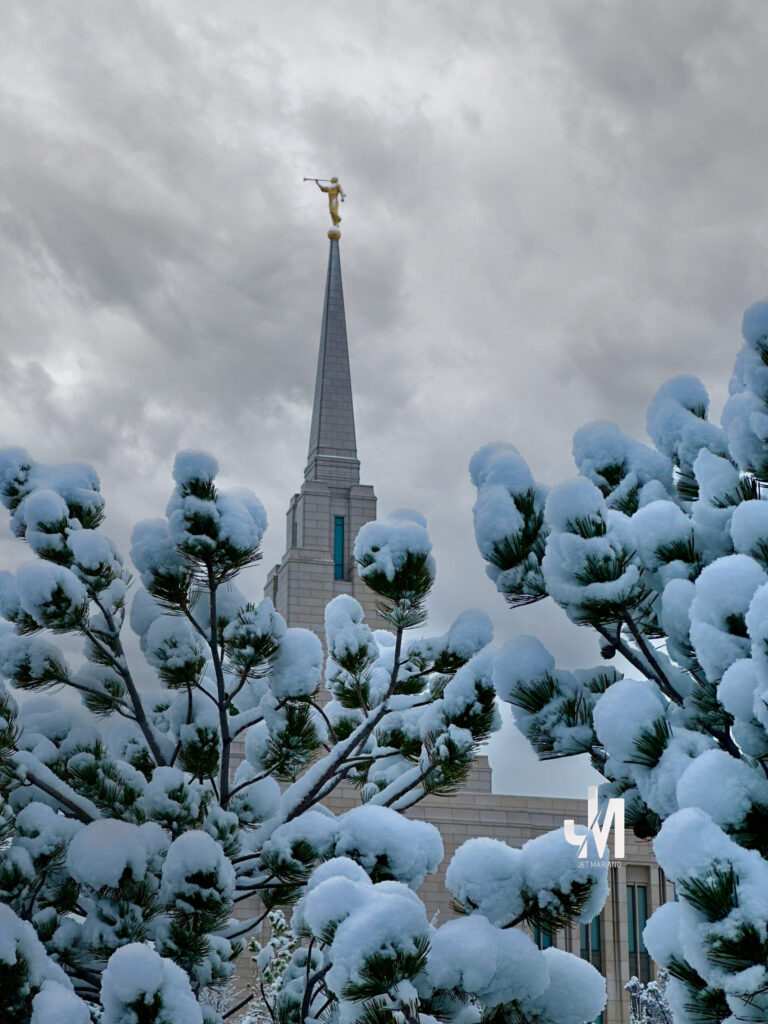
    Snow resting on the Oquirrh Mountain Temple this morning, a quiet reminder that even in the coldest seasons, God is still building something holy in us.

    EXCERPT

    God does not just see who we are.
    He sees what we can become — and invites us to help Him get there.


    INTRO

    Most of us want to feel valued, not just noticed, but trusted. We want to know that our lives matter beyond our own circle, that what we do makes a real difference.

    One of the quiet truths of the gospel is that God increases our sense of worth by inviting us to participate in His work. He does not simply affirm who we are. He assigns us something meaningful to do.

    When the Lord spoke to Moses, He first declared, “Thou art my son.” Then He added an invitation that changed everything: “I have a work for thee.” In that moment, identity became purpose.

    The same pattern appears again and again in scripture. Abraham learned that he had been chosen before he was born. Alma taught that many were prepared from the foundation of the world to help others enter God’s rest. These were not random callings. They were expressions of divine confidence.

    Not everyone receives a visible role like Moses or Abraham. Most of us are called in quieter ways. Still, the principle is the same. Whether the work feels large or small, every invitation to serve is God saying, I trust you. I need you. You matter in My plan.


    NOTES FROM THE SCRIPTURES

    Throughout scripture, God affirms worth and then invites action.

    Moses learned he was a son of God before being sent to liberate a nation.
    Abraham learned he was chosen before being entrusted with leadership.
    Alma taught that many were prepared long before they were ever called.

    The pattern is consistent.
    Calling follows confidence.
    Service follows identity.

    Even Amulek, who described himself as being “called many times,” shows us that repeated, simple invitations can be just as sacred as dramatic ones.


    PERSPECTIVE (DIRECT QUOTES)

    Scripture

    “I have a work for thee, Moses, my son.”
    Moses 1:6

    “Thou wast chosen before thou wast born.”
    Abraham 3:23

    “They were called and prepared from the foundation of the world.”
    Alma 13:3

    President Spencer W. Kimball

    God does notice us, and he watches over us. But it is usually through another person that he meets our needs. Therefore, it is vital that we serve each other in the kingdom. … So often, our acts of service consist of simple encouragement or of giving mundane help with mundane tasks, but what glorious consequences can flow from mundane acts and from small but deliberate deeds!

    “Small Acts of Service,” Ensign, December 1974

    President Thomas S. Monson

    I experienced … as I have many times before, a sense of gratitude that my Heavenly Father had answered another person’s prayer through me.

    “The Priesthood—a Sacred Gift,” April 2007 General Conference


    PRACTICE (TODAY, NOT SOMEDAY)

    Today, I will look for the ways God is calling me to serve.

    Not only in the obvious moments, but in the quiet ones.
    In a kind word.
    In a listening ear.
    In a simple act that no one else may notice.

    I will recognize these invitations for what they truly are.
    Not interruptions.
    Not obligations.
    But expressions of trust.

    Each small call is a reminder that God believes in me.
    That He sees my potential.
    That He trusts my ability to bless others right now.


    FINAL REFLECTION

    Some people are asked to lead nations.
    Others are asked to lift one soul at a time.

    Both are sacred.

    God’s work does not move forward only through grand moments. It advances through countless quiet acts of faith, done by ordinary people who accept divine invitations.

    To be given work in God’s kingdom is not a burden.
    It is a gift.
    A sign of confidence from heaven.


    POCKET I’M KEEPING

    When God gives me something to do, He is not testing me.
    He is trusting me.


    WHAT I HEAR NOW

    “I have a work for thee.”

    Not just for prophets.
    Not just for leaders.
    But for me.
    Today.


    © 2012–2025 Jet Mariano. All rights reserved.
    For usage terms, please see the Legal Disclaimer.
  • “What Have I Done for Someone Today?”

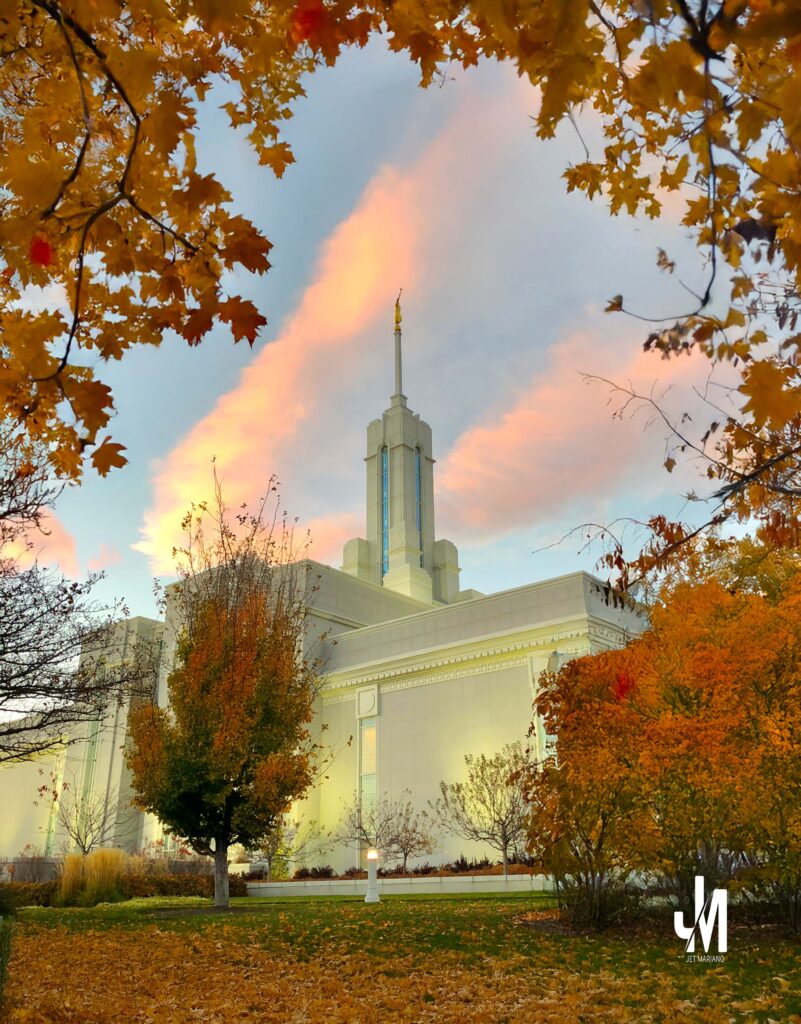
    Captured outside the Mount Timpanogos Temple during peak fall—standing in stillness after a long day, I waited for the sky to open and remind me that light always returns.

    Excerpt

    Autumn reminds me that service is like the seasons—quiet, constant renewal. Even when we’re tired or uncertain, giving of ourselves brings color back to the soul.


    Intro

    This week felt like an uphill climb. Long nights, long thoughts. I could barely rest, yet something inside me refused to quit. I realized once again that when you love what you do—when your work serves a purpose beyond yourself—fatigue fades behind fulfillment.

    Years ago, in another IT assignment, I worked through the night restoring a critical system. No one saw the hours or the quiet prayers between reboots, but the satisfaction came from knowing others could keep working because I did not stop. That same quiet joy has followed me ever since. It’s the joy of standing up, of helping, of serving—whether the task is big or small.


    Notes from President Monson

    “Unless we lose ourselves in service to others, there is little purpose to our own lives.”

    “Man’s greatest happiness comes from losing himself for the good of others.”

    “At baptism we covenanted to bear one another’s burdens, that they may be light.

    “How many times has your heart been touched as you have witnessed the need of another? How often have you intended to be the one to help—and yet life’s busyness interfered?”


    Perspective

    President Monson’s words reached deep this week. I saw how easy it is to get lost in endless to-dos, alerts, and deadlines—the “thick of thin things.” Service, however, brings focus. When I choose to help, I find peace. When I act, I feel alive again. The Savior’s example is the ultimate model of losing oneself in love and lifting others quietly, consistently, and completely.


    Practice

    Today, not someday, I can serve—by listening more, forgiving faster, and stepping forward even when tired. True discipleship isn’t about grand gestures; it’s in the small, unseen moments where compassion overrides convenience.


    Final Reflection

    Each time I walk past the temple, I’m reminded: service sanctifies. The light that falls upon its walls is the same light that can fill our hearts when we give of ourselves freely. The world doesn’t need our perfection—it needs our presence.


    Pocket I’m Keeping

    When I help someone quietly, heaven notices loudly.


    What I Hear Now

    “We become so caught up in the busyness of our lives… too often we spend most of our time taking care of the things which do not really matter much at all in the grand scheme of things.”


    Link to the Talk

    What Have I Done for Someone Today — President Thomas S. Monson (October 2009 General Conference)

    © 2012–2025 Jet Mariano. All rights reserved.
    For usage terms, please see the Legal Disclaimer.
  • The Unwavering Light (Manila Philippines Temple)

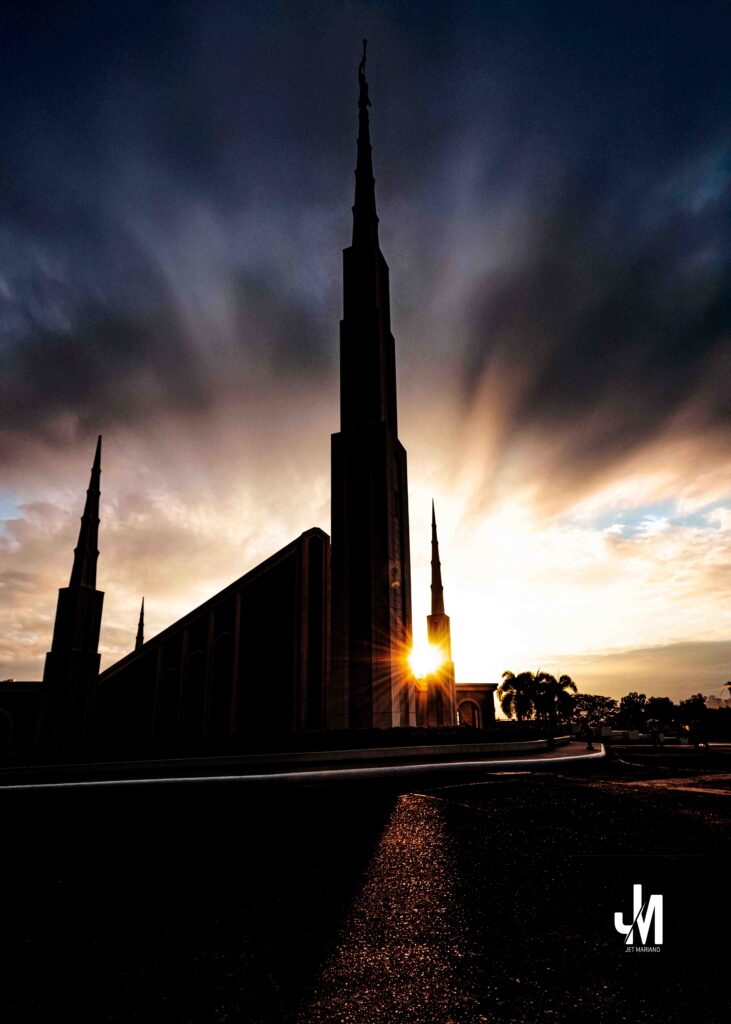
    Manila Philippines Temple — I waited for the exact second the sun aligned with the spire. The light pierced through just as if Heaven itself whispered, “I’m still here.”

    Excerpt

    The sun hid behind the spire—then broke through. That light reminded me of a different storm long ago, when a screen turned blue, and I learned that faith and persistence are built the same way: line upon line, brick by brick.


    Intro

    November 1999. The world was bracing for Y2K. I was working for an aerospace company in Carson, California, getting ready to drive my parents to LAX for their flight to the Philippines. Before leaving, I decided to double-check our Veritas backup on the Exchange 5.5 server running on Windows NT 4.0. Then came the dreaded BSOD—Blue Screen of Death.

    My shift was supposed to end at 4 PM Friday. I didn’t go home until Monday morning. No sleep, no shortcuts—just brick-by-brick rebuilding until email was restored. I missed saying goodbye to my parents, but I kept the company connected.


    Notes from Elder Maxwell

    “You’ve all been in a storm… when you couldn’t see the sun but you knew it was still there. Likewise, in the stormy and dark moments of life know that the Son of God is always there. His light will never go out.”

    That quote became my anchor—both in IT and in life.


    Perspective

    That night taught me more than any certification. There was no Google, no AI, no online forums—just manuals, backups, and faith that the system could rise again. Today, AI fixes in seconds what once took days. But the light that kept me going then still burns now: the belief that persistence itself is a form of faith.


    Practice (today, not someday)

    • When systems—or souls—crash, don’t panic. Pause, breathe, and build.
    • Keep working, even if it’s one file or one prayer at a time.
    • Remember: the Light is constant, even if the screen goes dark.

    Final Reflection

    The Manila Temple photo symbolizes that memory. When the sun broke through the spire, I felt the same quiet assurance I knew in 1999: He never left me. The blue screen, the missed flight, the fatigue—it was all part of learning that perseverance is light in motion.


    Pocket I’m Keeping

    The Light never goes out—only our view of it does.


    What I Hear Now

    “Faith is not seeing the light; it’s working until it returns.”

    © 2012–2025 Jet Mariano. All rights reserved.
    For usage terms, please see the Legal Disclaimer.
  • The Night I Wouldn’t Quit (Seattle Temple, 14°F)

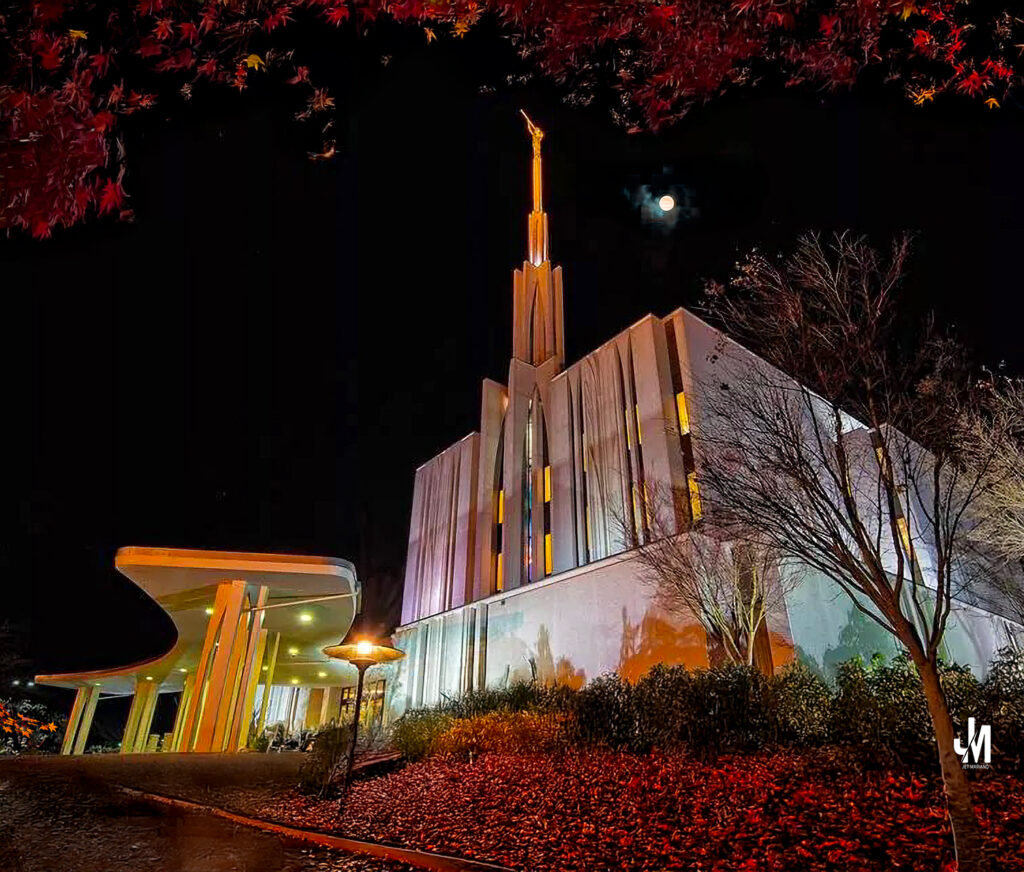
    Seattle Washington Temple — 14°F, suit and tie, icy pavement underfoot. I slipped once, stood again, and framed this shot while the moon played peek-a-boo above the spire. My camera gear cushioned the fall, my faith kept me standing.

    Excerpt

    Sometimes the light we chase nearly costs us everything. But when we stand back up—cold, bruised, and trembling—we find not just the shot, but the story that defines us.


    Intro

    It was 14°F in Seattle. I was dressed in a suit and tie for a wedding when the moon began to play peek-a-boo behind the temple spire. I scouted the icy pavement for the right angle, slipped hard, and hit the ground. My camera backpack broke the fall. Still, I stayed—shot after shot—until my legs began to stiffen from the cold. Gathering what energy I had left, I ran toward the temple’s visitor center. Kind hands brought me into a heated room and warmed me back to life.
    That night reminded me why I rarely back down—from freezing weather, failing systems, or storms that test the soul. The temple stood unshaken, and so did I.

    Why I kept going: It wasn’t skill—it was discipline. A simple, healthy routine and a promise to avoid quick fixes helped me stay steady. I’m not the smartest; I’m just “never say die.” I started from zero, and service keeps me moving.


    Notes from {Speaker}

    • Courage isn’t the absence of cold; it’s pressing the shutter before the light fades.
    • Sometimes the miracle isn’t surviving—it’s still choosing to serve after you do.
    • The temple teaches us that endurance and grace can share the same frame.

    Perspective

    In IT, storms don’t always come from the sky—they come from critical outages, failed updates, and people relying on you at impossible hours. I’ve faced those too—sometimes while boarding flights or crossing oceans. I was in the Philippines before COVID and still handled tickets for a U.S. client. At Incheon Airport, I restored a VM. In Western Samoa, I fixed email for a company thousands of miles away. Once, 29,000 feet above ground, my soft-phone rang mid-flight—Tahiti users couldn’t send email. I helped them anyway.
    You could call me a workaholic. I call it love for helping people.


    Practice (today, not someday)

    • When fatigue hits, serve once more—small acts reignite large faith.
    • Write down one storm you’ve survived and what it taught you.
    • Find a temple—or a quiet place—and let stillness thaw your heart.

    Final Reflection

    My life has felt like a series of tours of duty—local government, universities, law firms, manufacturing, perinatal, and home builders—each relying on me as a “Swiss knife” of IT. After the 2012 recession, I lost clients but not calling. I passed the business to my son and returned to corporate life in 2014.

    “Vacation?” I can’t recall one. Every trip seemed to bring a new emergency. But I’ve learned to see service as my rest—because helping others is where my soul finds warmth. I’ve done this since before Google or AI existed, when documentation came from books and discipline.

    Through it all, the pattern holds—stand a little longer, look for the moon, run for warmth when you must, and let the temple remind you that light is never lost to the cold.


    Pocket I’m Keeping

    Light is rarely free; it asks something of us.


    What I Hear Now

    “If the only thing you take into the storm is faith, it will be enough.”
    “Composition comes back after compassion—first for yourself, then for others.”


    Link to the Talk

    My IT Journey — the long road that led to that frozen night at the Seattle Temple.

    © 2012–2025 Jet Mariano. All rights reserved.
    For usage terms, please see the Legal Disclaimer.
  • MIT8: “The Healing Power of Service”

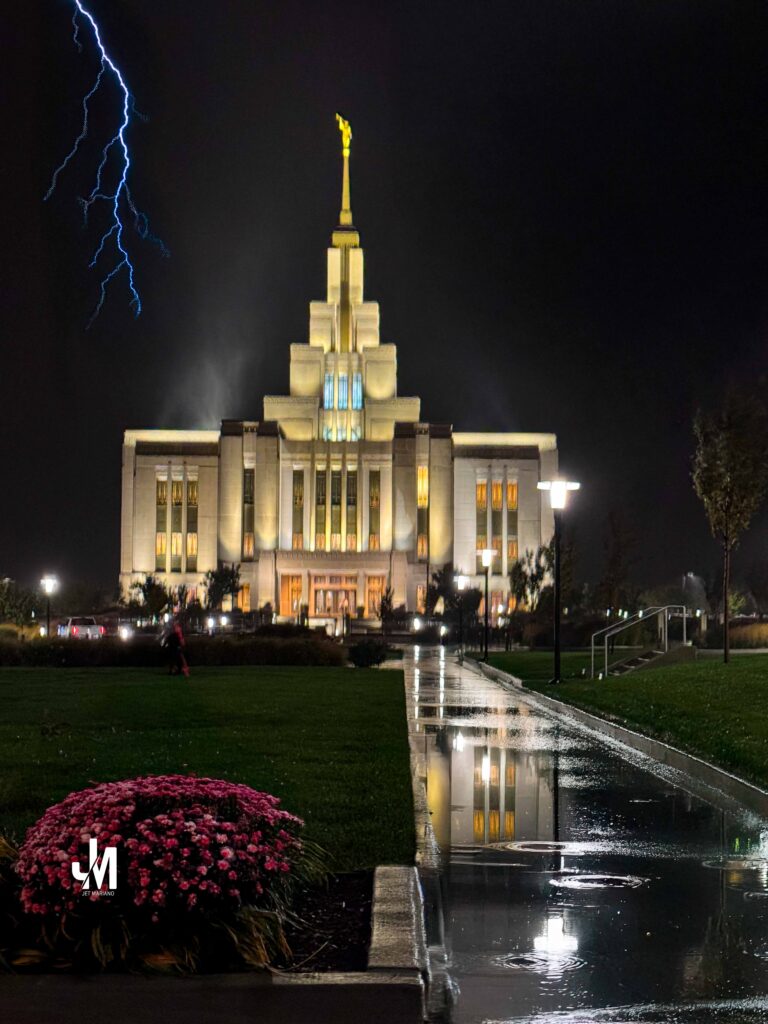
    Lightning breaks over Saratoga Springs Temple—framed through the open driver’s window, with rain reflections and the flower bed lit by my Tesla.

    Behind the Shot (BTS)

    I waited patiently for the perfect lightning strike, switching my iPhone to video mode so I could later capture the exact frame. I parked strategically, rolled down the driver’s window, and composed the scene—rain-slick path, temple reflection, and the flower bed on the left illuminated by my Tesla’s headlights. I took over fifty shots, braving 55-mph winds and heavy rain until I was drenched to the bone.

    Tesla’s Summon feature became my safety net—it allows the car to move itself up to 20 feet in a straight line. I’ve visited this temple many times and know exactly where to park during storms like this. When the lightning finally hit, my car quietly rolled beside me, heater set to 75°, ready to bring warmth after the storm.

    Excerpt

    Setbacks lose their sting when we turn outward. The surest cure for heaviness of heart is to lift another’s. In serving, we find strength we didn’t know we still had.


    Intro

    After proxy endowment at the Saratoga Springs Temple, rain came hard—55 mph winds, lightning cracking over the spire. I was soaked through but determined to capture the moment. This week was one of the toughest—under the weather, training a new engineer, racing the Windows 10 → 11 deadline. Yet, even weary, I pressed on. Elder Neal A. Maxwell once said, “When difficulties come, don’t feel sorry for yourself. Lose yourself in service… When you feel down, lift other people up.” That truth steadied me more than the storm.


    Perspective

    In IT, storms don’t always come from the sky—they come from deadlines, downtime, and people who depend on you. The temptation to withdraw is strong, but the gospel has taught me that light returns when I reach outward. Service becomes medicine: teaching, fixing, lifting, sharing, mentoring. Each act reorders the soul toward purpose. The temple reminded me that the Lord’s work never pauses for weather, and neither should mine.


    Practice (today, not someday)

    When exhaustion whispers, “You’ve done enough,” I’ll answer with quiet action. I’ll keep helping the next person who needs guidance—whether that’s a coworker puzzled by PowerShell or a friend weighed down by unseen battles. The Savior’s healing always flowed outward; so must mine.


    Final Reflection

    The downpour cleansed more than the temple steps—it washed away my self-pity. I realized that serving amid struggle doesn’t drain me; it refills me. My soaked jacket, cold hands, and the warmth of my car’s heater at 75° felt symbolic: heaven never leaves its servants freezing in the storm.


    Pocket I’m Keeping

    “Lose yourself in service.” When the clouds gather again, I’ll remember this night of lightning and light—how the act of giving steadied the heart that was slipping.


    What I Hear Now

    “Lift others. That’s how I’ll lift you.”
    The whisper wasn’t from the wind but from the One who calms it.

    © 2012–2025 Jet Mariano. All rights reserved.
    For usage terms, please see the Legal Disclaimer.
  • Marked in Time Sep 10, 2025 — Finding Joy in the Journey

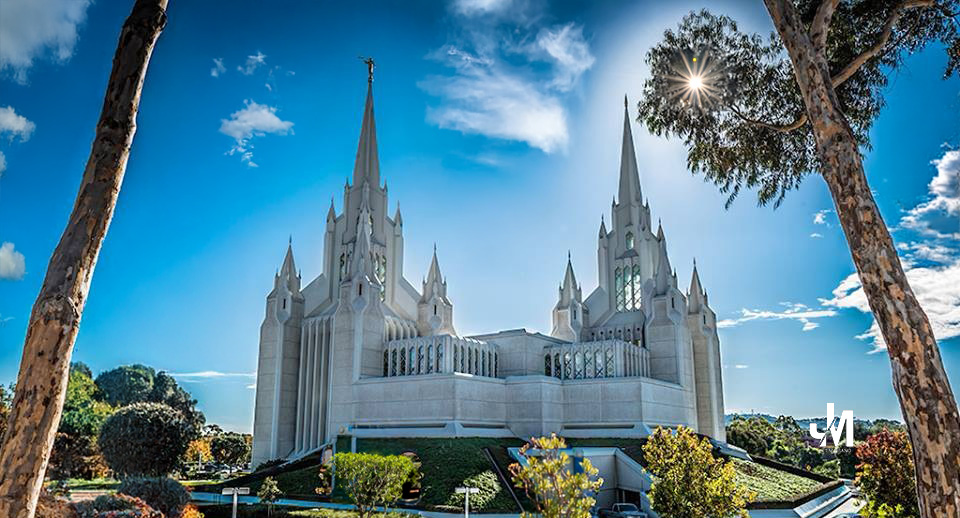
    San Diego California Temple — made on an early iPhone. Daylight reminds me it’s less about the lens and more about the eye and the feeling. This house is family to me—my firstborn was sealed here on 12/12/12 at 12:00 PM.

    Excerpt
    President Thomas S. Monson teaches that joy is not in the distant future but in the daily moments we cherish with gratitude and love.


    Intro
    Life changes—sometimes suddenly, often gradually. President Thomas S. Monson reminds us that we cannot pile up tomorrows and expect joy to wait. Joy is in the journey now—in gratitude, in kindness, in cherishing those around us before it is too late.


    Straight line (what he’s saying)
    Change is constant; the key is learning what matters most.
    • Childhood, family time, and simple daily joys vanish if we postpone them.
    • Don’t wait for tomorrows that never come; love must be shown today.
    Never let a problem to be solved become more important than a person to be loved.
    • Gratitude transforms lack into abundance; ingratitude blinds us to God’s gifts.
    • Challenges will come, but we choose whether to cherish or neglect the people we love.
    • Christ’s example—serving, forgiving, and loving to the end—shows us how to live joyfully.


    Final reflection
    Time never stands still. My regrets are not about things I did, but things I left undone—words unsaid, kindness unshown. President Monson’s reminder echoes: joy is not about someday; it is about today.


    Pocket I’m keeping
    • Hug my family more, speak my love more.
    • Write the note, send the message, make the call—today.
    • Guard against letting stress eclipse people.
    • Give thanks deliberately, even for the small, ordinary blessings.
    • Joy = gratitude in motion.


    What I hear now
    Joy is a daily decision, not a future destination. If I train my heart to see God’s gifts in every moment, life itself becomes the journey worth rejoicing in.


    Link to the talk
    “Finding Joy in the Journey – President Thomas S. Monson

    © 2012–2025 Jet Mariano. All rights reserved.
    For usage terms, please see the Legal Disclaimer.
  • That’s You and That’s Me

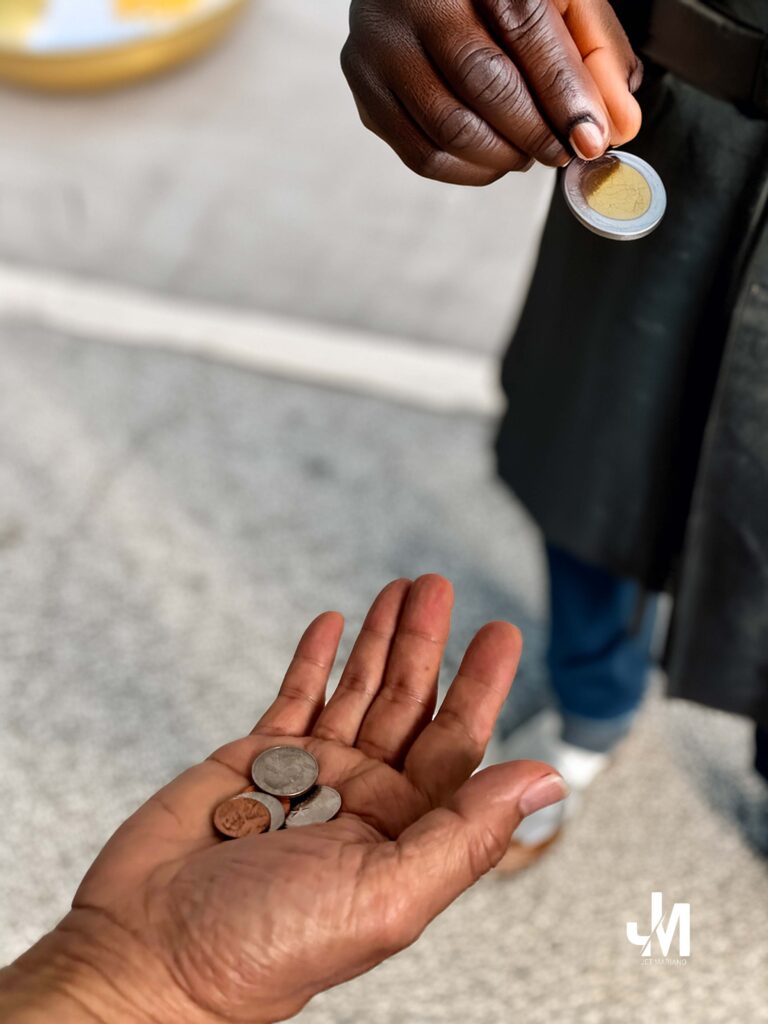
    Two open hands—one giving, one receiving. Some needs are plain to see; others we carry quietly. That’s you and that’s me.

    Intro
    Some needs are easy to spot—a hand outstretched at a corner, a face weeping in public. Others ride quietly under the surface: worry that doesn’t show, loneliness with a practiced smile, a “load” carried where no one can see. This week I kept thinking about both kinds—the visible and the hidden—and how the Lord is the One who sees them all. The photo below is the obvious kind. But I’m learning to look for the quiet kind too, including in my own life. “No one makes it all alone… we all rely on help from Home.”


    That’s You and That’s Me — Seminary album Free to Choose (1987)

    Some reach out with their hands,
    Some reach out with their eyes,
    And most try hard not to let it show,
    But it’s a thin disguise.

    Some needs can be hidden;
    Some are plain to see.
    No one makes it all alone—
    We all rely on help from Home
    To get us back to where we want to be.

    And that’s you and that’s me,
    Living off His goodness
    And learning how to be.

    And that’s you and that’s me;
    I want to be ever you—like He’s ever you and me.

    Sometimes I can’t hide it;
    Sometimes I just want to cry:
    “I need someone to share my load,”
    When no one’s on my side.

    That’s when I remember:
    You have days like these.
    No one makes it alone—
    We all rely on help from Home
    To get us back to where we want to be.

    And that’s you and that’s me,
    Living off His goodness
    And learning how to be.
    That’s you and that’s me—
    I want to be ever you, like He’s ever you and me;
    And He gives so freely and shows us how to care.

    And that’s you and that’s me,
    Living off His goodness
    And learning how to be.


    Final reflection
    The song names what discipleship looks like in real time: noticing. Some needs are loud; some are quiet. Christ meets both, and He invites us to do the same—“living of His goodness and learning how to be.” Sometimes that means coins in a palm. Sometimes it’s a steady text, a prayer in someone’s name, a ride, a listening ear, or a temple visit offered for a friend. And when the load is ours, we remember we also “rely on help from Home.” Seen or unseen, He sees—and He sends us to see.


    © 2012–2025 Jet Mariano. All rights reserved.
    For usage terms, please see the Legal Disclaimer.
  • Because I Have Been Given Much, I Too Must Give

    Because I Have Been Given Much, I Too Must Give

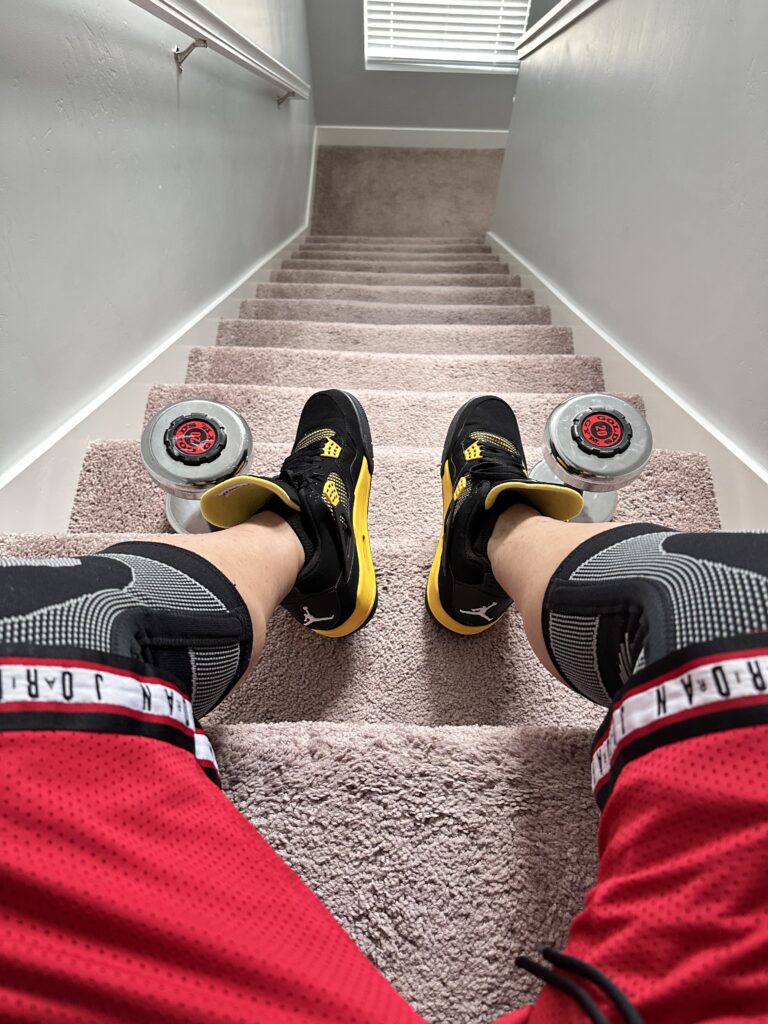
    Jordan 4s laced, knee braces locked, and 20s in hand—another stair session. I train to stay ready, not just fit.

    I train to stay rooted in purpose, faithful in service, and prepared for life’s demands.
    Fitness clears my mind and sharpens my focus.
    The goal isn’t just strength—it’s being able to make a difference.

    That’s why I wear McDavid knee braces, elbow support, and back support. My workouts are non-stop—compound, high-rep, and uninterrupted. You have to train smart. No shortcuts. No injuries.

    Tonight’s training flow?

    • 30-minute stair run (1st floor to basement, non-stop)
    • 120 reps each of:
      • Pushups
      • Sit-ups
      • Leg raises
      • Abs crunches
    • Bird/Dog exercise for balance and core control
    • Crab-walks to engage hip and glute strength
    • 20-minute plank rotation
    • All while my laundry spins in the background
    • Tilapia fillets thawed and ready for a clean dinner
    • Playlist? Pure Church music, filling the air with purpose

    This is a multi-tasked project of body, spirit, and home.


    During sacrament, the hymn “Because I Have Been Given Much” played softly—but its message roared inside me.

    It asked me:
    What are you giving in return?

    I reflected:

    👉🏼 I give my focus to study—choosing AZ-104 over passive scrolling
    👉🏼 I give my energy to fitness—choosing movement over comfort
    👉🏼 I give my rest to quality sleep—choosing recovery over distraction
    👉🏼 I give my time to the Lord—choosing temple service over idle time
    👉🏼 I give my work my best—choosing to document, secure, and improve

    This isn’t boasting. This is realignment.
    When you’ve been preserved, protected, and placed where you are for a purpose—
    you can’t just sit still.

    You move.
    You give.
    You train.
    You serve.
    Because you’ve been given much.

    And what you give in return becomes your praise.

    © 2012–2025 Jet Mariano. All rights reserved.
    For usage terms, please see the Legal Disclaimer.

error: Content is protected !!