
Tag: spiritual discipline

  • Procrastination – Redeeming The Time

    Early morning run. In Tagalog we sometimes say “Bukas na lang,” meaning “I’ll do it tomorrow.” That mañana habit quietly steals time and opportunities. I try not to delay the things that matter—whether it is exercise, work, faith, or even a prompting to do good. Some things are meant to be done today.

    Excerpt
    Time is the one resource that cannot be stored, replaced, or recovered once it passes.


    Intro
    People often think the most valuable things on earth are oil, gold, or rare resources. Yet there is something even more valuable and far more fragile: time. Every day we are given a fixed number of hours, and once they pass, they never return.

    In life, it is easy to delay important things. We tell ourselves we will exercise tomorrow, finish a task later, or reach out to someone another day. But the gospel teaches us that time is sacred and should be used wisely.


    Notes from Scripture

    “Redeeming the time, because the days are evil.”

    Ephesians 5:16

    Paul taught the Saints to live carefully and wisely. Part of that wisdom is learning to redeem time—to reclaim it from distractions and use it for things that truly matter.

    Elder Ian S. Ardern taught:

    “Time is never for sale; time is a commodity that cannot, try as you may, be bought at any store for any price. Yet when time is wisely used, its value is immeasurable. On any given day we are all allocated, without cost, the same number of minutes and hours to use, and we soon learn, as the familiar hymn so carefully teaches, ‘Time flies on wings of lightning; we cannot call it back’ (‘Improve the Shining Moments,’ Hymns, no. 226). What time we have we must use wisely.”

    “A Time to Prepare,” General Conference, October 2011

    The Book of Mormon also warns against delaying spiritual action.

    “If we do not improve our time while in this life, then cometh the night of darkness wherein there can be no labor performed.”
    Alma 34:33


    Perspective
    Procrastination often appears harmless. We think postponing something small will not matter. But small delays accumulate and slowly shape the direction of our lives.

    In my own life, I have learned that discipline matters. Whether it is boxing early in the morning, maintaining clean nutrition, or solving difficult IT problems, delay rarely helps. In technology, procrastination can cause systems to fail, security issues to grow, and problems to multiply. Acting promptly often prevents larger problems later.

    The same principle applies spiritually. Prompt obedience and timely action protect us from unnecessary regret.

    President Thomas S. Monson once taught:

    “Send that note to the friend you’ve been neglecting; give your child a hug; give your parents a hug; say ‘I love you’ more; always express your thanks. Never let a problem to be solved become more important than a person to be loved. Friends move away, children grow up, and loved ones pass on. It’s so easy to take others for granted—until that day when they’re gone from our lives and we are left with feelings of ‘what if’ and ‘if only.’ Said author Harriet Beecher Stowe, ‘The bitterest tears shed over graves are for words left unsaid and deeds left undone.’”

    Finding Joy in the Journey

    These reminders teach us that redeeming time is not only about productivity—it is about love, relationships, and living intentionally.

    Practice (today, not someday)
    Today I will redeem my time. I will act on the good things that come to mind rather than postponing them. I will focus on the activities that strengthen my faith, my health, my work, and my relationships.


    Final Reflection
    Time quietly shapes the course of our lives. When used wisely, even ordinary days can become meaningful and purposeful.


    Pocket I’m Keeping
    Time redeemed today becomes peace tomorrow.


    What I Hear Now
    “Time flies on wings of lightning; we cannot call it back.”


    © 2012–2026 Jet Mariano. All rights reserved.
    For usage terms, please see the Legal Disclaimer.

  • MIT8 – “One Heart and One Mind”

    This photo was taken while hiking the Herriman Mountains. I walked the trail back and forth, up and down, creating multiple footsteps in the snow to simulate the idea behind this reflection — many steps, one direction. Unity is often built through repeated effort, not a single moment.

    Excerpt

    Zion is not built by sameness. It is built when people choose unity while carrying different loads.


    Intro

    Over the years, I’ve worked in environments where success depended on alignment more than talent. In IT, in security, and even in physical training, progress stalls the moment people begin competing instead of coordinating. The strongest systems I’ve seen—technical or human—are the ones where everyone knows they belong and everyone knows they matter.

    Scripture describes Zion in similar terms. Not as perfection, but as unity.


    Notes from the Author

    The prophet Enoch’s city is described in a way that has always stood out to me:

    “And the Lord called his people Zion, because they were of one heart and one mind, and dwelt in righteousness; and there was no poor among them.”
    Moses 7:18

    What strikes me is not just their righteousness, but the outcome of it. There was no poor among them. That phrase suggests more than generosity. It suggests belonging.


    Perspective

    Scripture doesn’t say they merely helped the poor. It says poverty ceased to exist among them. To me, that implies a community where people were not reduced to labels, deficits, or past circumstances. Each person was seen as capable of contributing, even if their contribution looked different.

    I’ve seen this principle play out in my own life. In work settings, people thrive when they are trusted early, not tested endlessly. In training, progress comes when the body is respected as it is today, not judged for what it was yesterday. When someone is treated as an asset rather than a burden, they often rise to meet that expectation.

    The Book of Mormon describes a similar unity among those baptized at the waters of Mormon. Alma taught them to move forward together:

    “That ye may look forward with one eye, having one faith and one baptism, having your hearts knit together in unity and in love one towards another.”
    Mosiah 18:21

    Unity does not erase difference. It aligns direction.


    Practice (today, not someday)

    Today, I will pay attention to how I see people. I will resist the urge to sort others into categories based on background, skill level, or current capacity. Whether at work, at church, or in daily interactions, I will choose language and actions that affirm contribution instead of deficiency.

    Unity begins with how we look at one another.


    Final Reflection

    Building Zion is not about creating a uniform community. It is about creating a cohesive one. A place where people are strengthened by shared purpose, not divided by comparison.

    That kind of unity requires intention. It requires humility. And it requires consistent effort, just like anything worth building.


    Pocket I’m Keeping

    Unity grows when people feel needed, not merely tolerated.


    What I Hear Now

    To be of one heart and one mind is not to think alike, but to move together.


    © 2012–2026 Jet Mariano. All rights reserved.
    For usage terms, please see the Legal Disclaimer.
  • MIT8 – “Let Virtue Garnish Thy Thoughts Unceasingly”

    (President Gordon B. Hinckley, April 2007 General Conference)
    Read the full talk →

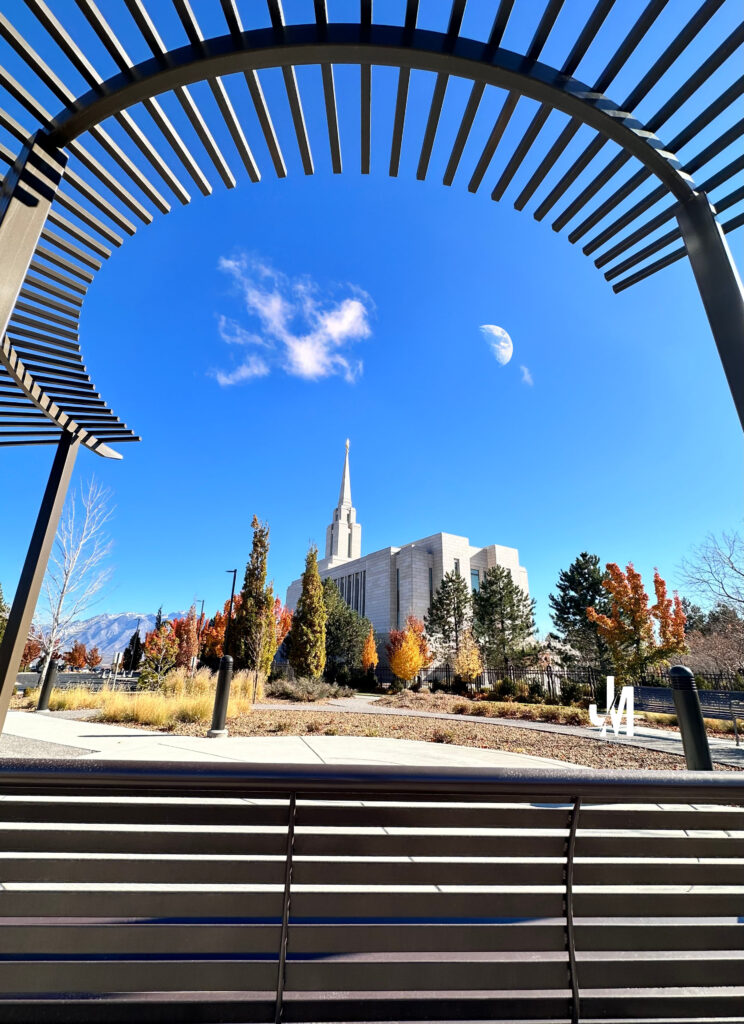
    Oquirrh Mountain Temple under the waxing gibbous moon — November, 2025. I waited patiently until light met stillness.

    Excerpt:
    President Hinckley’s counsel reaches across time: “Let virtue garnish thy thoughts unceasingly; then shall thy confidence wax strong in the presence of God.” The promise that follows is profound—“The Holy Ghost shall be thy constant companion.” These are not poetic lines; they are spiritual laws. Virtue invites confidence, and confidence invites the Spirit.


    When I listened to this talk again—over fifty times between last night and this morning—the Spirit emphasized one word: virtue.

    What is virtue?
    Virtue means to fill your mind with morally clean, righteous, and excellent thoughts until goodness becomes your reflex. To garnish is to equip or arm your thoughts, so when fear, doubt, or temptation step onto the stage of your mind, they find no audience. We control the stage. We choose which act plays. As I sat inside the Oquirrh Mountain Temple, I realized: darkness never conquers light that is armed with virtue.

    President Hinckley connected virtue to a simple, practical four-point program—a pattern that turns righteousness into rhythm:

    1. Pray.
      Prayer is the bridge to our Heavenly Father. “Speak with Him,” President Hinckley said. “Express the gratitude of your heart.” Prayer is not repetition—it is relationship. It invites light to dwell where confusion once lived.
    2. Study.
      “Resolve now that you will get all the education you can.” The glory of God is intelligence. I remember my own pursuit—working full-time in IT while carrying a full course load at LACC and DeVry. It was exhausting, but education was revelation in motion. To study is to worship with the mind.
    3. Pay Tithing.
      “Glorious is the promise of the Lord concerning those who pay their tithes.” Temporal faith builds spiritual independence. Each tithe is a declaration that God’s economy governs my heart more than the world’s uncertainty.
    4. Attend Your Meetings.
      There is no substitute for partaking of the sacrament. Sunday worship keeps us anchored when weekday storms rise. It renews the covenant that allows virtue to flow back into thought and action.

    President Hinckley’s bridge between virtue and the four-point program is clear once you live it: each step disciplines the mind and purifies the heart.
    Prayer keeps thoughts upward.
    Study keeps them expanding.
    Tithing keeps them consecrated.
    Worship keeps them renewed.
    Together, they garnish the mind with virtue—unceasingly.

    He promised, “Each of you is a creature of Divinity. You are literally a daughter or son of the Almighty. There is no limit to your potential. If you will take control of your lives, the future is filled with opportunity and gladness.”

    As I waited outside the Oquirrh Temple for the waxing gibbous moon to rise above the spire, I thought of those words. The moon appeared quietly, reflecting light it does not create—just as we reflect heaven’s virtue when we live this four-point pattern.


    Final Reflection:
    Virtue is not perfection—it is direction. It is the steady alignment of thought toward holiness until confidence replaces fear. In that light, President Hinckley’s four steps are not separate commandments; they are one continuous motion toward the presence of God.

    © 2012–2025 Jet Mariano. All rights reserved.
    For usage terms, please see the Legal Disclaimer.
  • “Elder Maxwell taught that spiritual reflexes…”)

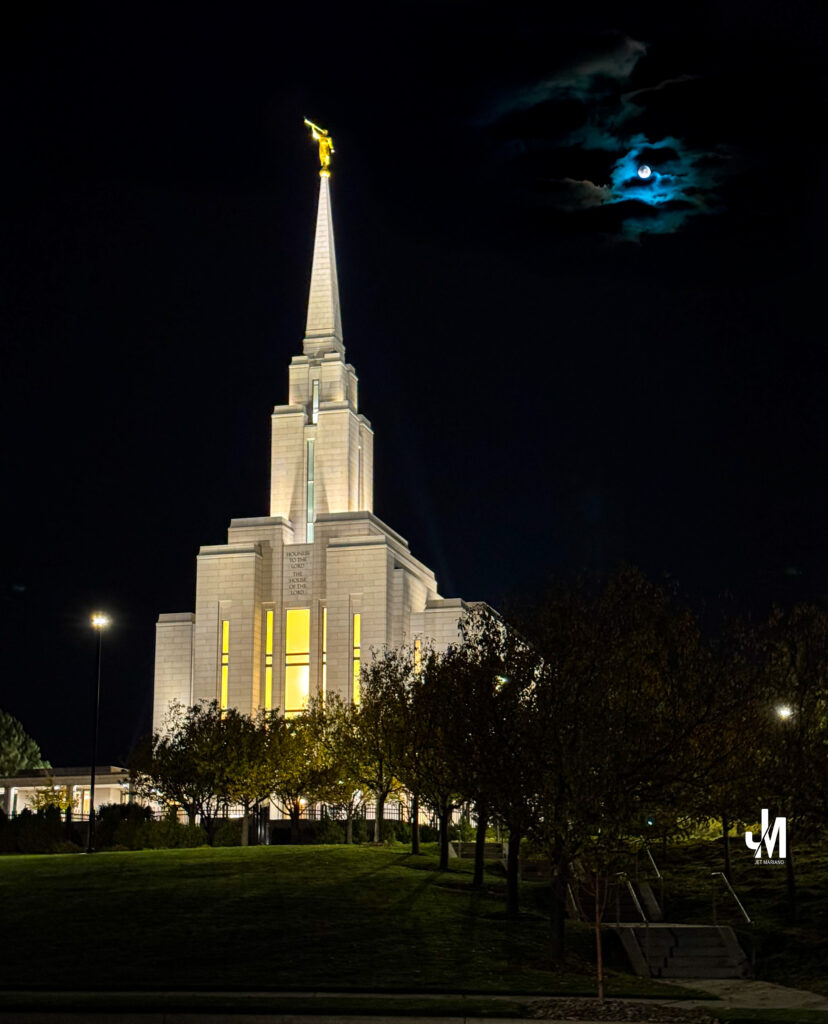
    Morning light at the Orem Utah Temple—where discipline becomes devotion and reflex turns into righteousness.

    (October 20, 2025 — Guideline #8 from Elder Neal A. Maxwell’s “21 Guidelines for Righteous Living”)

    Excerpt

    In moments of pressure, there’s no time for debate. What we practice daily determines what we choose instinctively.


    Intro

    Elder Neal A. Maxwell’s Guideline #8 teaches that discipleship is not just knowing what’s right but becoming the kind of person who does what’s right automatically. Just as an athlete relies on muscle memory, disciples rely on spiritual reflexes—responses trained by repeated obedience.

    In my world of IT, when systems crash, there’s no time to analyze from scratch. I act on instinct built from years of disciplined practice. Spiritual life requires the same readiness—decisions born not of panic but of principle.


    Perspective

    The Quarterback Analogy
    Elder Maxwell used the example of a great quarterback to explain righteous reflexes.

    ElementDescriptionSpiritual Parallel
    The QuarterbackA great quarterback doesn’t pause mid-play to analyze how to hold the football.The individual in life’s fast-moving moments.
    The ActionProper technique is internalized—it’s all reflex.Righteousness must be practiced until it becomes instinct.
    The ReasonLife offers too many temptations and sudden tests to always stop and reason through them.We need habits of holiness, not hesitation.
    The GoalThe quarterback throws correctly without thinking.The disciple chooses correctly without delay—spiritual safety through reflex.

    Elder Maxwell reminded us that we cannot afford slow moral decisions: “Do the right thing out of reflex and not agonize over a temptation to which you then might succumb.”


    Practice (today, not someday)

    Righteous reflexes aren’t built overnight—they’re shaped through disciplined repetition. My daily rhythm keeps both body and spirit tuned to respond to life’s pressures with steadiness and faith.

    Every night, I review tomorrow’s priorities, focusing on what’s urgent and important. I close my day with scripture study, prayer, and meditation. At 4 a.m., I start again—prayer first, then stretching, followed by 120 straight push-ups to keep my body strong and my mind awake.

    Breakfast is clean and balanced before I shower and prepare for work. If I’m early, I swing by either the Oquirrh or Taylorsville Temple to photograph the morning light—my quiet offering before the day begins. By 6:30 a.m., I’m at my desk, handling the priorities of the day.

    Saturday is for temple worship. Sunday is for renewing my covenants. Then Monday begins again. These patterns are not habits of routine—they are habits of devotion. They’ve become my spiritual reflexes: instinctive, practiced, and constant.


    Closer Reflection

    Elder Maxwell’s “righteous reflexes” remind me of Bruce Lee’s legendary speed—so fast that 1970s cameras could barely record it. Lee trained until motion became instinct; every move came from memory, not hesitation.

    Spiritual reflexes are the same. They come from daily, disciplined practice until obedience is automatic. Bruce Lee said, “I fear not the man who has practiced 10,000 kicks once, but the man who has practiced one kick 10,000 times.”

    In IT, the same principle applies. After years of handling systems under pressure, I’ve learned to respond instinctively—knowing where to look, how to act, and when to stay calm. It’s muscle memory built through faith and repetition.

    Whether in martial arts, spirituality, or technology, true mastery comes when preparation and reflex move as one—when right choices and right actions flow as easily as recognizing the palm of your own hand.


    Pocket I’m Keeping

    When pressure comes, I don’t have to think twice. I’ve already decided to do what’s right.


    What I Hear Now

    “Keep practicing righteousness until it becomes your reflex.”


    Link to the Talk

    “21 Guidelines for Righteous Living” — Elder Neal A. Maxwell
    https://www.youtube.com/watch?v=f4bVYkkNeWE&t=300s


    Behind the Shot (BTS)

    Captured outside the Oquirrh Mountain Utah Temple under a moonlit sky—a quiet reminder that repetition builds readiness. Every photo, every prayer, every early start is practice for spiritual precision.

    © 2012–2025 Jet Mariano. All rights reserved.
    For usage terms, please see the Legal Disclaimer.

error: Content is protected !!