Tag: Thomas S. Monson

  • MIT8 – “I Have a Work for Thee”

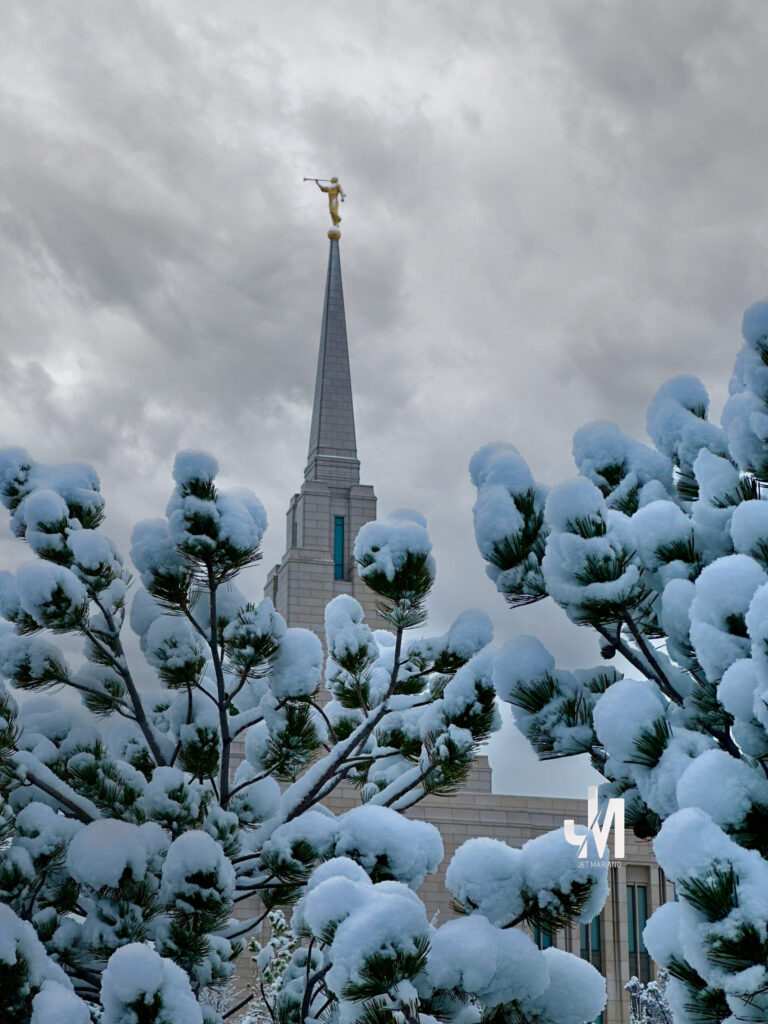
    Snow resting on the Oquirrh Mountain Temple this morning, a quiet reminder that even in the coldest seasons, God is still building something holy in us.

    EXCERPT

    God does not just see who we are.
    He sees what we can become — and invites us to help Him get there.


    INTRO

    Most of us want to feel valued, not just noticed, but trusted. We want to know that our lives matter beyond our own circle, that what we do makes a real difference.

    One of the quiet truths of the gospel is that God increases our sense of worth by inviting us to participate in His work. He does not simply affirm who we are. He assigns us something meaningful to do.

    When the Lord spoke to Moses, He first declared, “Thou art my son.” Then He added an invitation that changed everything: “I have a work for thee.” In that moment, identity became purpose.

    The same pattern appears again and again in scripture. Abraham learned that he had been chosen before he was born. Alma taught that many were prepared from the foundation of the world to help others enter God’s rest. These were not random callings. They were expressions of divine confidence.

    Not everyone receives a visible role like Moses or Abraham. Most of us are called in quieter ways. Still, the principle is the same. Whether the work feels large or small, every invitation to serve is God saying, I trust you. I need you. You matter in My plan.


    NOTES FROM THE SCRIPTURES

    Throughout scripture, God affirms worth and then invites action.

    Moses learned he was a son of God before being sent to liberate a nation.
    Abraham learned he was chosen before being entrusted with leadership.
    Alma taught that many were prepared long before they were ever called.

    The pattern is consistent.
    Calling follows confidence.
    Service follows identity.

    Even Amulek, who described himself as being “called many times,” shows us that repeated, simple invitations can be just as sacred as dramatic ones.


    PERSPECTIVE (DIRECT QUOTES)

    Scripture

    “I have a work for thee, Moses, my son.”
    Moses 1:6

    “Thou wast chosen before thou wast born.”
    Abraham 3:23

    “They were called and prepared from the foundation of the world.”
    Alma 13:3

    President Spencer W. Kimball

    God does notice us, and he watches over us. But it is usually through another person that he meets our needs. Therefore, it is vital that we serve each other in the kingdom. … So often, our acts of service consist of simple encouragement or of giving mundane help with mundane tasks, but what glorious consequences can flow from mundane acts and from small but deliberate deeds!

    “Small Acts of Service,” Ensign, December 1974

    President Thomas S. Monson

    I experienced … as I have many times before, a sense of gratitude that my Heavenly Father had answered another person’s prayer through me.

    “The Priesthood—a Sacred Gift,” April 2007 General Conference


    PRACTICE (TODAY, NOT SOMEDAY)

    Today, I will look for the ways God is calling me to serve.

    Not only in the obvious moments, but in the quiet ones.
    In a kind word.
    In a listening ear.
    In a simple act that no one else may notice.

    I will recognize these invitations for what they truly are.
    Not interruptions.
    Not obligations.
    But expressions of trust.

    Each small call is a reminder that God believes in me.
    That He sees my potential.
    That He trusts my ability to bless others right now.


    FINAL REFLECTION

    Some people are asked to lead nations.
    Others are asked to lift one soul at a time.

    Both are sacred.

    God’s work does not move forward only through grand moments. It advances through countless quiet acts of faith, done by ordinary people who accept divine invitations.

    To be given work in God’s kingdom is not a burden.
    It is a gift.
    A sign of confidence from heaven.


    POCKET I’M KEEPING

    When God gives me something to do, He is not testing me.
    He is trusting me.


    WHAT I HEAR NOW

    “I have a work for thee.”

    Not just for prophets.
    Not just for leaders.
    But for me.
    Today.


    © 2012–2025 Jet Mariano. All rights reserved.
    For usage terms, please see the Legal Disclaimer.
  • “What Have I Done for Someone Today?”

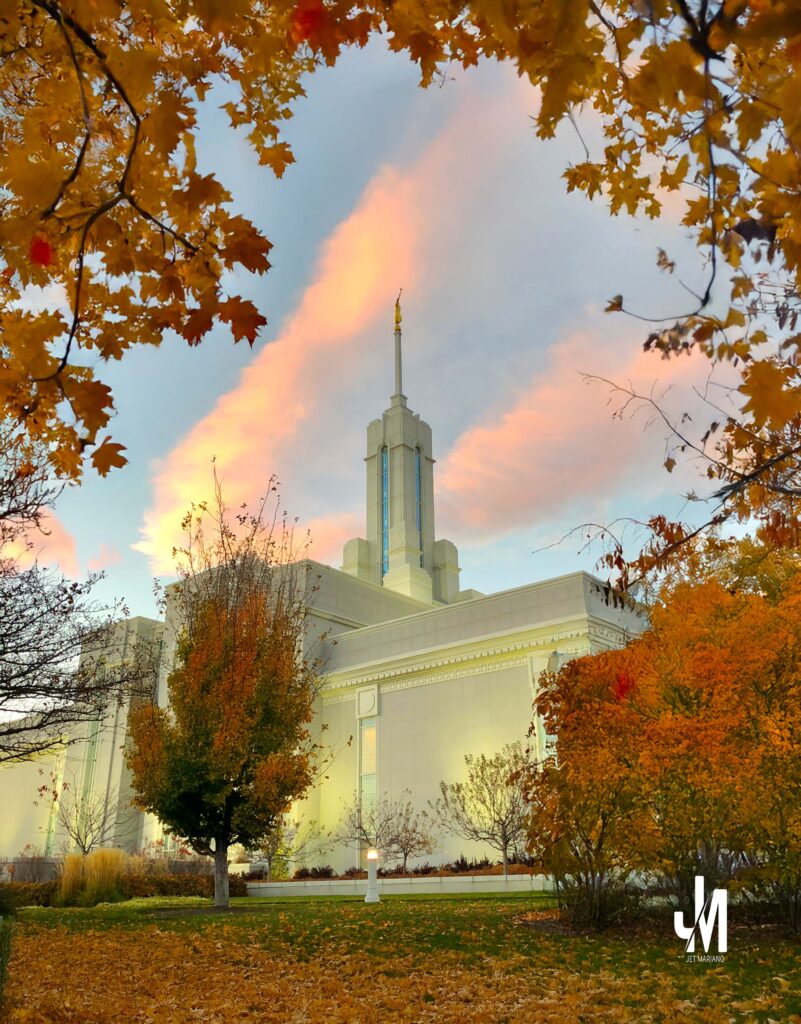
    Captured outside the Mount Timpanogos Temple during peak fall—standing in stillness after a long day, I waited for the sky to open and remind me that light always returns.

    Excerpt

    Autumn reminds me that service is like the seasons—quiet, constant renewal. Even when we’re tired or uncertain, giving of ourselves brings color back to the soul.


    Intro

    This week felt like an uphill climb. Long nights, long thoughts. I could barely rest, yet something inside me refused to quit. I realized once again that when you love what you do—when your work serves a purpose beyond yourself—fatigue fades behind fulfillment.

    Years ago, in another IT assignment, I worked through the night restoring a critical system. No one saw the hours or the quiet prayers between reboots, but the satisfaction came from knowing others could keep working because I did not stop. That same quiet joy has followed me ever since. It’s the joy of standing up, of helping, of serving—whether the task is big or small.


    Notes from President Monson

    “Unless we lose ourselves in service to others, there is little purpose to our own lives.”

    “Man’s greatest happiness comes from losing himself for the good of others.”

    “At baptism we covenanted to bear one another’s burdens, that they may be light.

    “How many times has your heart been touched as you have witnessed the need of another? How often have you intended to be the one to help—and yet life’s busyness interfered?”


    Perspective

    President Monson’s words reached deep this week. I saw how easy it is to get lost in endless to-dos, alerts, and deadlines—the “thick of thin things.” Service, however, brings focus. When I choose to help, I find peace. When I act, I feel alive again. The Savior’s example is the ultimate model of losing oneself in love and lifting others quietly, consistently, and completely.


    Practice

    Today, not someday, I can serve—by listening more, forgiving faster, and stepping forward even when tired. True discipleship isn’t about grand gestures; it’s in the small, unseen moments where compassion overrides convenience.


    Final Reflection

    Each time I walk past the temple, I’m reminded: service sanctifies. The light that falls upon its walls is the same light that can fill our hearts when we give of ourselves freely. The world doesn’t need our perfection—it needs our presence.


    Pocket I’m Keeping

    When I help someone quietly, heaven notices loudly.


    What I Hear Now

    “We become so caught up in the busyness of our lives… too often we spend most of our time taking care of the things which do not really matter much at all in the grand scheme of things.”


    Link to the Talk

    What Have I Done for Someone Today — President Thomas S. Monson (October 2009 General Conference)

    © 2012–2025 Jet Mariano. All rights reserved.
    For usage terms, please see the Legal Disclaimer.
  • Marked In Time – “Stand in Holy Places”

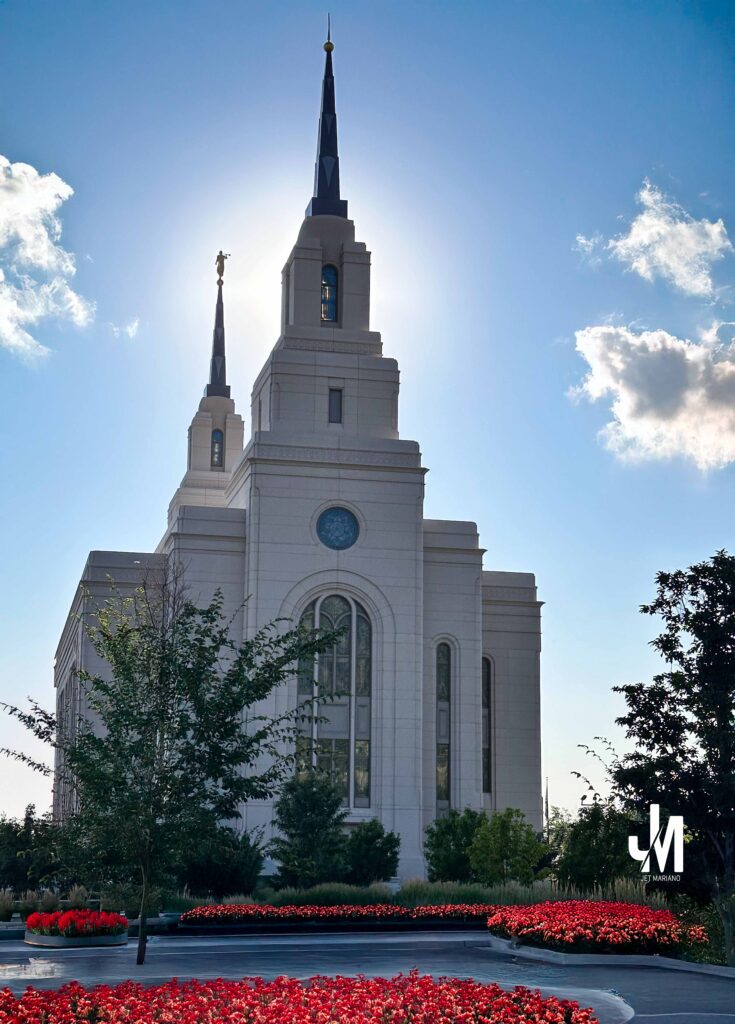
    Layton Utah Temple — late afternoon, sun crowning the spire; shallow haze for a soft halo; foreground reds as a living border. iPhone, 26mm equiv.

    Excerpt

    In a shifting world, God’s laws don’t move. Standing in holy places anchors my heart and tunes my ears to revelation—often quiet, always real.


    Intro

    I came to the Layton Temple in July needing steadiness. Technology breaks, schedules slip, even good plans go sideways. Inside the temple, the noise falls away. President Monson’s call to “stand … in holy places, and be not moved” landed fresh. I felt why the Lord invites us to keep covenants and come back often—the temple is where He re-centers the soul.


    Notes from President Monson

    • God’s commandments are constant; they are commandments, not suggestions.
    • Prayer is our lifeline; God answers—in ways we recognize as we practice.
    • The world’s moral compass drifts, but Christ’s gospel holds steady.
    • Revelation comes when we’re worthy, willing, and in the right places.
    • Holy places (temples, homes, sacrament) give peace to weather life’s storms.
    • Inspiration is to be trusted and acted upon.


    Perspective — direct quotes

    “The Ten Commandments are just that—commandments.”
    “Our Father in Heaven is the same yesterday, today, and forever.”
    “Watch and pray always.”
    “Stand … in holy places, and be not moved.”


    Practice — today, not someday

    1. Temple time: schedule my next endowment/initiatory before I leave this post.
    2. Daily prayer slots: five quiet minutes morning and night—no phone, just scripture and a kneeling prayer.
    3. Holy ground at home: set a small, uncluttered spot for scripture, journal, and temple card—use it daily.

    Final Reflection

    In July I brought a hurried heart to the Layton Temple and left carrying peace. President Monson reminded me that God’s laws don’t flex with culture, and that revelation often whispers when I’m where He wants me to be. The temple slowed me to the Lord’s pace. It didn’t erase my problems, but it reframed them. I can face outages, delays, and disappointments without losing center. Holiness isn’t escape; it’s alignment. When I choose the Lord’s places, I hear the Lord’s voice.


    Pocket I’m Keeping

    Stand in holy places, and be not moved.” One line to carry into every room this week.


    What I Hear Now — direct quotes

    “The work of righteousness shall be peace.”
    “Draw near unto me and I will draw near unto you.”


    A Moment That Marked Me — Frankfurt, 1987 (Monson)

    President Monson told how, during the Frankfurt Germany Temple dedication, he felt a clear impression to call Peter Mourik as the first speaker—even after being told Brother Mourik wasn’t in the building. Trusting the Spirit, he announced him anyway. At that very moment, Brother Mourik felt prompted across town to drive to the temple and walked in as his name was called. This experience witnesses that worthy, timely impressions can be trusted—the Lord coordinates details we cannot see.


    Advantages of Standing in Holy Places (my takeaways)

    • Clarity: Temples tune the heart; choices sort into wise vs. unwise.
    • Protection: Covenants set boundaries that keep me safe when the world blurs lines.
    • Power to Act: The Spirit gives courage to do right things in the right order.
    • Peace: The promised effect of righteousness is quietness and assurance forever.
    • Memory: Heaven records; the temple helps me remember who I am and whose I am.

    Link to the Talk / Source

    Official text: Stand in Holy Places — President Thomas S. Monson.

    © 2012–2025 Jet Mariano. All rights reserved.
    For usage terms, please see the Legal Disclaimer.
  • Marked in Time Sep 10, 2025 — Finding Joy in the Journey

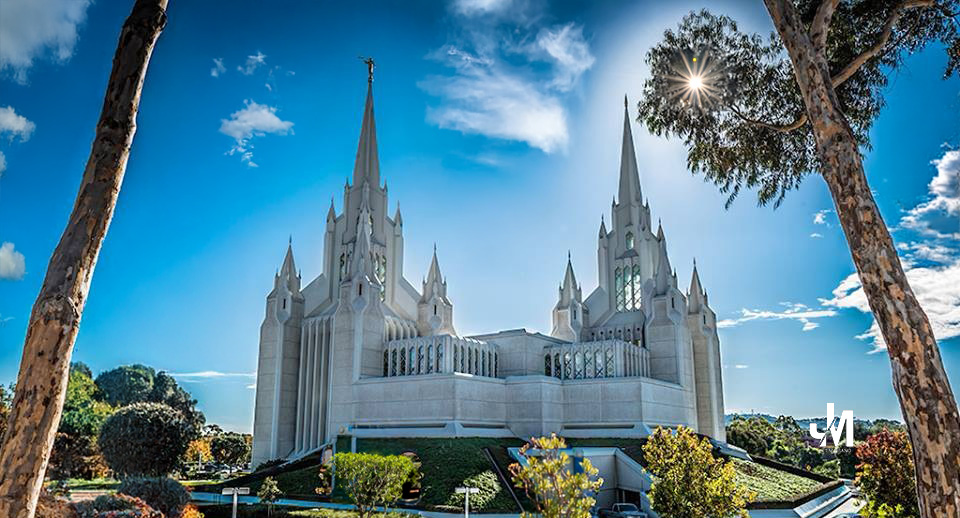
    San Diego California Temple — made on an early iPhone. Daylight reminds me it’s less about the lens and more about the eye and the feeling. This house is family to me—my firstborn was sealed here on 12/12/12 at 12:00 PM.

    Excerpt
    President Thomas S. Monson teaches that joy is not in the distant future but in the daily moments we cherish with gratitude and love.


    Intro
    Life changes—sometimes suddenly, often gradually. President Thomas S. Monson reminds us that we cannot pile up tomorrows and expect joy to wait. Joy is in the journey now—in gratitude, in kindness, in cherishing those around us before it is too late.


    Straight line (what he’s saying)
    Change is constant; the key is learning what matters most.
    • Childhood, family time, and simple daily joys vanish if we postpone them.
    • Don’t wait for tomorrows that never come; love must be shown today.
    Never let a problem to be solved become more important than a person to be loved.
    • Gratitude transforms lack into abundance; ingratitude blinds us to God’s gifts.
    • Challenges will come, but we choose whether to cherish or neglect the people we love.
    • Christ’s example—serving, forgiving, and loving to the end—shows us how to live joyfully.


    Final reflection
    Time never stands still. My regrets are not about things I did, but things I left undone—words unsaid, kindness unshown. President Monson’s reminder echoes: joy is not about someday; it is about today.


    Pocket I’m keeping
    • Hug my family more, speak my love more.
    • Write the note, send the message, make the call—today.
    • Guard against letting stress eclipse people.
    • Give thanks deliberately, even for the small, ordinary blessings.
    • Joy = gratitude in motion.


    What I hear now
    Joy is a daily decision, not a future destination. If I train my heart to see God’s gifts in every moment, life itself becomes the journey worth rejoicing in.


    Link to the talk
    “Finding Joy in the Journey – President Thomas S. Monson

    © 2012–2025 Jet Mariano. All rights reserved.
    For usage terms, please see the Legal Disclaimer.

error: Content is protected !!