
Author: jetnmariano

  •  MIT-8: “The Brass Serpent”

    Not everything that heals you is complicated. Sometimes, you just have to look.

    Excerpt
    Sometimes the hardest problems in life are answered with the simplest solutions. The challenge is not the solution—it is whether we are willing to accept it.


    Intro
    As I reflected this past month, I realized how often I complicate things that are meant to be simple. In the scriptures, the story of the brass serpent is one of the clearest reminders that healing, both physical and spiritual, often comes through simple acts of faith.


    Notes from the Scriptures
    As the children of Israel journeyed near the land of Edom, they complained along the way. Because of their murmuring, “the Lord sent fiery serpents among the people, and they bit the people; and much people of Israel died” (Numbers 21:6).

    Moses sought the Lord on behalf of the people, and the answer he received was unexpected. “Make thee a fiery serpent,” the Lord commanded, “and set it upon a pole: and it shall come to pass, that every one that is bitten, when he looketh upon it, shall live.” Moses obeyed, “and it came to pass, that if a serpent had bitten any man, when he beheld the serpent of brass, he lived” (Numbers 21:8-9).

    At first glance, the solution seems straightforward. Yet Nephi later revealed an important truth: “The labor which they had to perform was to look; and because of the simpleness of the way, or the easiness of it, there were many who perished” (1 Nephi 17:41). The difficulty was not in the act itself, but in accepting something so simple.

    Alma later taught that the brass serpent was a symbol of the Son of God. However, “few understood the meaning of those things, and this because of the hardness of their hearts.” Many “would not look,” not because they couldn’t, but because “they did not believe that it would heal them” (Alma 33:20).

    This pattern mirrors the mindset of Laman and Lemuel. When asked if they had prayed, they replied, “We have not; for the Lord maketh no such thing known unto us” (1 Nephi 15:9). Doubt prevented action.

    Alma then invited the people with a simple but powerful question: “If ye could be healed by merely casting about your eyes that ye might be healed, would ye not behold quickly?” He urged them to “cast about your eyes and begin to believe in the Son of God” (Alma 33:21-22).

    He later reinforced the same principle: “The way is prepared, and if we will look we may live forever” (Alma 37:46).

    Nephi, generations later, made the connection even clearer: “As Moses lifted up the brazen serpent in the wilderness, even so shall he be lifted up who should come… even so as many as should look upon the Son of God with faith… might live, even unto that life which is eternal” (Helaman 8:14-15).

    The Savior Himself confirmed this truth: “And as Moses lifted up the serpent in the wilderness, even so must the Son of man be lifted up: that whosoever believeth in him should not perish, but have eternal life” (John 3:14-15).


    Perspective (direct quotes)
    “The labor which they had to perform was to look.”
    “And because of the simpleness of the way… there were many who perished.”
    “They did not believe that it would heal them.”
    “Cast about your eyes and begin to believe.”


    Practice (today, not someday)
    Today, I will not overcomplicate what God has made simple.
    I will act, even when I do not fully understand.
    I will choose faith over doubt, even when the solution seems too easy.
    I will look up—toward Christ—rather than around for alternatives.


    Final Reflection
    The brass serpent reminds me that the issue is rarely the solution. The issue is whether I am willing to trust it. Healing is available, but it requires humility. It requires action. And sometimes, it requires doing something so simple that pride resists it.


    Pocket I’m Keeping
    “Don’t ignore simple solutions.”


    What I Hear Now (direct quotes)
    “If ye could be healed… would ye not behold quickly?”
    “The way is prepared, and if we will look we may live forever.”


    Link to the talk/scriptures
    Numbers 21:6–9
    1 Nephi 17:41
    Alma 33:20–22
    Alma 37:46
    Helaman 8:14–15
    John 3:14–15


    © 2012–2026 Jet Mariano. All rights reserved.
    For usage terms, please see the Legal Disclaimer.

  • MIT8 – Once in a Blue Moon: Don’t Ever Let Them Win

    No matter how busy I was preparing for the IT cutover, I still made time for photography. This is one of my anchors. A moment to pause, to see light, and to remind myself to keep going.

    Excerpt

    Once in a blue moon, beneath quiet light,
    I learned not to yield, but to stand and to fight.


    Intro

    There are moments in life that don’t come often. Rare, quiet, and almost unnoticed. This was one of them. A full moon above the temple, stillness all around, and a reminder that even in darkness, light remains.

    Even in the middle of pressure, responsibility, and preparation, I found a moment to pause. To look up. To remember who I am.


    Notes from Jesus Christ

    “Be of good cheer; I have overcome the world.”
    —John 16:33


    Perspective

    Once in a blue moon, when the night closes in,
    When breath turns to fire and strength wears thin,
    When the body says stop and the mind wants to quit,
    That’s the moment you rise… you don’t yield, you don’t sit.

    Through rounds that don’t end, through sweat and through pain,
    Through strikes in the dark that you take and sustain,
    Conditioned to stand when there’s nothing within,
    That’s when you remember… don’t ever let them win.

    Slow is the rhythm where discipline begins,
    Each motion refined so no error slips in,
    For habits once formed will return in the fight,
    When pressure is highest and there’s no room for right.

    In battles of code, where the pressure runs dry,
    Where systems break down and solutions won’t comply,
    No space for mistakes when you’re pushed to the edge,
    At the point of no return, there’s no time for a hedge.

    No exit, no shortcut, no easy way through,
    Just grit in your soul and the will to stay true,
    When everything’s tested and all’s wearing thin,
    That’s where you are forged… don’t ever let them win.


    Practice (today, not someday)

    I move with intent, I refine and repeat,
    No rushed empty motion, no careless defeat.

    Slow to build right, so when pressure begins,
    I stand on my training… and that’s how I win.


    Final Reflection

    Once in a blue moon, everything slows down enough for you to see clearly.

    The struggle.
    The weight.
    The silence.

    And yet… you’re still here.

    No applause. No recognition. No visible finish line.

    But you endured.

    So I made a decision:

    Don’t ever let them win.


    Pocket I’m Keeping

    Don’t ever let them win.


    What I Hear Now

    “Fear thou not; for I am with thee: be not dismayed; for I am thy God.”
    —Isaiah 41:10


    © 2012–2026 Jet Mariano. All rights reserved.
    For usage terms, please see the Legal Disclaimer.

  • MIT8 Don’t dream it’s over. The fight is not Done!

    Salt Lake Temple at sunset. Shot at 50mm to catch the sun breaking through—lighting the place where covenants begin and where light reminds me to endure.

    Excerpt

    Don’t dream it’s over.
    The fight is not done.


    Intro

    Easter came quietly this year. No crowd, no noise—just stillness and reflection. As I listened to General Conference, one message stayed with me: love—not just when it’s easy, but especially when it’s hard.


    Notes from President Dallin H. Oaks

    “Today we might say that we are commanded to love our adversaries. All mortals are beloved children of God.”

    “As followers of Christ, let us follow Him by forgoing contention and by using the language and methods of peacemakers.”


    Perspective

    “The worth of souls is great in the sight of God.”
    —Doctrine and Covenants 18:10

    “Blessed are the peacemakers: for they shall be called the children of God.”
    —Matthew 5:9


    Practice (today, not someday)

    Today I choose to love without contention.
    To stand firm without becoming harsh.
    To help without expecting anything in return.
    To be a peacemaker… even when it’s not easy.


    Final Reflection

    Loving others is not weakness.
    It is discipline.

    It does not mean surrendering truth—
    but choosing peace over pride, and patience over reaction.

    Easter reminds me that because of Him,
    death is not the end… and neither are our struggles.

    There is more ahead.
    So I keep going.


    Pocket I’m Keeping

    Choose to be a peacemaker. Always.


    What I Hear Now

    “We can follow the example of Jesus Christ… by choosing to love others—even if they show little or no love toward us.”

    “Come unto me, all ye that labour and are heavy laden, and I will give you rest.”
    —Matthew 11:28


    © 2012–2026 Jet Mariano. All rights reserved.
    For usage terms, please see the Legal Disclaimer.

  • MIT-8 Silver pieces and the worth of a Soul

    The world assigns value.
    God never does.

    Excerpt

    Silver was counted. Souls were not. And yet, heaven never made that mistake.


    Intro

    When Joseph was sold by his brothers, the price they accepted revealed more about them than it did about him. They saw inconvenience. God saw a deliverer.

    Years later, that same pattern would repeat—this time, with the Savior Himself.


    Notes from Scripture

    When Joseph’s brothers cast him into the pit and sold him for twenty pieces of silver, they did not understand what they were doing. What looked like betrayal became the very path that would preserve their lives.

    Joseph later declared:
    “It was not you that sent me hither, but God” (Genesis 45:8).

    The prophet Zechariah later described a people who misjudged the worth of a shepherd, offering thirty pieces of silver—an amount that exposed how little they understood.

    That same number would be used again when Judas betrayed Christ.


    Perspective (Direct Quotes)

    “It was not you that sent me hither, but God” (Genesis 45:8)

    “A goodly price that I was prised at of them.” (Zechariah 11:13)

    “The worth of souls is great in the sight of God” (Doctrine and Covenants 18:10)


    Practice (Today, Not Someday)

    Today, I will remember that people are not measured by convenience, appearance, or past mistakes.

    I will choose to:

    • See beyond what is visible
    • Speak with respect, even when it’s not returned
    • Treat every person as someone God has never discounted

    Final Reflection

    Joseph was sold for silver—but he was never defined by it.

    The Savior was betrayed for silver—but He chose to redeem, not condemn.

    The world will always try to assign value based on what it understands.

    But heaven does not negotiate the worth of a soul.


    Pocket I’m Keeping

    No one I meet today is “cheap” in the eyes of God.


    What I Hear Now (Direct Quotes)

    “The things which some men esteem to be of great worth… others set at naught.” (1 Nephi 19:7)

    “For behold, the Lord your Redeemer suffered death in the flesh… that all men might repent and come unto him” (D&C 18:11)

    © 2012–2026 Jet Mariano. All rights reserved.
    For usage terms, please see the Legal Disclaimer.

  • MIT8 – Christ our Passover Deliverance through Sacrifice

    Morning stillness. A reminder that even in quiet moments, deliverance has already begun.

    Excerpt

    Deliverance doesn’t come by chance—it comes through sacrifice.


    Intro

    There are moments in scripture that don’t just tell a story—they reveal a pattern. The Passover is one of them. What happened in Egypt was not only deliverance from bondage, but a living symbol of something far greater that would come.


    Notes from Alma / Moses / Christ

    The Lord has always taught His people through patterns—preparing them before the miracle even happens.

    “And behold, this is the whole meaning of the law, every whit pointing to that great and last sacrifice; and that great and last sacrifice will be the Son of God, yea, infinite and eternal.”
    — Alma 34:14

    Even before Israel was freed, the Lord established a way for them to remember. He wasn’t just saving them—He was teaching them.


    Perspective

    After nine devastating plagues, Pharaoh still refused to let Israel go. Then came the final warning:

    “And there shall be a great cry throughout all the land of Egypt…”
    — Exodus 11:6

    This time, protection required action. The Israelites were commanded to mark their homes with the blood of an unblemished lamb.

    “And the blood shall be to you for a token… and when I see the blood, I will pass over you.”
    — Exodus 12:13

    Even before the deliverance happened, the Lord asked them to remember it:

    “What mean ye by this service?”
    — Exodus 12:26

    The lesson was clear: salvation comes through obedience and sacrifice.


    Practice (today, not someday)

    Today, I pause and ask myself:
    Do I recognize the ways the Lord has already passed over me?

    Do I see His hand protecting, guiding, and delivering me—even when I didn’t fully understand it at the time?

    Like the instruction given in ancient Egypt, I choose to remember now—not later.


    Final Reflection

    The Passover was never just about Egypt. It was pointing forward—to Christ.

    As Jesus sat with His apostles before His crucifixion, He established a new remembrance:

    “This is my body which is given for you: this do in remembrance of me.”
    — Luke 22:19

    “This cup is the new testament in my blood, which is shed for you.”
    — Luke 22:20

    Just as the lamb’s blood spared Israel, Christ—the true Lamb—offers deliverance to all of us.

    “For even Christ our passover is sacrificed for us.”
    — 1 Corinthians 5:7

    He didn’t just free people from physical bondage. He frees us from sin, fear, and spiritual death.

    There was a time in my life when I thought losing an opportunity was the end. I carried that weight—questions, frustration, even a sense of being left behind. But looking back now, I can see something I couldn’t see then.

    The Lord was passing over something I thought I needed… to lead me to something He knew I needed.

    What I once saw as loss became redirection. What felt like silence became protection. And what I thought was delay became preparation.

    Just like the children of Israel, I didn’t fully understand the deliverance while I was still in it. But now I see—He was already making a way.


    Pocket I’m Keeping

    Deliverance comes through sacrifice—and Christ is that sacrifice.


    What I Hear Now

    “And behold, this is the whole meaning of the law…”
    — Alma 34:14

    “For even Christ our passover is sacrificed for us.”
    — 1 Corinthians 5:7


    © 2012–2026 Jet Mariano. All rights reserved.
    For usage terms, please see the Legal Disclaimer.

  • MIT-8 — “He Turned Aside: Choosing the Sacred”

    After choosing not to react, I came here. Among the tulips and the temple, I was reminded that peace is not something we find by accident. It is something we protect by choice.
    Since the scaffolding was removed, the temple has been drawing people all day. I had to patiently wait for the right moment as visitors passed by, taking photos and selfies, until everything cleared.
    Sometimes, stillness is not given. It is waited for.

    Excerpt
    “I will now turn aside, and see this great sight…” (Exodus 3:3)


    Intro
    There are moments when something sacred is placed before us, but it does not demand our attention. We must choose to notice it. We must choose to turn.

    Moses did not just see the burning bush. He chose to turn aside.


    Notes from {Speaker}
    Reverence is not just an aspect of spirituality. It is the foundation of it.

    Elder Ulisses Soares taught that reverence requires intention. It invites us to step away from distraction and give our full attention to what is holy.


    Perspective (direct quotes)
    “I will now turn aside, and see this great sight…” (Exodus 3:3)

    “Moses, Moses” (Exodus 3:4)

    “Put off thy shoes from off thy feet, for the place whereon thou standest is holy ground” (Exodus 3:5)

    “Come and fear not, and lay aside every sin…” (Alma 7:15)

    “Deny yourselves of all ungodliness…” (Moroni 10:32-33)


    Practice (today, not someday)
    Today, I will turn aside.
    I will step away from distractions and from reactions that disturb peace.
    I will choose what is sacred over what is immediate.


    Final Reflection
    Turning aside is not only about moving toward something sacred. It is also about choosing what not to engage.

    Today, on my way to the Filipino Ward in Midvale, Utah, I was looking forward to watching my grandson take part in the Primary musical presentation on Palm Sunday.

    Along the way, I encountered a tense situation on the road that could have easily escalated. For a brief moment, everything paused, and I had a choice.

    I could react.
    I could confront.
    I could escalate.

    Or I could turn aside.

    I chose to remain calm.
    I chose not to engage.
    I chose to continue forward.

    I made it to the chapel. I watched my grandson perform. I spent time with fellow members.

    Afterward, I drove to Temple Square and stood among the tulips, seeing the Salt Lake Temple—quiet, steady, and free from scaffolding.

    Moses turned aside to see something sacred.

    Today, I turned aside from something that would have taken that moment away.


    Pocket I’m Keeping
    “I will now turn aside.”


    What I Hear Now (direct quotes)
    “When God saw that he turned aside… God called unto him…” (Exodus 3:4)


    Link to the talk

    Reverence For Sacred Things – by Elder Ulisses Soares

    © 2012–2026 Jet Mariano. All rights reserved.
    For usage terms, please see the Legal Disclaimer.

  • MIT-8 — “Here Am I: From Objection to Calling”

    Moments like this remind me that moving forward is rarely about feeling ready. It is about trusting enough to go when called. Like Moses, we may question, hesitate, and even doubt, but the promise remains the same: “I will be with thee.”

    Excerpt
    “Who am I, that I should go unto Pharaoh…?” (Exodus 3:11)


    Intro
    There are moments when God calls, and instead of stepping forward, we hesitate. Not because we lack faith, but because we see our own limitations more clearly than our potential. Moses felt it. I have felt it. And perhaps we all have, in our own callings, careers, and responsibilities.


    Notes from Scripture
    Moses did not accept his calling easily. In his encounter with God at the burning bush, he raised concern after concern—six in total. Each one revealed a different fear: inadequacy, lack of knowledge, fear of rejection, personal weakness, comparison, and finally, frustration when results did not come quickly.

    Yet each time, the Lord did not withdraw the calling. He responded with assurance, instruction, power, support, and patience.


    Perspective (direct quotes)
    “Who am I, that I should go unto Pharaoh…?” (Exodus 3:11)
    “I will be with thee” (Exodus 3:12)

    “But, behold, they will not believe me…” (Exodus 4:1)

    “O my Lord, I am not eloquent…” (Exodus 4:10)

    “O my Lord, send… by the hand of him whom thou wilt send” (Exodus 4:13)

    “Lord, wherefore hast thou so evil entreated this people?” (Exodus 5:22)

    “The Lord uses the unlikely to accomplish the impossible” — President Russell M. Nelson


    Practice (today, not someday)
    Today, I will stop disqualifying myself before even trying.
    I will move forward even when I feel unprepared.
    I will trust that if I am called, I will also be supported.


    Final Reflection
    Moses’ objections are not just ancient history. They are alive in our daily lives.

    In my IT journey, I have faced my own “Who am I?” moments:

    • Standing in front of leadership during critical migrations
    • Identifying blockers others could not see
    • Carrying systems that entire departments depended on

    There were times I felt:

    • not qualified enough
    • not ready enough
    • not supported enough

    Yet just like Moses, the pattern was always the same—step forward, and help followed.

    In my IT journey, I have faced moments where I had to step into complex problems that carried real impact across the organization. The pressure was real, and the path forward was not always clear. But as I moved forward step by step, the way opened.

    In other moments, I questioned:
    Why am I the one carrying this?
    Why does it feel harder after I stepped in?

    Moses asked the same thing.

    And still, the Lord did not remove him. He strengthened him.


    Pocket I’m Keeping
    “I will be with thee.”


    What I Hear Now (direct quotes)
    “I will be with thy mouth, and teach thee what thou shalt say” (Exodus 4:12)


    © 2012–2026 Jet Mariano. All rights reserved.
    For usage terms, please see the Legal Disclaimer.

  • Born of Water, Blood, and Spirit — The Sacred Role of Mothers

    Life enters this world through sacrifice.
    Through water. Through blood. Through a mother.

    Excerpt

    Every life enters this world through sacrifice. Through water, through blood, through a mother. I am beginning to understand what that really means.


    Intro

    I’ve been thinking deeply about mothers.

    Especially now.

    There are women who bring life into this world knowing the risks. Some endure long labor, complications, and moments where their own lives are on the line.

    Some give everything… so their child can live.

    And the more I reflect on it, the more I realize:

    We owe our mothers more than we understand.


    Notes from Today

    Today, I was reminded of something simple.

    Even in the middle of my own grief, I found myself thinking about others—about their struggles, their sacrifices, and their quiet strength.

    Someone close to me once asked:

    “Why do you still care for others when you are the one who needs care?”

    I paused.

    Then I remembered something I’ve held onto for years:

    When you are down… lift others up.


    Perspective (Doctrine — Moses 6:59–60)

    In the Book of Moses, the Lord teaches something profound about how we enter this world:

    “Inasmuch as ye were born into the world by water, and blood, and the spirit… even so ye must be born again into the kingdom of heaven” (Moses 6:59).

    Every life begins this way.

    Water—the amniotic fluid that surrounds and sustains the child.
    Blood—the sacrifice of the mother’s body.
    Spirit—the life that comes from God.

    I have come to see this differently now.

    A mother carries a child for nine months. Her body changes. Her strength is stretched. And at the moment of birth, there is water and blood—real sacrifice—so that the child can live.

    This is not just biology.

    This is divine symbolism.

    Just as a mother gives of her own body and blood to bring a child into physical life, Jesus Christ gave His blood so that we might be born again into spiritual life.

    Motherhood, in that moment, becomes a quiet, heaven-given reminder of the Savior’s sacrifice.


    Application (Robert J. Matthews Insight)

    I remember listening to an Education Week address by Robert J. Matthews, where he explained this connection through the Book of Moses.

    He taught that bringing life into the world has always been tied to sacrifice.

    That image has stayed with me:

    A mother giving everything she has…
    so that another life can begin.


    Practice (today, not someday)

    Honor your mother.
    Recognize her sacrifice.
    Do not take life lightly.

    And when you feel like you have nothing left—

    Lift someone anyway.


    Final Reflection

    Mothers give life.

    Not in ease, but through sacrifice.

    And sometimes, we only begin to understand that when we see how fragile life really is.

    I am beginning to understand.


    Pocket I’m Keeping

    Life comes through sacrifice.


    What I Hear Now (direct quotes)

    “Inasmuch as ye were born into the world by water, and blood, and the spirit…”
    “When you are down… lift others up.”


    © 2012–2026 Jet Mariano. All rights reserved.
    For usage terms, please see the Legal Disclaimer.
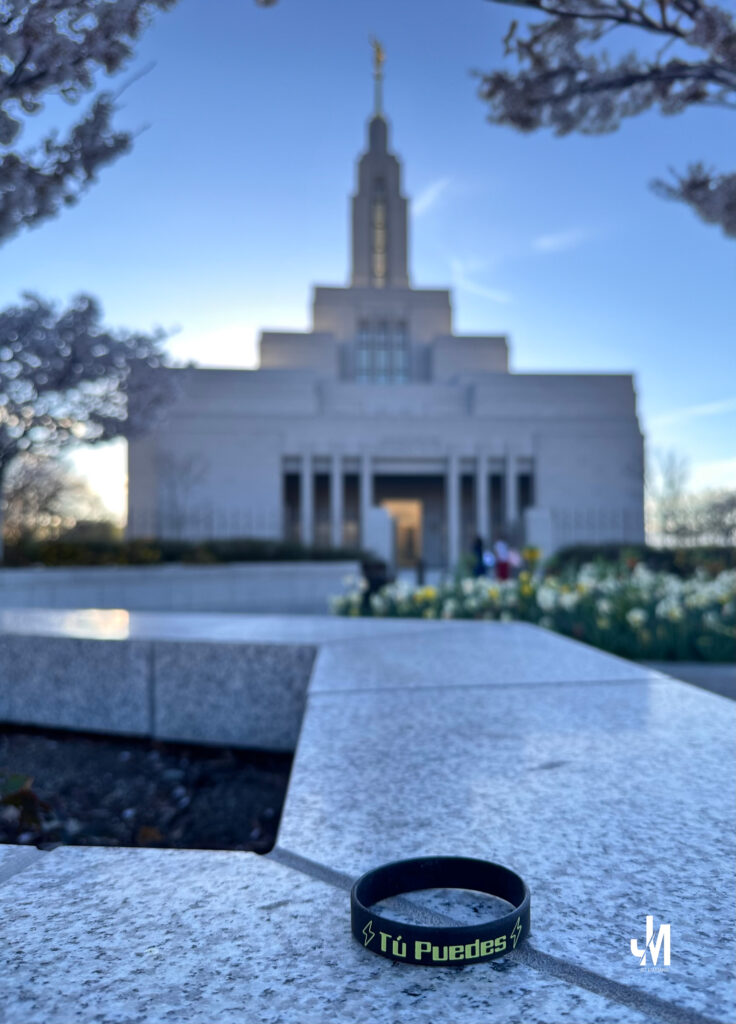
  • Tú Puedes — The Refining Fire of Grief

    Everything felt blurred… but the message was clear.
    Tú puedes.

    Excerpt
    I thought I would be used to grief by now. I was wrong. But in the middle of it… a quiet message remained: Tú puedes.


    Intro
    March 23, 2026.

    While at work, I received a message from my younger daughter. She had gone into early contractions at 4AM and lost her baby boy at 19 weeks. His name would have been Solis Xavier.

    It felt like I was struck by lightning.

    In that moment, another memory returned—November 20, 2021. My firstborn daughter went through a similar loss. Her baby boy, Kale’l, was just days away from being born.

    I suddenly felt helpless. I stayed in my office for about an hour, trying to process everything, while our President and HR sat with me.

    The grief didn’t feel new.

    But it didn’t feel any lighter either.


    Notes from Life & Loss
    I thought that after everything I had already experienced—my younger brother, my father, my grandson, my sister-in-law—that I would have learned how to handle grief better.

    I thought maybe I would be used to it by now.

    I’ve heard people say, “life goes on.”

    But I realized something.

    I am not wired that way.

    Each loss feels just as deep. Just as real.

    Even when a coworker passed away earlier this year, I was affected.

    Grief doesn’t lessen because it repeats.

    It remains… because love remains.


    Refining Fire (Ensign 2013 Connection)
    In The Refining Fire of Grief, it teaches that grief is not something we outgrow—it is something that refines us.

    Grief is not a sign of weakness.

    It is the evidence that we love.

    And maybe the reason it still hurts…
    is because I still do.


    Turning Point
    The next day, I tried to fight it the only way I knew how.

    I went to the basement and pushed through six rounds—slipping, ducking, rolling, throwing nonstop combinations. It was the most I had ever done.

    But it didn’t help.

    So I went to the temple.

    Before I entered, I noticed something in my car—a simple band with yellow letters:

    “Tú puedes.”

    I didn’t know what it meant at the time.

    But I brought it with me.

    I placed it in front of the temple.

    Everything else felt blurred…
    but that message became clear.

    You can.


    Perspective (Direct Impressions)
    “You can.”
    “You are still standing.”
    “My grace is sufficient.”

    Not that the pain was gone…
    but that I had strength for this moment.


    The road didn’t stop for my grief. It kept going.
    And in the distance… the temple reminded me where to look.


    On the way, I realized something.

    The road doesn’t stop for grief.

    It keeps going.

    And in the distance… the temple remains.

    Not always close.
    But always there.


    Practice (today, not someday)
    Go anyway.
    Pray anyway.
    Show up anyway.

    Even when your heart is heavy.

    Because that is where strength is given.


    Final Reflection
    I thought I would be used to this by now.

    I’m not.

    And maybe that’s not something to fix.

    Maybe that’s something to understand.

    If this is the refining fire…
    then I will endure it.

    Because love is still worth it.

    And in the middle of it all…

    Tú puedes.

    Kale’l and Xavier.
    Not lost. Not gone.
    Just beyond my reach… for now.

    Pocket I’m Keeping
    Tú puedes.


    What I Hear Now (direct quotes)
    “My grace is sufficient for thee.”
    “I will not leave you comfortless.”
    “Be still, and know that I am God.”


    © 2012–2026 Jet Mariano. All rights reserved.
    For usage terms, please see the Legal Disclaimer.

  • MIT-8 “It Was Not You That Sent Me Hither, But God”

    15 seconds to run into position.
    No retake. No guarantee.
    Just trust… and move.
    Standing here at Daybreak, I realized something—
    the moment may feel rushed, uncertain, even forced…
    but the placement is never random.
    Like Joseph, what once didn’t make sense
    now feels guided.
    It was not timing.
    It was not chance.
    It was God placing me exactly where I needed to be.

    Excerpt
    Sometimes what feels like a setback is actually God positioning us exactly where we need to be.


    Intro
    There was a time I looked back at a loss in my career and felt the weight of it. It didn’t make sense. It felt like something was taken away.

    But looking at Joseph’s story, I see it differently now.


    Notes from the Scriptures
    He sent a man before them, even Joseph, who was sold for a servant.
    Psalm 105:17

    When Joseph revealed himself to his brothers, he acknowledged the devastating decision they had made decades earlier: “I am Joseph your brother, whom ye sold into Egypt.” But he immediately explained how that decision had helped God fulfill his purposes for their family: “Now therefore be not grieved, nor angry with yourselves, that ye sold me hither: for God did send me before you to preserve life” (Genesis 45:4-5). He concluded, “So now it was not you that sent me hither, but God” (Genesis 45:8).


    Perspective
    Joseph stood in front of the very people who caused his suffering—and saw purpose instead of pain.

    I’ve had moments where I questioned why something had to happen in my career. At the time, it felt like a loss I didn’t deserve.

    But if that door hadn’t closed… I wouldn’t be here.

    A full-time opportunity in Utah.
    A place to rebuild.
    A place to grow stronger—spiritually, physically, and mentally.

    Daily discipline.
    Clean living.
    Boxing training that keeps me sharp and grounded.
    Time to think, to reflect, to reconnect with God.

    And the quiet blessings that don’t make noise—but change everything.

    Looking back now, I can say with peace:

    It was not them.
    It was God.


    Practice (Today, Not Someday)
    Today, I will trust that not everything that feels like loss is truly loss.

    I will move forward with faith, knowing that God may be preparing something I cannot yet see.


    Final Reflection
    Joseph didn’t just survive what happened to him—he understood it.

    And when I look at my own path, I see that some of the hardest moments were actually turning points.

    God didn’t just fix things later.

    He was already there… guiding it from the beginning.


    Pocket I’m Keeping
    What I thought was a setback… was actually a setup.


    What I Hear Now
    “So now it was not you that sent me hither, but God” (Genesis 45:8)


    Link to the Talk / Scripture
    Genesis 45
    Psalm 105:17


    © 2012–2026 Jet Mariano. All rights reserved.
    For usage terms, please see the Legal Disclaimer.

  • MIT-8 “Prepared in Plenty, Protected in Famine”

    Prepared in plenty, protected in famine. Light always comes after preparation.

    Excerpt
    Preparation today becomes provision tomorrow.


    Intro
    Pharaoh’s dream wasn’t just symbolic—it was a warning. Through Joseph, God revealed a pattern: seasons of abundance followed by seasons of scarcity. The difference between survival and suffering would depend on one thing—preparation.


    Notes from the Scriptures

    Pharaoh saw in his dream seven years of plenty followed by seven years of famine. Through revelation, Joseph interpreted what others could not.

    (Genesis 41:1-36)

    The solution was simple, but required discipline: store during the years of abundance so there would be enough during the years of famine.

    President Gordon B. Hinckley later echoed this same principle:

    “I want to make it very clear that I am not prophesying, that I am not predicting years of famine in the future.”
    “There is a portent of stormy weather ahead to which we had better give heed.”
    (“To the Boys and to the Men,” General Conference, October 1998)

    Preparation is not fear—it is wisdom.


    Perspective
    Joseph didn’t just interpret the dream—he acted on it. Because of that, when famine came, Egypt didn’t panic. They were ready.

    This principle is not limited to ancient times. It applies to finances, to spiritual strength—and even to daily work.

    In IT, I’ve seen the same pattern again and again.

    Systems run smoothly during “years of plenty.” Everything works, tickets are light, and it’s easy to assume things will stay that way. But when failure comes—and it always does—the difference between chaos and control is preparation.

    Documentation is our “stored grain.”

    The modern “corn in Egypt.” Documentation and preparation today become survival tomorrow.

    When systems go down, when key people are unavailable, or when something critical breaks, those who prepared can respond with clarity. Those who didn’t are left scrambling.


    Practice (today, not someday)
    Today I will prepare while things are working. I will document, organize, and plan—not just for my benefit, but for those who may depend on it later.


    Final Reflection
    Joseph didn’t store grain for himself. He prepared for a future he could not yet see. And when the famine came, he was in a position to save others—including his own family.

    Preparation is never wasted. It becomes someone else’s lifeline.


    Pocket I’m Keeping
    What I prepare today may save someone tomorrow.


    What I Hear Now
    “We lose our life by serving and lifting others. By so doing we experience the only true and lasting happiness. Service is not something we endure on this earth so we can earn the right to live in the celestial kingdom. Service is the very fiber of which an exalted life in the celestial kingdom is made. …”
    “The Celestial Nature of Self-Reliance,” October 1982 general conference

    “In their prosperous circumstances, they did not send away any who were naked, or that were hungry, or that were athirst, or that were sick, or that had not been nourished; and they did not set their hearts upon riches; therefore they were liberal to all…”
    Alma 1:30

    “I have heard that there is corn in Egypt: get you down thither, and buy for us from thence; that we may live, and not die”
    (Genesis 42:2)


    © 2012–2026 Jet Mariano. All rights reserved.
    For usage terms, please see the Legal Disclaimer.

  • MIT-8 “Two Coats: Obedience, Loss, and New Beginnings in the Life of Joseph of Egypt.”

    Taylorsville Temple before sunrise. Joseph lost his coat twice, yet the Lord was already preparing the next chapter.

    Excerpt
    Joseph lost his coat twice, but he never lost his faith.


    Intro
    Joseph’s story is one of repeated loss followed by unexpected elevation. Twice in his life he lost a garment and the position he held, yet each time the loss became the doorway to something greater. His life reminds us that obedience does not always prevent hardship, but it does guide us through it.


    Notes from the Scriptures

    Joseph’s first loss came while he was still young, living in the land of Canaan. His father loved him deeply and gave him a coat of many colors. That gift, however, intensified the jealousy of his brothers. When Joseph came to check on them, they turned against him.

    “They stript Joseph out of his coat, … cast him into a pit,” and later sold him into slavery (Genesis 37:23-28).

    Though everything familiar was taken from him, Joseph remained faithful. In Egypt, his diligence and integrity earned the trust of his master.

    Later, another trial came. Potiphar’s wife repeatedly tried to persuade Joseph to betray his trust and commit adultery. Joseph refused each time, remaining loyal both to Potiphar and to God.

    When she attempted to seize him physically, Joseph fled.

    “He left his garment in her hand, and fled, and got him out.” (Genesis 39:12)

    The garment she held became false evidence against him, and Joseph was thrown into prison.

    Yet even there, the pattern continued:

    “Because the Lord was with him, and that which he did, the Lord made it to prosper.” (Genesis 39:23)

    Joseph lost his position twice, yet his faith remained steady.


    Perspective
    Joseph’s story is not just about loss but about endurance. The second setback could easily have shaken his faith. Instead, Joseph continued to trust the Lord.

    Nephi experienced something similar. As a young man he left Jerusalem with his family, abandoning comfort and security to follow the Lord’s command (1 Nephi 2:2-4). Years later, after reaching the promised land, conflict within the family forced him to leave again.

    Nephi obeyed once more and established a new community, where the people eventually lived “after the manner of happiness” (2 Nephi 5:27).

    Both stories teach a profound truth: sometimes obedience leads us through repeated trials before it leads us to peace.

    Practice (today, not someday)
    Today I will remember that setbacks do not cancel God’s promises. When circumstances change, when plans collapse, or when losses come unexpectedly, faith can remain steady. Obedience today prepares the way for tomorrow’s new beginning.

    Final Reflection
    Joseph’s garments were taken, his freedom was taken, and his circumstances were taken. Yet his faith was never taken. God was quietly shaping his future through every trial.


    Pocket I’m Keeping
    When obedience leads to loss, trust God anyway.


    What I Hear Now
    Like the Jaredite barges, life can feel submerged by waves.

    “they were many times buried in the depths of the sea … but the wind did never cease to blow them towards the promised land.” (Ether 6:7)


    Link to the talk
    (Add the original talk or scripture reference if you want to link it.)


    IT Reflection (My own story)

    Joseph’s life reminds me of moments in my own IT career. Systems crash, projects fail, companies restructure, and sometimes the work we built disappears overnight. Yet those disruptions often become preparation for something new.

    Just as Joseph rose again through faithfulness and diligence, many of the hardest moments in technology work have eventually opened doors to deeper learning, new responsibilities, and greater trust.

    Sometimes losing the “coat” simply means the Lord is preparing us for a different assignment.


    © 2012–2026 Jet Mariano. All rights reserved.
    For usage terms, please see the Legal Disclaimer.
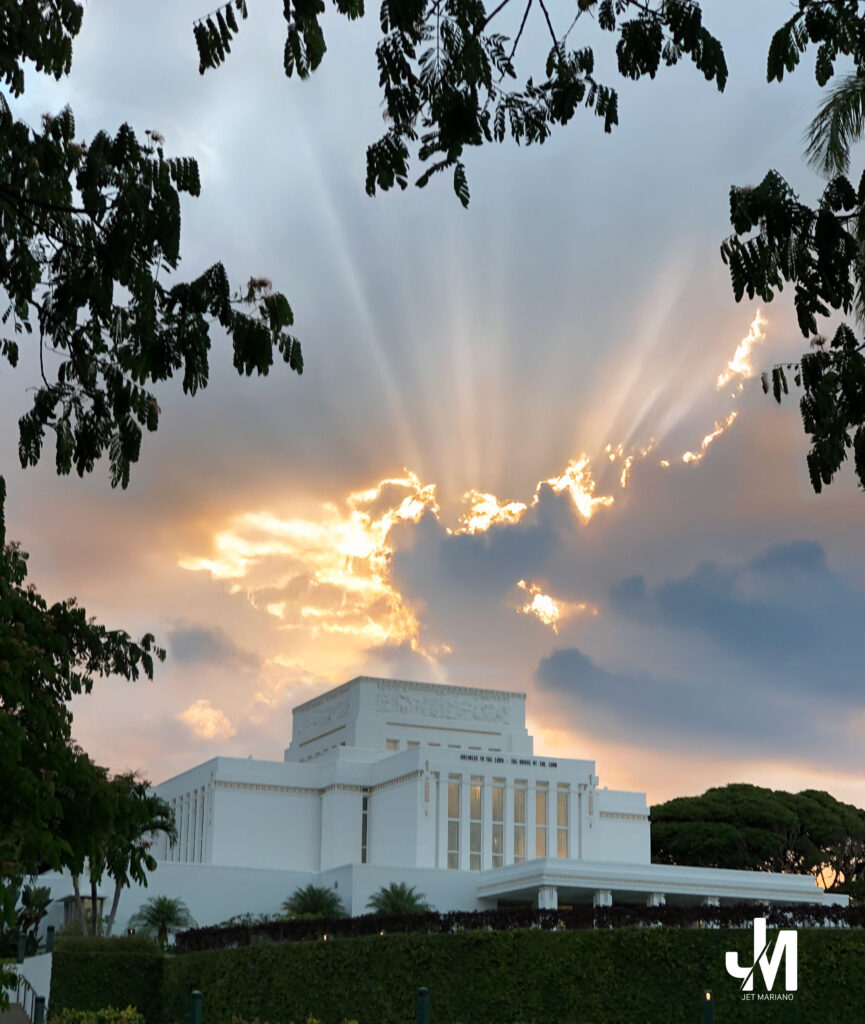
  • Procrastination – Redeeming The Time

    Early morning run. In Tagalog we sometimes say “Bukas na lang,” meaning “I’ll do it tomorrow.” That mañana habit quietly steals time and opportunities. I try not to delay the things that matter—whether it is exercise, work, faith, or even a prompting to do good. Some things are meant to be done today.

    Excerpt
    Time is the one resource that cannot be stored, replaced, or recovered once it passes.


    Intro
    People often think the most valuable things on earth are oil, gold, or rare resources. Yet there is something even more valuable and far more fragile: time. Every day we are given a fixed number of hours, and once they pass, they never return.

    In life, it is easy to delay important things. We tell ourselves we will exercise tomorrow, finish a task later, or reach out to someone another day. But the gospel teaches us that time is sacred and should be used wisely.


    Notes from Scripture

    “Redeeming the time, because the days are evil.”

    Ephesians 5:16

    Paul taught the Saints to live carefully and wisely. Part of that wisdom is learning to redeem time—to reclaim it from distractions and use it for things that truly matter.

    Elder Ian S. Ardern taught:

    “Time is never for sale; time is a commodity that cannot, try as you may, be bought at any store for any price. Yet when time is wisely used, its value is immeasurable. On any given day we are all allocated, without cost, the same number of minutes and hours to use, and we soon learn, as the familiar hymn so carefully teaches, ‘Time flies on wings of lightning; we cannot call it back’ (‘Improve the Shining Moments,’ Hymns, no. 226). What time we have we must use wisely.”

    “A Time to Prepare,” General Conference, October 2011

    The Book of Mormon also warns against delaying spiritual action.

    “If we do not improve our time while in this life, then cometh the night of darkness wherein there can be no labor performed.”
    Alma 34:33


    Perspective
    Procrastination often appears harmless. We think postponing something small will not matter. But small delays accumulate and slowly shape the direction of our lives.

    In my own life, I have learned that discipline matters. Whether it is boxing early in the morning, maintaining clean nutrition, or solving difficult IT problems, delay rarely helps. In technology, procrastination can cause systems to fail, security issues to grow, and problems to multiply. Acting promptly often prevents larger problems later.

    The same principle applies spiritually. Prompt obedience and timely action protect us from unnecessary regret.

    President Thomas S. Monson once taught:

    “Send that note to the friend you’ve been neglecting; give your child a hug; give your parents a hug; say ‘I love you’ more; always express your thanks. Never let a problem to be solved become more important than a person to be loved. Friends move away, children grow up, and loved ones pass on. It’s so easy to take others for granted—until that day when they’re gone from our lives and we are left with feelings of ‘what if’ and ‘if only.’ Said author Harriet Beecher Stowe, ‘The bitterest tears shed over graves are for words left unsaid and deeds left undone.’”

    Finding Joy in the Journey

    These reminders teach us that redeeming time is not only about productivity—it is about love, relationships, and living intentionally.

    Practice (today, not someday)
    Today I will redeem my time. I will act on the good things that come to mind rather than postponing them. I will focus on the activities that strengthen my faith, my health, my work, and my relationships.


    Final Reflection
    Time quietly shapes the course of our lives. When used wisely, even ordinary days can become meaningful and purposeful.


    Pocket I’m Keeping
    Time redeemed today becomes peace tomorrow.


    What I Hear Now
    “Time flies on wings of lightning; we cannot call it back.”


    © 2012–2026 Jet Mariano. All rights reserved.
    For usage terms, please see the Legal Disclaimer.

  • Temporary Global Reader Account for Microsoft 365 Tenant Review

    During Microsoft 365 tenant reviews or migration preparation, it is common to create a temporary read-only account so engineers can safely inspect the environment.

    Instead of granting administrative permissions, the recommended approach is to assign the Global Reader role. This role provides visibility into configuration, policies, and identity structure while preventing any changes to production resources.

    This method is frequently used during tenant consolidation, acquisitions, or domain transitions where a review of the existing environment is required before cutover.

    The following PowerShell example demonstrates how to create a temporary user and assign the Global Reader role using Microsoft Graph PowerShell.


    1. Create the Entra Account

    Creates a temporary user account for tenant inspection.

    $PasswordProfile = @{
        Password = "<ExamplePassword>"
        ForceChangePasswordNextSignIn = $false
    }
    
    New-MgUser `
    -DisplayName "Tenant Review Account" `
    -UserPrincipalName "[email protected]" `
    -MailNickname "reviewaccount" `
    -AccountEnabled:$true `
    -PasswordProfile $PasswordProfile

    2. Retrieve the Global Reader Role

    Checks whether the Global Reader role is already active in the tenant.

    $role = Get-MgDirectoryRole | Where-Object {$_.DisplayName -eq "Global Reader"}

    3. Activate the Role if Needed

    Some roles are not active until they are first used.

    $template = Get-MgDirectoryRoleTemplate |
    Where-Object {$_.DisplayName -eq "Global Reader"}
    
    New-MgDirectoryRole -RoleTemplateId $template.Id
    
    $role = Get-MgDirectoryRole |
    Where-Object {$_.DisplayName -eq "Global Reader"}

    5. Verify the Role Assignment

    Get-MgDirectoryRoleMember -DirectoryRoleId $role.Id

    Why This Approach Is Used

    Providing a temporary Global Reader account allows migration engineers to review the tenant safely. The role grants visibility into identity, security policies, and configuration without allowing any changes.

    This approach reduces risk while ensuring the incoming team can properly analyze the environment before migration activities begin.


    © 2012–2026 Jet Mariano. All rights reserved.
    For usage terms, please see the Legal Disclaimer.

  • MIT-8 “Humility, It Is Not in Me, Joseph in Egypt, Genesis 41:16”

    At the temple steps during the blue hour, I am reminded of Joseph’s words: “It is not in me.” Every gift, every solution, and every success ultimately comes from God.

    Excerpt
    “It is not in me: God shall give Pharaoh an answer of peace” (Genesis 41:16).


    Intro
    Some of the most powerful moments in scripture are not when someone demonstrates great ability, but when they refuse to take credit for it. Joseph had a remarkable gift. Yet when the opportunity came to impress Pharaoh, he made something clear: the power did not belong to him.


    Notes from Scripture
    Joseph had already experienced how powerful dreams could be. His own dreams had stirred anger among his brothers and eventually led to betrayal, slavery, and prison. Yet the same spiritual gift that placed him in difficult circumstances later became the instrument that lifted him out of prison and into a position of great influence in Egypt.

    When two fellow prisoners struggled to understand their dreams, Joseph asked a simple question: “Do not interpretations belong to God?” (Genesis 40:8).

    Later, when Pharaoh called for him to interpret troubling dreams, Joseph again refused to claim the gift as his own:

    “It is not in me: God shall give Pharaoh an answer of peace” (Genesis 41:16).

    A similar humility appears in the account of Ammon. After witnessing a miracle, King Lamoni asked him directly, “Art thou sent from God?” (Alma 18:33). Ammon replied:

    “I am a man; and man in the beginning was created after the image of God, and I am called by his Holy Spirit to teach these things unto this people, that they may be brought to a knowledge of that which is just and true;”

    Alma 18:34–35

    These servants of God understood something important. Spiritual power does not originate with the person through whom it flows.

    Elder Dieter F. Uchtdorf shared a similar lesson from his early experience as a General Authority. During a drive to a stake conference, President James E. Faust offered counsel that stayed with him:

    “They will treat you very kindly. They will say nice things about you.”
    He then added with a smile,
    “Dieter, be thankful for this. But don’t you ever inhale it.”

    “Pride and the Priesthood,” October 2010 general conference


    Perspective
    Pride often creeps in quietly. A small success can tempt us to believe the accomplishment belongs entirely to us. But the scriptures repeatedly remind us that ability, insight, and opportunity come from a higher source.

    In my own work in IT, some of the most difficult problems never resolve through one person alone. A breakthrough often comes after collaboration with vendors, coworkers, and teammates who bring their own insights to the table. Over the years I have learned that no man is an island. When something finally works after hours of troubleshooting, I try to remember that inspiration, patience, and teamwork all play a role.

    Many times the solution arrives in a way that feels bigger than personal ability. In those moments I quietly remember Joseph’s words: “It is not in me.” The credit belongs to God, and also to the people He places around us.


    Practice (today, not someday)
    Today I will recognize the contributions of others and acknowledge the source of my own abilities. When something succeeds, I will thank the teammates who helped and remember that inspiration often comes from beyond myself.


    Final Reflection
    Great servants of God accomplish remarkable things, yet they remain careful not to claim ownership of the power behind them. Their humility becomes part of their strength.


    Pocket I’m Keeping
    “It is not in me.”


    What I Hear Now
    “They will treat you very kindly… but don’t you ever inhale it.” — President James E. Faust


    © 2012–2026 Jet Mariano. All rights reserved.
    For usage terms, please see the Legal Disclaimer.

  • MIT-8 “Unimaginable”

    While attending Microsoft Active Directory training in Redmond in 2016, I noticed the sunlight breaking through the forest. What feels like delay may actually be preparation for something unimaginable.

    Excerpt
    God may be doing something unimaginable while we are still standing in the middle of the trial.


    Intro
    Sometimes life feels like a long stretch between promise and fulfillment. In those moments it is easy to wonder if heaven has gone quiet or if God has forgotten us. But the scriptures show something different. The journey from Point A to Point B is often where faith is tested and refined. Once we arrive at Point B, faith is no longer required in the same way.


    Notes from the Speaker or Scripture

    “He called down famine on the land
    and destroyed all their supplies of food;
    and he sent a man before them—
    Joseph, sold as a slave.
    They bruised his feet with shackles,
    his neck was put in irons,
    till what he foretold came to pass,
    till the word of the Lord proved him true.
    The king sent and released him,
    the ruler of peoples set him free.
    He made him master of his household,
    ruler over all he possessed,
    to instruct his princes as he pleased
    and teach his elders wisdom.”

    Psalm 105:16–22 (NIV)

    Joseph’s life moved through deep hardship before reaching its purpose. He spent years as a slave and prisoner, yet those years quietly prepared him for leadership that would later save nations.

    Elder Dieter F. Uchtdorf explained:

    “Joseph must have wondered if God had forgotten him. God had something unimaginable in mind for Joseph. He used this period of trial to strengthen Joseph’s character and put him in a position to save his family.”

    “God Will Do Something Unimaginable,” October 2020 general conference

    Even during Joseph’s trials, scripture repeatedly reminds us that the Lord was with him (Genesis 39:2–3, 21, 23). Others recognized that divine help even when Joseph himself was still enduring difficulty.


    Perspective
    Many of us assume that comfort equals God’s approval and hardship means something is wrong. But the scriptures challenge that assumption. Nephi opened his record by acknowledging “many afflictions” while still declaring that he had been “highly favored of the Lord in all [his] days” (1 Nephi 1:1).

    Lehi later taught Jacob that God can “consecrate thine afflictions for thy gain” (2 Nephi 2:2).

    In my own experience, especially in difficult IT problems or long troubleshooting sessions, answers rarely appear immediately. The solution often emerges only after patience, teamwork, and persistence. Many times the breakthrough arrives when I least expect it. Looking back, I realize that what felt like delay was actually preparation. God was shaping the path while I was still learning to trust Him.


    Practice (today, not someday)
    Today I will remember that God sees the entire path even when I see only a small part of it. When challenges appear, I will trust that He is still present and still working through the process.


    Final Reflection
    Faith often grows strongest when we cannot yet see the outcome. What feels like delay may simply be the space where God is preparing something greater than we imagined.


    Pocket I’m Keeping
    God may be preparing something unimaginable.


    What I Hear Now
    “God had something unimaginable in mind for Joseph.” — Elder Dieter F. Uchtdorf


    © 2012–2026 Jet Mariano. All rights reserved.
    For usage terms, please see the Legal Disclaimer.

  • Preparation Is Power

    Blog

    This afternoon I trained alone.

    No audience.
    No noise.
    No applause.

    Just preparation.

    Since day one of my range training, I’ve applied the same principle: train under pressure, not comfort. Even during Mozambique drills, the objective was never speed alone — it was composure under stress. Control before movement. Precision before power.

    Preparation is not adrenaline.
    It is discipline.

    In IT, preparation means documenting before deployment.
    Testing before migration.
    Backing up before cutover.
    Monitoring before failure.

    You don’t wait for systems to break before you get serious.

    In boxing, preparation means conditioning before sparring.
    Footwork before combinations.
    Defense before offense.
    Breath control before power.

    You don’t throw wild punches and hope for the best.

    At the range, preparation means stance before speed.
    Sight alignment before trigger press.
    Breathing before movement.
    Repetition before confidence.

    Training under controlled pressure builds calm execution.

    And photography?

    You don’t take photos.
    You create them.

    Creation requires preparation.

    I return to the same location again and again.
    I walk the perimeter.
    I study the light.
    I wait for clouds to move.
    I adjust angles.
    I look for the right vantage point.

    Inspiration is not random.
    It arrives when preparation meets patience.

    Whether it’s Azure migrations, domain merges, sparring rounds, drill work, or landscape photography — the principle never changes:

    Calm preparation defeats chaotic reaction.

    Most people react to pressure.
    Few prepare for it.

    Preparation is not paranoia.
    It is responsibility.

    Tonight was simple:

    Train.
    Refuel.
    Reset.

    Preparation is power.

    © 2012–2026 Jet Mariano. All rights reserved.
    For usage terms, please see the Legal Disclaimer.

  • MIT-8 “I will not fail thee, nor forsake thee”

    Oquirrh Temple under the snow moon. A quiet reminder that the light stays, even on nights that hurt.

    Excerpt

    “From the bed of pain, from the pillow wet with tears, we are lifted heavenward by that divine assurance and precious promise: ‘I will not fail thee, nor forsake thee.’”

    “Oh, sweet the joy this sentence gives: ‘I know that my Redeemer lives!’”


    Intro

    Some losses come quietly. Others come with shock.

    When I lost my father on my birthday, I learned what it means to cry and still stand. This week, as death again entered my family circle, President Thomas S. Monson’s words returned to me like an anchor dropped in deep water.

    Death has visited my life more than once. Each time feels different. Each time cuts differently. And yet, the promise remains unchanged.

    He will not fail us.
    He will not forsake us.
    And because He lives, those we love live also.


    Notes from President Thomas S. Monson

    President Monson spoke from personal grief. When his beloved wife Frances passed away, he did not speak as a distant theologian. He spoke as a husband who said, “To say that I miss her does not begin to convey the depth of my feelings.”

    Yet he declared:

    “I know that our separation is temporary… This is the knowledge that sustains me.”

    He reminded us that suffering is universal. No life is free from sorrow. The question is not whether we will suffer. The question is whether we will falter or finish.

    He pointed to Job, stripped of everything, who still declared:

    “I know that my Redeemer liveth.”

    President Monson taught that trials refine us. They do not destroy us unless we allow them to. “Good timber does not grow with ease.” Strength is forged in storm.

    And in another sacred testimony, he declared:

    “Because our Savior died at Calvary, death has no hold upon any one of us.”

    Death is not extinction. It is transition.
    “He is not here, but is risen.”

    And because He rose, so shall we.


    Perspective

    When I saw death up close again, I felt shaken. Grief does that. It is real. It is heavy.

    But President Monson’s voice steadied me.

    “Whether it is the best of times or the worst of times, He is with us.”

    That is not poetic language. That is covenant language.

    I have lost my father.
    I have lost my younger brother.
    I have lost my grandson.
    Now my sister-in-law.

    Each loss has a different intensity. Each one leaves a different imprint.

    Yet the doctrine remains constant.

    “If a man die, shall he live again?”

    “If a man die, he shall live again.”

    That is not wishful thinking. That is Resurrection truth.


    Practice (today, not someday)

    Today I will not demand that grief disappear.

    Today I will:

    Pray even when my voice trembles.
    Listen to hymns that remind my heart of heaven.
    Speak hope to my children when they feel unsettled.
    Choose to believe that separation is temporary.

    I will remember that enduring does not mean suppressing pain. It means walking through it with faith intact.

    Today I finish. I do not falter.


    Final Reflection

    President Monson said, “This is the knowledge that sustains.”

    Not eliminates sorrow.
    Not removes tears.
    Sustains.

    There is a difference.

    From the pillow wet with tears, we are lifted heavenward.

    That lifting is real.

    Because He lives, death is not a wall. It is a door.


    Pocket I’m Keeping

    “He will not fail thee, nor forsake thee.”

    “I know that my Redeemer liveth.”

    Those two promises together are enough.


    What I Hear Now

    “I will not fail thee, nor forsake thee.”

    “Because our Savior died at Calvary, death has no hold upon any one of us.”

    “Oh, sweet the joy this sentence gives: I know that my Redeemer lives.”

    And tonight, that is enough.

    © 2012–2026 Jet Mariano. All rights reserved.
    For usage terms, please see the Legal Disclaimer.

  • MIT-8 “Trial of your Faith”

    Some promises stretch longer than we expect, but the One who formed the arch is the same One who sustains it.

    Excerpt
    Between God’s promise and its fulfillment lives the trial of our faith, a sacred space known only to Him.

    Intro
    I realized something today. The distance between what God promises and when it actually happens is not empty space. It is what we call the trial of our faith. Heaven measures that gap, not us..

    Notes from the author
    God tested Abraham’s faith.. He waited decades for the son God had promised to him and Sarah. God promised descendants as countless as the stars. Abraham believed. That belief strengthened his relationship with God. (Genesis 15:6). Later, God commanded Abraham to offer his long awaited son.
    Abraham obeyed.
    God honored him.

    :

    “By myself have I sworn, saith the Lord, for because thou hast done this thing, and hast not withheld thy son, thine only son:”
    Genesis 22:16-18

    Why did Abraham have to wait so long? God certainly had the power to bless him sooner. Yet the waiting served divine purposes. It proved his faith. It purified his faith.

    Perspective
    Moroni defined faith as “things which are hoped for and not seen.”

    Faith operates in what we cannot yet measure. It requires trust before evidence appears.

    He warned us not to dispute simply because we do not see.

    Faith does not disappear when blessings come. It transforms.

    Until fulfillment arrives, faith carries the weight of the promise.

    That is why blessings often follow “after the trial of [our] faith” (Ether 12:6).

    Jesus declared, “I will try the faith of my people” (3 Nephi 26:11; see also Mosiah 23:21). James explained the purpose: “The trying of your faith worketh patience” (James 1:3). Delayed blessings are not denial. They are development.

    Practice (today, not someday)
    Today I will trust God in the waiting. I will not measure His promises by my timeline. Like Abraham, I will believe even when fulfillment feels distant.

    Final Reflection
    The gap is not punishment. It is preparation. God shapes the soul in the silence between promise and provision.

    Pocket I’m Keeping
    I stand on sacred ground between promise and fulfillment.

    What I Hear Now
    “I will try the faith of my people.”
    “The trying of your faith worketh patience.”

    Scripture
    Ether 12:6


    © 2012–2026 Jet Mariano. All rights reserved.
    For usage terms, please see the Legal Disclaimer.
  • DevSecOps Comeback: A Beginner-Friendly 30-Day Guided Lab

    DevSecOps at Payforward. AWS pipelines. Security built into every deployment.

    DevSecOps may sound complex, but at its core it is simple:

    • Write code
    • Store it in Git
    • Automate build and test
    • Scan for vulnerabilities
    • Deploy securely

    This guide walks step by step, assuming only basic familiarity with Git, Azure, YAML, and Python.

    No assumptions. No shortcuts.


    Before Starting: Required Foundations

    1. Basic Git Understanding

    Git is version control.

    Think of it as a time machine for code.

    Common commands:

    git init
    git add .
    git commit -m "Initial commit"
    git push

    What this means:

    • git init creates a repository
    • git add . stages changes
    • git commit saves a snapshot
    • git push sends changes to Azure DevOps or GitHub

    In DevSecOps, Git is the source of truth.

    If it’s not in Git, it doesn’t exist.


    2. Basic Azure Comfort

    In Azure DevOps, there are:

    • Repos (code lives here)
    • Pipelines (automation runs here)
    • Artifacts (build output stored here)

    The workflow:

    Code → Push → Pipeline Runs → Security Checks → Artifact Produced

    No manual deployments.


    3. Understanding YAML (Very Important)

    YAML is just structured configuration.

    Example:

    trigger:
      branches:
        include:
          - main

    This simply means:

    “When code is pushed to main branch, run the pipeline.”

    Another example:

    pool:
      vmImage: windows-latest

    This means:

    “Use a Microsoft-hosted Windows machine to run tasks.”

    YAML is not programming.
    It is instructions.

    Indentation matters.
    Spacing matters.
    No tabs.


    4. Light Python Example

    Create a simple app.

    app/app.py

    from flask import Flask
    
    app = Flask(__name__)
    
    @app.get("/")
    def home():
        return "Secure automation is running"
    
    if __name__ == "__main__":
        app.run(host="0.0.0.0", port=8080)

    requirements.txt

    flask==3.0.3

    Simple. Clean. Testable.


    The DevSecOps Analogy: Snake and Eagle

    In nature, a snake can overpower an eagle by wrapping tightly and applying controlled pressure.

    In DevSecOps:

    • The eagle represents risk, exposure, and vulnerabilities.
    • The snake represents automation, discipline, and enforcement.

    Manual processes allow risk to fly freely.

    Automated pipelines wrap around code changes, applying consistent pressure:

    • Tests must pass.
    • Vulnerabilities must be scanned.
    • Secrets must not leak.

    Automation constrains risk.

    That is DevSecOps.


    Week 1: Build and Test Pipeline

    azure-pipelines.yml

    trigger:
      branches:
        include:
          - main
    
    pool:
      vmImage: windows-latest
    
    variables:
      PythonVersion: "3.11"
    
    steps:
    - task: UsePythonVersion@0
      inputs:
        versionSpec: "$(PythonVersion)"
        addToPath: true
    
    - powershell: |
        python -m pip install --upgrade pip
        pip install -r app/requirements.txt
        pip install pytest
      displayName: Install dependencies
    
    - powershell: |
        pytest -q
      displayName: Run tests
    
    - powershell: |
        pip install pip-audit
        pip-audit -r app/requirements.txt
      displayName: Dependency vulnerability scan
    
    - task: PublishBuildArtifacts@1
      inputs:
        PathtoPublish: "$(Build.SourcesDirectory)"
        ArtifactName: "drop"

    What this does:

    1. Installs Python
    2. Installs dependencies
    3. Runs tests
    4. Scans for vulnerabilities
    5. Publishes artifact

    That is secure automation.


    Week 2: Secrets and Azure Key Vault

    Never store passwords in code.

    Instead:

    • Create Azure Key Vault
    • Store secret there
    • Use service connection
    • Pull secret during pipeline run

    This ensures:

    No plaintext secrets.
    No hardcoded credentials.
    No manual copy-paste errors.


    Week 3: Infrastructure as Code

    Choose Bicep.

    Example:

    resource storage 'Microsoft.Storage/storageAccounts@2023-01-01' = {
      name: 'devsecopslabstorage'
      location: resourceGroup().location
      sku: {
        name: 'Standard_LRS'
      }
      kind: 'StorageV2'
    }

    Infrastructure becomes code.
    Code becomes version-controlled.
    Version-controlled systems become predictable.


    Week 4: Containerization

    Dockerfile example:

    FROM python:3.11-slim
    WORKDIR /app
    COPY app/requirements.txt .
    RUN pip install -r requirements.txt
    COPY app .
    CMD ["python", "app.py"]

    Push image to Azure Container Registry.
    Deploy through pipeline.

    Now the system is portable, secure, and repeatable.


    Final Perspective

    DevSecOps is not about complexity.

    It is about control.

    Manual deployment allows risk to fly.
    Automation constrains risk.

    The snake does not move randomly.
    It moves deliberately.

    Secure pipelines do the same.

    Begin small.
    Automate consistently.
    Enforce security early.

    Edge returns with repetition.

    © 2012–2026 Jet Mariano. All rights reserved.
    For usage terms, please see the Legal Disclaimer.



error: Content is protected !!