(President Gordon B. Hinckley, April 2007 General Conference) Read the full talk →
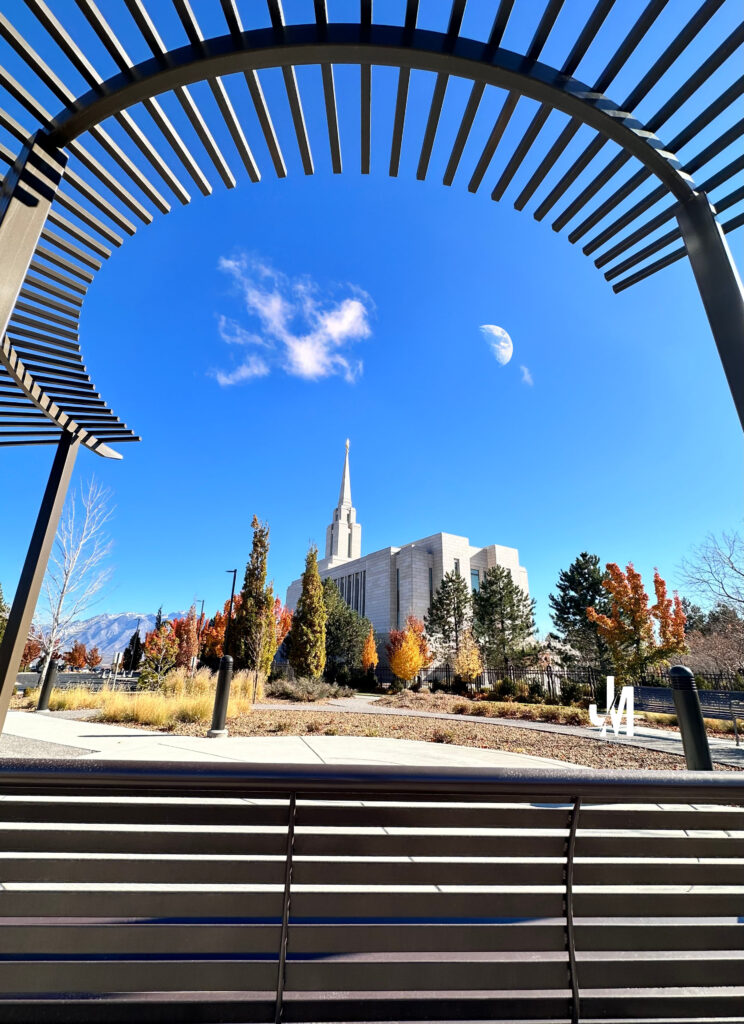
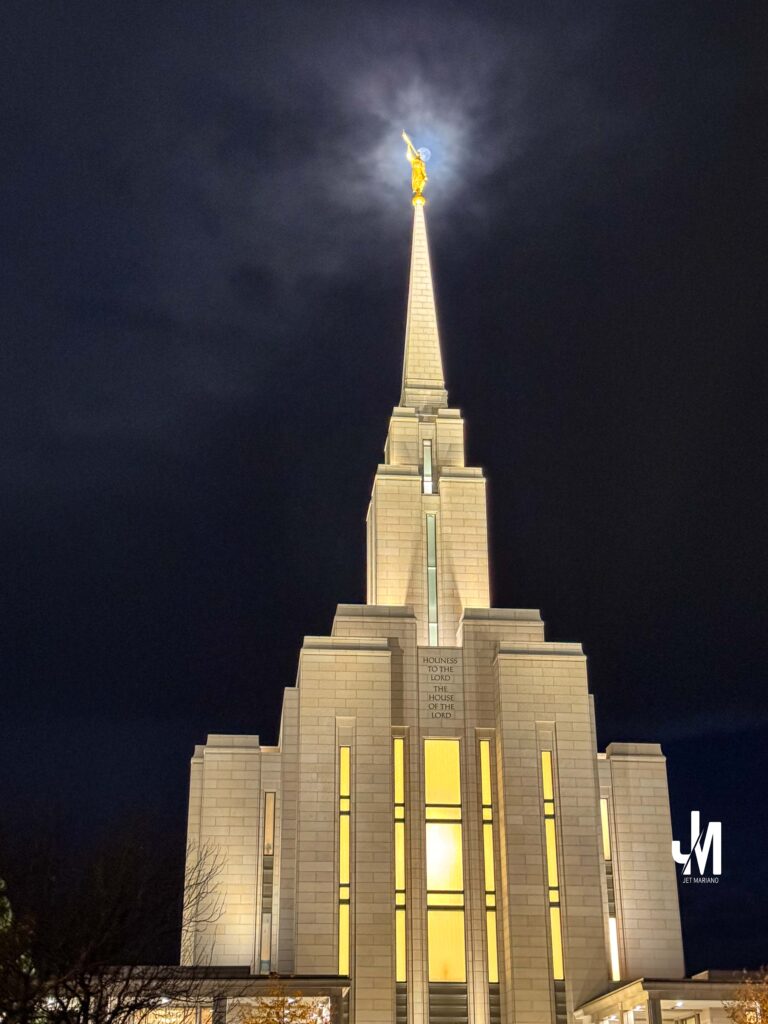
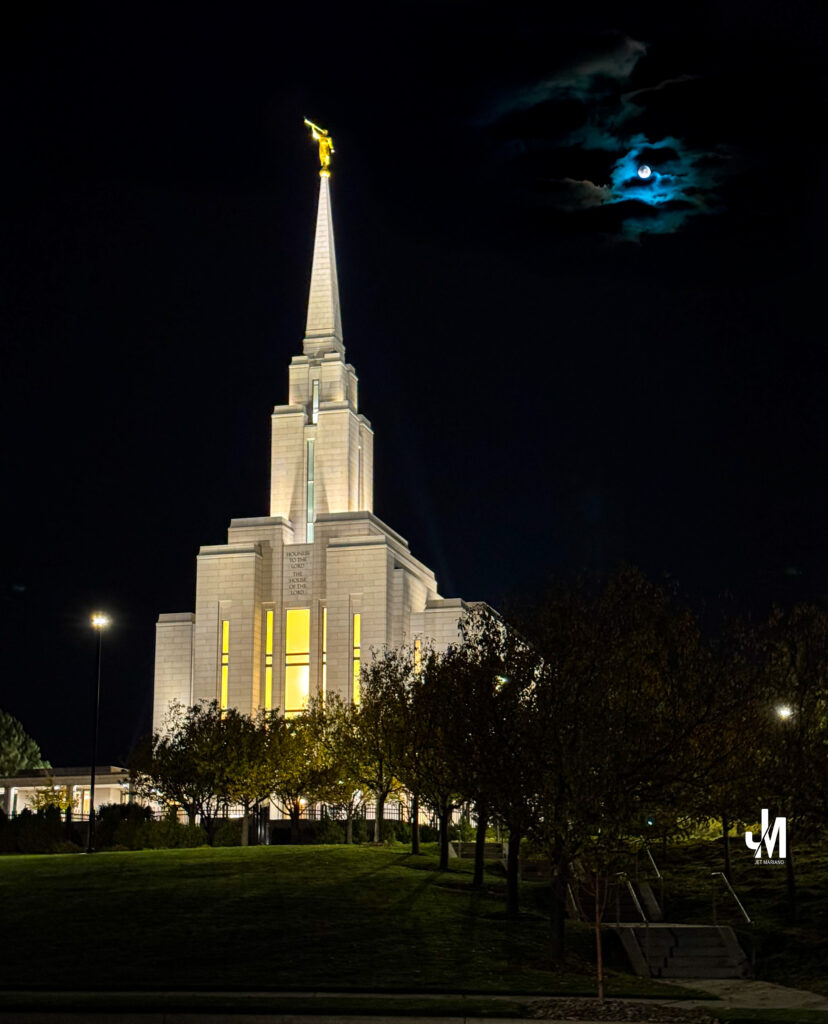
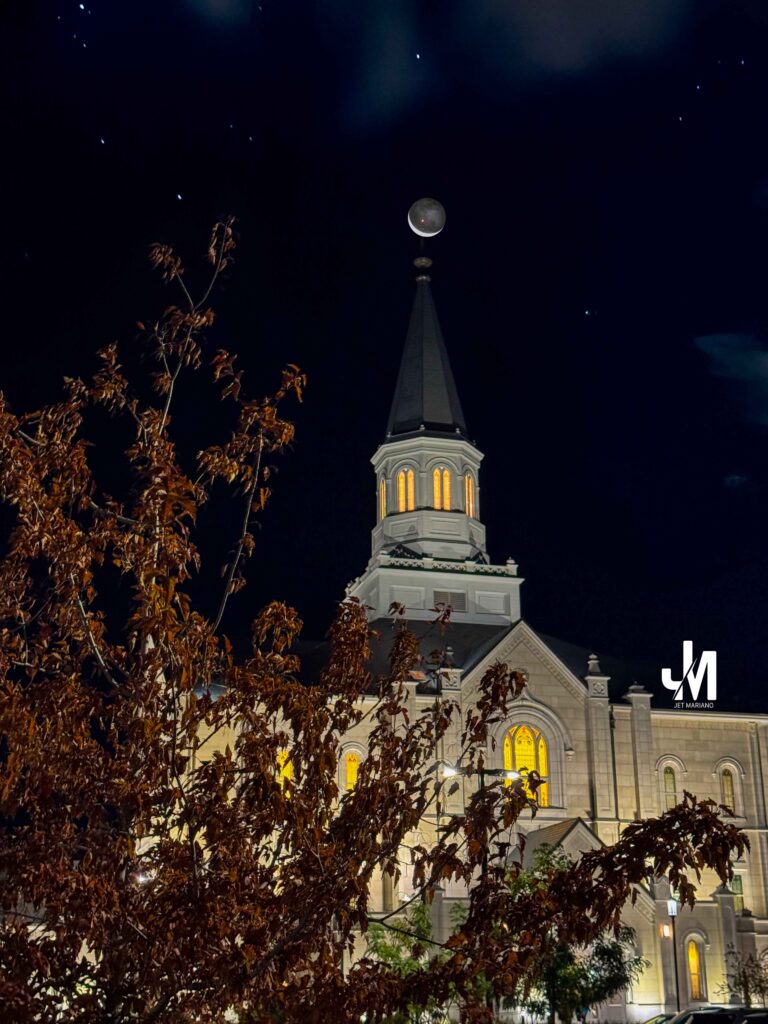
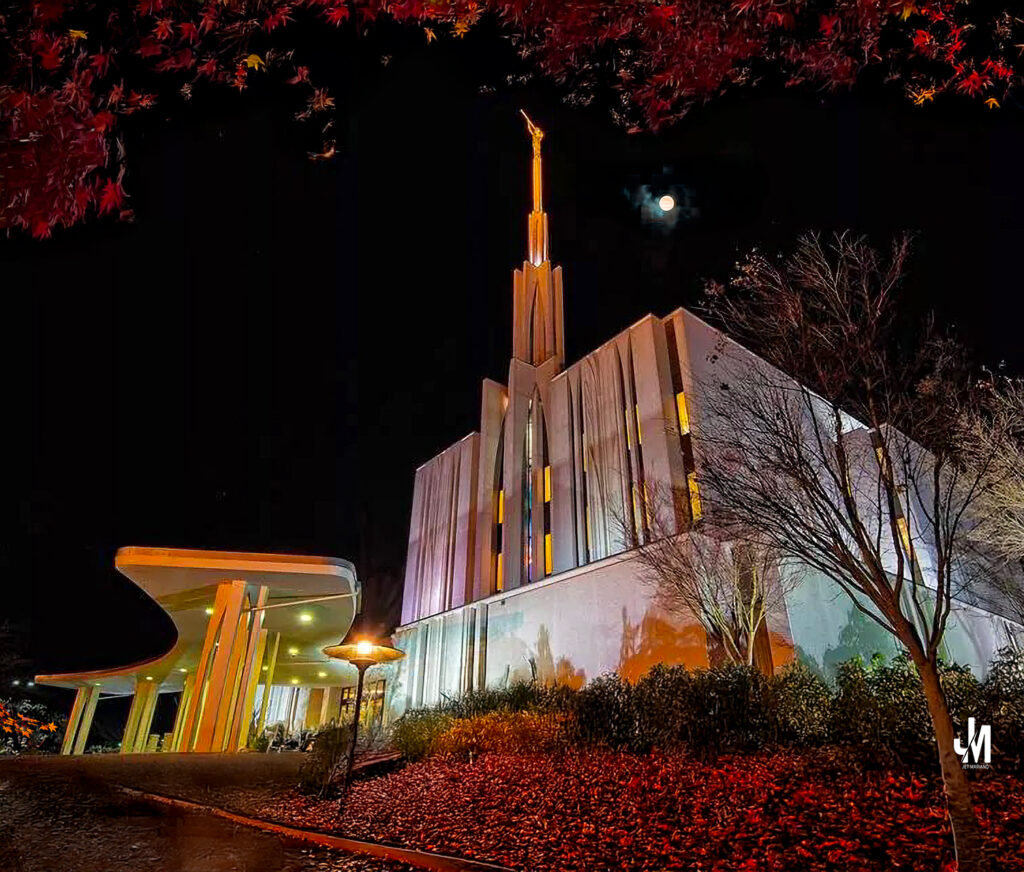
Oquirrh Mountain Temple under the waxing gibbous moon — November, 2025. I waited patiently until light met stillness.
Excerpt: President Hinckley’s counsel reaches across time: “Let virtue garnish thy thoughts unceasingly; then shall thy confidence wax strong in the presence of God.” The promise that follows is profound—“The Holy Ghost shall be thy constant companion.” These are not poetic lines; they are spiritual laws. Virtue invites confidence, and confidence invites the Spirit.
When I listened to this talk again—over fifty times between last night and this morning—the Spirit emphasized one word: virtue.
What is virtue? Virtue means to fill your mind with morally clean, righteous, and excellent thoughts until goodness becomes your reflex. To garnish is to equip or arm your thoughts, so when fear, doubt, or temptation step onto the stage of your mind, they find no audience. We control the stage. We choose which act plays. As I sat inside the Oquirrh Mountain Temple, I realized: darkness never conquers light that is armed with virtue.
President Hinckley connected virtue to a simple, practical four-point program—a pattern that turns righteousness into rhythm:
Pray. Prayer is the bridge to our Heavenly Father. “Speak with Him,” President Hinckley said. “Express the gratitude of your heart.” Prayer is not repetition—it is relationship. It invites light to dwell where confusion once lived.
Study. “Resolve now that you will get all the education you can.” The glory of God is intelligence. I remember my own pursuit—working full-time in IT while carrying a full course load at LACC and DeVry. It was exhausting, but education was revelation in motion. To study is to worship with the mind.
Pay Tithing. “Glorious is the promise of the Lord concerning those who pay their tithes.” Temporal faith builds spiritual independence. Each tithe is a declaration that God’s economy governs my heart more than the world’s uncertainty.
Attend Your Meetings. There is no substitute for partaking of the sacrament. Sunday worship keeps us anchored when weekday storms rise. It renews the covenant that allows virtue to flow back into thought and action.
President Hinckley’s bridge between virtue and the four-point program is clear once you live it: each step disciplines the mind and purifies the heart. Prayer keeps thoughts upward. Study keeps them expanding. Tithing keeps them consecrated. Worship keeps them renewed. Together, they garnish the mind with virtue—unceasingly.
He promised, “Each of you is a creature of Divinity. You are literally a daughter or son of the Almighty. There is no limit to your potential. If you will take control of your lives, the future is filled with opportunity and gladness.”
As I waited outside the Oquirrh Temple for the waxing gibbous moon to rise above the spire, I thought of those words. The moon appeared quietly, reflecting light it does not create—just as we reflect heaven’s virtue when we live this four-point pattern.
Final Reflection: Virtue is not perfection—it is direction. It is the steady alignment of thought toward holiness until confidence replaces fear. In that light, President Hinckley’s four steps are not separate commandments; they are one continuous motion toward the presence of God.
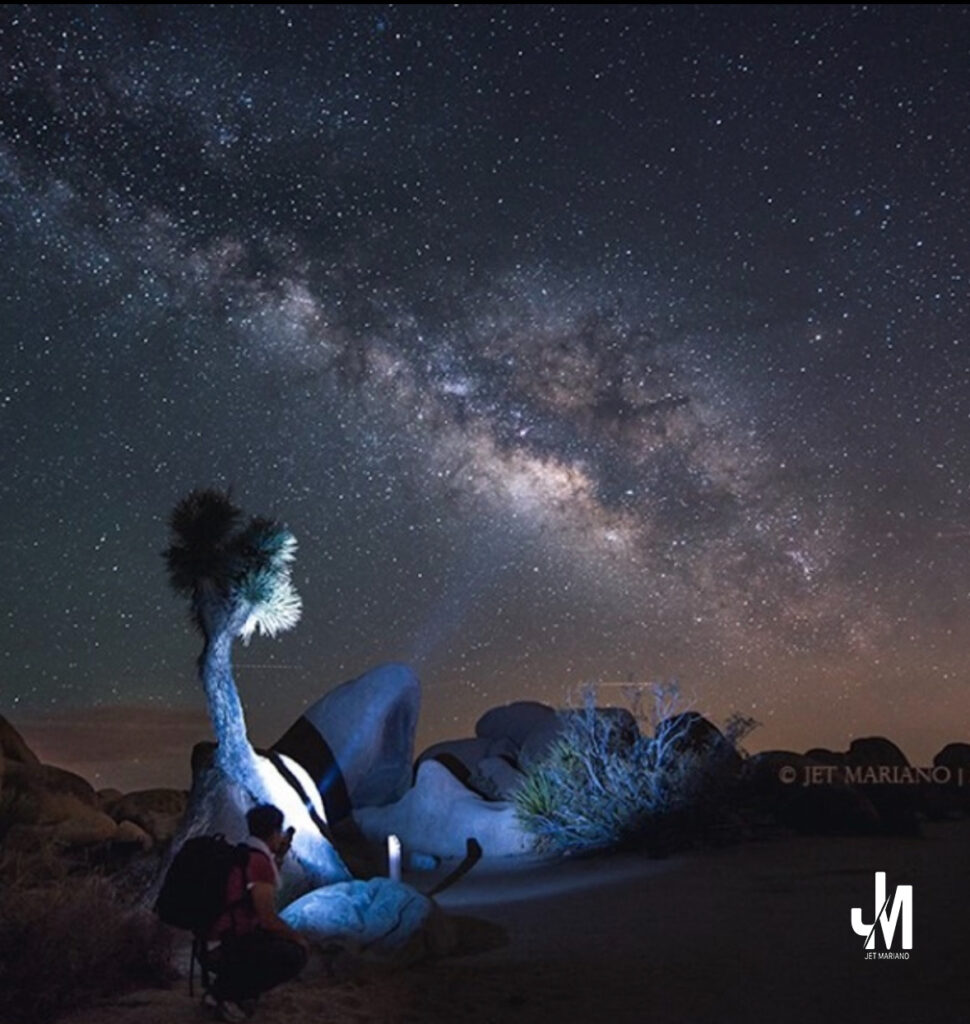
Joshua Tree National Park – The Milky Way at 2 AM. 30 sec exposure, f/11, ISO 2400. Manual focus locked on the brightest star to prevent lens hunting. A quiet lesson in light, patience, and faith.
Excerpt We all will experience illness, disappointment, temptation, and loss. These challenges can knock our self-confidence. However, disciples of Jesus Christ have access to a different kind of confidence — the confidence that comes from covenants, virtue, and the Spirit.
Intro While I sat in the Celestial Room of the Oquirrh Temple, I heard a quiet assurance: “In due time.” It echoed the nudges I felt early Friday morning. I had come seeking peace, but what I received was perspective — that confidence before God comes not from circumstance, but from virtue and covenant faithfulness.
Notes from President Nelson (April 2025 General Conference) From his talk “Confidence in the Presence of God”:
“We all will experience illness, disappointment, temptation, and loss. These challenges can knock our self-confidence. However, disciples of Jesus Christ have access to a different kind of confidence.”
“When we make and keep covenants with God, we can have confidence that is born of the Spirit. The Lord told the Prophet Joseph Smith that our confidence can ‘wax strong in the presence of God.’ Imagine the comfort of having confidence in the presence of God!”
President Nelson continued:
“When I speak of having confidence before God, I am referring to having confidence in approaching God right now! I am referring to praying with confidence that Heavenly Father hears us, that He understands our needs better than we do.”
He reminded us that confidence is the byproduct of charity and virtue.
“Let thy bowels be full of charity… and let virtue garnish thy thoughts unceasingly; then shall thy confidence wax strong in the presence of God.”
He also promised:
“Regular worship in the house of the Lord increases our capacity for both virtue and charity. Thus, time in the temple increases our confidence before the Lord. Increased time in the temple will help us prepare for the Second Coming of our Savior, Jesus Christ.”
And finally:
“Then, as we go to our Heavenly Father with increasing confidence, we will be filled with more joy, and your faith in Jesus Christ will increase. We will begin to experience spiritual power that exceeds our greatest hopes.”
What Is Virtue? This is what I learned in the Celestial Room of the Oquirrh Temple: If you let virtue — morally clean and excellent thoughts, kindness, and all that is positive — fill your mind, then the bad actors on the stage of your mind like doubt, fear, and depression will evaporate.
Why? Because we control the stage of our mind.
We can divert our thoughts to virtue: our favorite Church talk, a meaningful scripture, or a motivating experience. These are our arsenal to protect the mind from intrusive darkness.
As Elder Boyd K. Packer taught:
“The mind is like a stage… There is always some act being performed. Virtue determines which act takes the spotlight.”
Darkness will never have power over light. When virtue becomes our daily focus, we begin to understand what it means to “garnish our thoughts unceasingly.”
Perspective D&C 124 teaches, “Let virtue garnish thy thoughts unceasingly.” To “garnish” means to arm or equip. Virtue, then, is our spiritual armor — the unseen force that steadies the mind and protects confidence.
In IT, confidence is also earned — through repetition, study, and mistakes turned into mastery. When knowledge becomes daily practice, it forms character; and character, in time, becomes wisdom — the quiet confidence that endures.
Practice Virtue doesn’t silence thoughts; it trains them. It replaces anxious noise with light. It equips us to approach God not as strangers but as sons and daughters who trust His timing — His due time.
Final Reflection – Light in One of the Darkest Places The photo above was taken at Joshua Tree National Park — one of the darkest places on earth. Out there, you can hardly see your own hands.
To capture the Milky Way, I did what years of practice taught me:
Mounted my camera on a tripod
Pointed the lens toward the brightest star in the Milky Way using the LCD screen
Let the autofocus lock in until the stars were sharp
Then switched both the 14–24mm f/2.8G lens from AF to M and the camera to Manual so the lens wouldn’t “hunt” in the dark
Set the exposure to 30 seconds, f/11, ISO 2400
Hit the 30-second timer and walked into the frame, shining a small LED flashlight toward the Milky Way
I became both the subject and the seeker — trusting the focus, the settings, and the process. The sky didn’t suddenly change; the Milky Way was there the whole time. The difference was confidence built from quiet, repeated attempts.
Faith works the same way. We may feel surrounded by darkness, but if we’ve prepared, practiced, filled our minds with virtue, and kept showing up in God’s house, the light eventually appears — and our confidence, in His presence, slowly waxes strong.
Pocket I’m Keeping Virtue will free you from anxious, troublesome thoughts. In time, it becomes confidence — the kind that lets you stand in God’s presence without fear.
(Guideline #21: Time Isn’t Your Natural Dimension)
The Oquirrh Mountain Temple — where silence felt eternal, and the dawn waited its turn.
Excerpt: In the quiet hours before dawn, the cold air at Oquirrh Mountain Temple carried a whisper — not of time passing, but of eternity reminding me where I truly belong.
Intro
It was early morning in the 30s, the kind of cold that clears the mind but steadies the heart. The temple stood bright against the darkness, its light spilling upward toward the heavens. I wasn’t seeking answers — only understanding. And somewhere between the wind and silence, understanding came.
Notes from Elder Neal A. Maxwell
Elder Maxwell taught that time isn’t our natural dimension.
“There are days when you wish that time would pass quickly, and it won’t. There are days when you wish you could hold back the dawn, and you can’t. You and I are not at home in this dimension we call time… we belong to eternity.”
He compared our souls to fish who thrive in water — but for us, time isn’t our home. We move through it like visitors, wearing watches only to measure what eternity already knows.
Perspective (Direct Quotes)
“There are days when you wish that time would pass quickly, and it won’t. There are days when you wish you could hold back the dawn, and you can’t.”
Those lines carried me this morning as I stood still beneath the steeple. I realized that my soul has never felt at home in time. I’ve always felt that sense of being from somewhere else.
Practice (Today, Not Someday)
Today I practiced stillness. Not to rush, not to resist — only to be.
The chill pressed against my coat, but my heart felt warmth rise from within. I prayed, not for time to change, but for me to be at peace within it.
While I sat in quiet prayer, a gentle assurance came — one of peace and reconciliation. It reminded me that understanding often arrives before words are ever spoken.
Final Reflection
Elder Maxwell said, “We are struck out of eternity and this is not our natural home.”
I thought about how often I’ve wanted to fast-forward pain or freeze moments of peace. Yet both are teachers. Time doesn’t imprison us — it refines us, reminding us that eternity is our real address.
The Pocket I’m Keeping
When moments press hard against me, I’ll remember: I’m not built for time, I’m built for eternity. Every second that stretches me brings me closer to Him who shaped both time and soul.
What I Hear Now (Direct Quote)
“Sometimes experiences we want to end are the very ones we need in order to grow.” — Elder Neal A. Maxwell
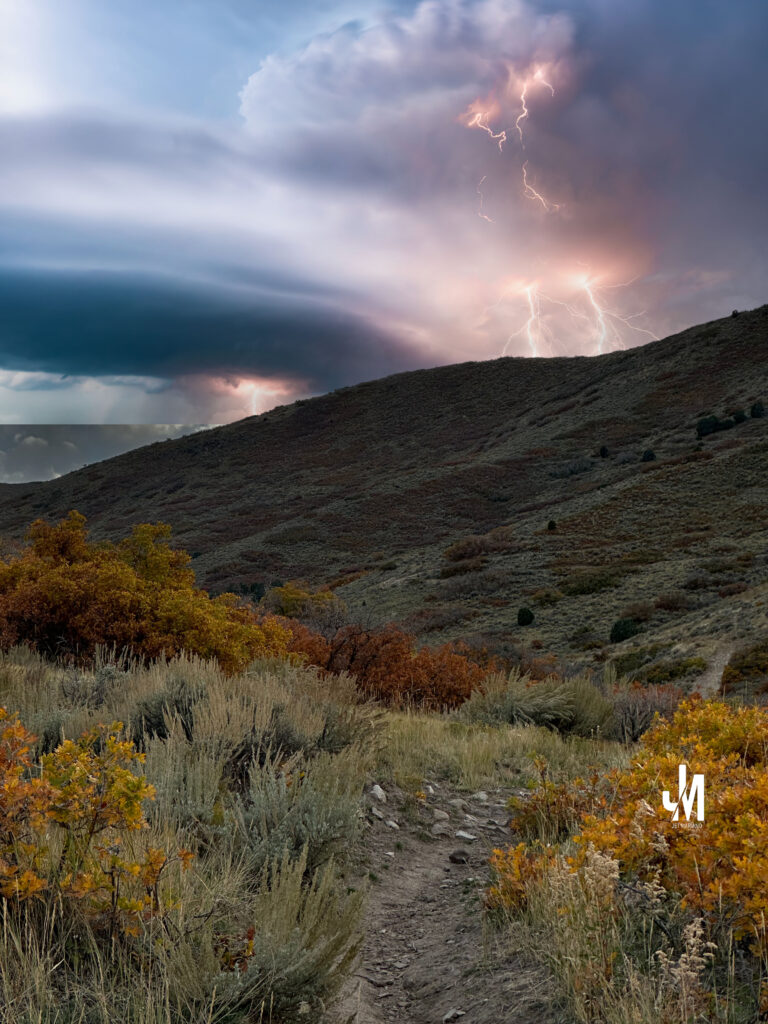
Lightning Strikes During My Hike” — halfway up a 500-foot trail, a storm rolled in. Lightning flashed all around, but I steadied my iPhone and captured the moment — proof that even in turbulence, light still finds a way through.
Excerpt: In IT, not every failure is about systems — sometimes it’s the people, the politics, or the process. That’s when you learn that survival isn’t just technical; it’s spiritual.
Intro: I’ve been in technology long enough to know that the real crashes don’t happen in code — they happen in communication. You can design the perfect plan, follow every procedure, and still watch bureaucracy rewrite the script. It’s invisible at first, but sooner or later, it finds you.
Last week reminded me of that truth — what I now call a 3:1 moment. (Details redacted.) Three hits came hard and fast, but one quiet mercy broke through — proof that when everything else seems stacked against you, grace still shows up.
That’s when the job becomes endurance training.
Notes from Elder Maxwell: Elder Neal A. Maxwell said:
“Make Jesus the light of your life, and by His light see everything else. He is your best friend. If you worry most about what that Friend thinks of you, you’ll be safe… When you are out in the world, away from a special environment like college, and you start to worry about what other people think, don’t worry about that too much. Instead, worry about what Jesus feels towards you and how He regards you.”
Replace college with work, and you have a perfect roadmap for surviving the modern workplace.
Perspective: The IT world can feel like a contact sport — part Navy SEAL, part MMA. You prepare, you adapt, and you always keep contingency plans. Because if you don’t, you’ll get run over by process, politics, or ego.
Even world champions know this truth. Manny Pacquiao was knocked down before — but never stayed down. In his fight with Keith Thurman, ten years younger and undefeated, the odds were stacked against him. Yet in the very first round, he delivered a lightning-fast two-punch combination — a left to the body followed by a right hook to the head — and Thurman went down.
That wasn’t just speed. It was preparation. It was discipline meeting opportunity — a reminder that when life corners you, your response determines the outcome. Manny didn’t rely on luck; he relied on the quiet confidence of someone who’s trained for every possible contingency.
Michael Jordan once said, “I’ve missed more than 9,000 shots in my career. I’ve lost almost 300 games. Twenty-six times, I’ve been trusted to take the game-winning shot and missed. I’ve failed over and over and over again in my life. And that is why I succeed.” His words mirror the same principle: failure isn’t final — it’s part of mastery. In sports, in IT, and in faith, the ones who rise are the ones who keep taking the next shot.
That’s what faith and readiness look like.
And that’s what integrity demands. Sometimes the test doesn’t come from code or systems, but from people — from moments when ego challenges your principles. When faced with the choice between comfort and conscience, integrity means standing your ground. As President Monson taught:
“Just be the same person you are in the dark that you are in the light.”
Practice (today, not someday): When systems fail or meetings go sideways, pause. Ask, “Am I reacting through the light of Christ or through the frustration of the moment?” Then answer with calm precision, integrity intact. Be the same person in the dark server room that you are in the spotlight of success.
Final Reflection: The week tested me — a 3:1 kind of test. (All redacted.) Yet through it came the same whisper that I’ve heard again and again: “Make Jesus the light of your life, and see everything else by His light.”
Because in this field — and in this life — even the best plans break. But faith doesn’t.
Pocket I’m Keeping: True uptime isn’t about servers — it’s about keeping your soul online with God.
What I Hear Now:
“Make Jesus the light of your life, and see everything else by His light. Worry most about what He thinks of you, and you’ll be safe.” — Elder Neal A. Maxwell
“Be the same person you are in the dark that you are in the light.” — President Thomas S. Monson
Photo Caption (BTS): “Lightning Strikes During My Hike” — halfway up a 500-foot trail, a storm rolled in. Lightning flashed all around, but I steadied my iPhone and captured the moment — proof that even in turbulence, light still finds a way through.
Trust the Lord, for He sees your possibilities even when you do not. Elder Neal A. Maxwell’s counsel reminds us that, like Enoch, we can turn doubt into divine potential.
Las Vegas Temple with a full moon and the Las Vegas skyline at sunset — photographed from an elevated ridge using distance compression to unite the sacred and the city.
Excerpt: Even when we feel inadequate, the Lord sees the builder of Zion within us—just as He did with Enoch.
Intro: This morning at Juniper Crest Ward, I sat in the chapel and felt a deep sense of peace. Life continues to offer its share of challenges—both at home and at work—but I’ve come to see them as part of the Lord’s refining process. As I pondered Elder Maxwell’s words, the phrase “He sees your possibilities” filled me with quiet assurance that every experience, even the difficult ones, is part of His design to help me grow.
Notes from Elder Maxwell: Elder Neal A. Maxwell’s twelfth Guideline for Righteous Living reminds us:
“Trust the Lord, for He sees your possibilities even when you do not.”
He taught that the Lord’s call to Enoch reveals how heaven measures potential differently than men do. When the Lord called Enoch, the young prophet protested:
“I am but a lad, and all the people hate me; for I am slow of speech.”
Yet the Lord saw something more. He saw in Enoch a builder of Zion—the only city in human history where righteousness never had a relapse. Enoch’s faith allowed the Lord to transform his weakness into strength and his fear into greatness.
Perspective: I see a reflection of that same principle in my own journey. There are moments when I’ve questioned my worth or felt small in the work I do. But the Lord continues to remind me through scripture, prayer, and personal experience that He knows my capacity far better than I do. Like Enoch, my task is not to measure my ability—but to trust His vision.
Practice (today, not someday): Instead of asking “Can I do this?”, I’m learning to ask “What can the Lord make of this?” I’ve seen His hand in small mercies at work, in strength during solitude, and in clarity during uncertainty. Each trial is not punishment—it’s preparation for the next assignment the Lord already sees.
Final Reflection: The Lord doesn’t always reveal our full potential at once. Sometimes, He lets us walk by faith until we recognize what He already knew we could become. Like Enoch, if we trust Him, He will turn our limitations into instruments of Zion.
Pocket I’m Keeping: “Possibility is heaven’s word for faith that kept going.”
What I Hear Now (direct quotes):
“Trust the Lord, for He sees your possibilities even when you do not.” – Elder Neal A. Maxwell
Photo caption (BTS): Las Vegas Nevada Temple beneath the setting sun and a rising full moon. I climbed to a nearby ridge with a 500mm lens to capture distance compression—bringing the temple and the Las Vegas Strip closer together in one frame. In that balance of sacred stillness and the world’s brilliance, I saw a quiet symbol of what it means to trust the Lord’s vision beyond our own.
Elder Neal A. Maxwell’s reminder that exclusion for righteousness is not rejection — it’s refinement.
Salt Lake Temple at night framed by red flowers and a lamppost, symbolizing unwavering faith amid rejection and darkness.
Intro There are seasons in life when conviction tests companionship — when holding true to gospel standards draws distance instead of approval. Elder Neal A. Maxwell’s Guideline #13 from Guidelines for Righteous Living begins with this counsel:
“Do not be discouraged if fair-weather friends discard you because you keep the standards of the Church.”
It’s a tender reminder that exclusion can be sanctifying. When others drift away for choosing righteousness, the Lord draws closer.
Notes from Elder Neal A. Maxwell
“Do not be discouraged as some fair-weather friends discard you because you keep the standards of the Church.”
“Sometimes it is better to be left out than to be taken in.”
“While the exclusion will hurt, the bruises will disappear and the blessings will remain.”
“Don’t ever envy those who live unrighteously. They only appear to be happy. They only seem to be free.”
“It is better for you to be alienated from the gang than to be alienated from God.”
“Not because you’re too good for them, but because you’re not that strong.”
“Do not let others mess up your mind with the muddy feet of the world.”
Perspective Elder Maxwell laid out a pattern for discipleship in difficult times:
Key Principle
Elder Maxwell’s Counsel & Explanation
Timeless Lesson
Do Not Be Discouraged
“Do not be discouraged as some fair-weather friends discard you.”
True discipleship may mean walking alone for a season.
Choose Exclusion Over Corruption
“Sometimes it is better to be left out than to be taken in.”
Purity is worth more than popularity.
Focus on Lasting Blessings
“The bruises will disappear and the blessings will remain.”
Wounds heal; eternal rewards stay.
Do Not Envy the Unrighteous
“They only appear to be happy.”
The world’s joy is a mirage.
Alienation from God vs. the Gang
“Better to be alienated from the gang than from God.”
Choose divine connection over social comfort.
Avoid Immoral Company
“Not because you’re too good…but because you’re not that strong.”
Humility is the truest safeguard.
Guard Your Mind
“Don’t let people with muddy feet track dirt into your thoughts.”
Protect your mind — it’s sacred ground.
Practice (today, not someday) When rejection comes for doing what’s right, I can choose gratitude over resentment. Every lost friendship rooted in worldliness is space made for godly strength to grow.
Today, I’ll guard my mind from bitterness and remember: exclusion for righteousness is not punishment — it’s preparation.
Final Reflection To live by conviction in a permissive world is to stand in a quiet kind of courage. Elder Maxwell’s words remind me that it’s better to face a smaller circle with a clear conscience than a full crowd with a clouded one.
Fair-weather friends may drift, but the faithful stay anchored. In the end, only one friendship lasts forever — the one I keep with God.
Pocket I’m Keeping When others walk away, I’ll walk with Christ. The bruises fade, but His presence remains.
What I Hear Now
“Do not be discouraged if fair-weather friends discard you because you keep the standards of the Church.” — Elder Neal A. Maxwell
Photo Caption (BTS) Behind the Shot: Salt Lake Temple at night — still and bright against the dark. I waited for the wind to stop before taking a 5-second exposure so every red bloom stayed still. The temple lights shone through the silence — a symbol of standing firm when others fade away.
Elder Neal A. Maxwell’s reminder that adversity isn’t defeat — it’s divine positioning for growth.
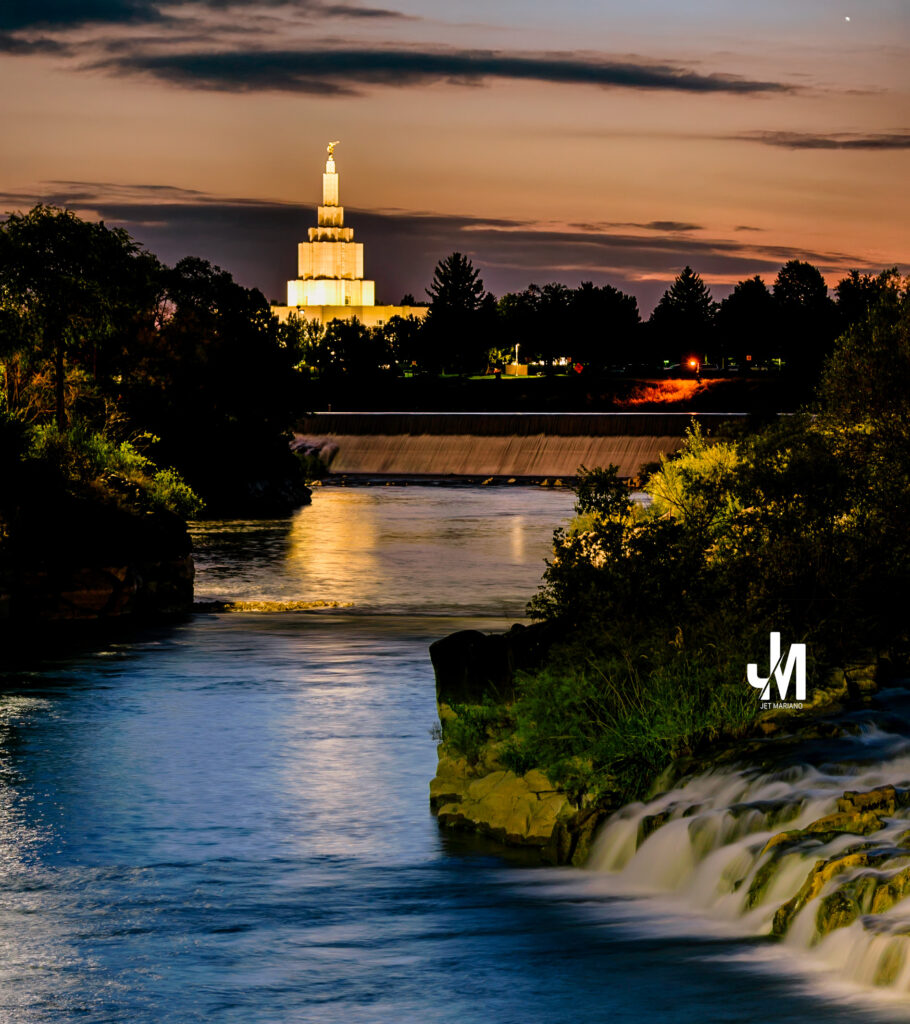
Idaho Falls Temple before sunrise with the Snake River flowing in front, captured at long exposure — symbolizing calm endurance, hidden opportunity, and divine light emerging from darkness.
Excerpt Elder Neal A. Maxwell’s 11th guideline for righteous living reminds us that being surrounded doesn’t mean being defeated — it can mean we’re exactly where God can shape our strength.
Intro Sometimes the hardest part of life isn’t the trial itself but feeling isolated in the middle of it. Whether at home, at work, or even within the walls of the Church, we all face moments when we feel surrounded by pressures, criticism, or misunderstanding. My sensitive nature often magnifies those moments, and for a while, I let them weigh me down. But Guideline #11 from Elder Neal A. Maxwell’s Guidelines for Righteous Living taught me to see those moments differently.
This week’s message — “Don’t be discouraged if you are surrounded” — became my antidote to discouragement. It reminded me that spiritual resilience is not found in escaping trials, but in seeing their divine purpose from the inside out.
Notes from Elder Neal A. Maxwell
“Don’t be discouraged if in the course of your lifetime the Church seems to be surrounded and outnumbered.”
Elder Maxwell shared the example of General Chesty Puller, one of the most courageous officers in U.S. Marine Corps history. When his troops were surrounded, he famously said: “At last we have the enemy just where we want him. We’re surrounded, and now we can fire in every direction.”
Elder Maxwell then pointed to the inner battles we face: “Remember that bad breaks need not ruin a good man or a good woman.”
He used the example of Joseph in Egypt, saying that if any man besides Job had bad breaks, it was Joseph — yet Joseph rose above them and became significant because he refused to let those breaks become an excuse for failure.
Elder Maxwell concluded, “So often, my young brothers and sisters, in life opportunity comes disguised as tragedy. It doesn’t drop its disguise right away. It’s sometime before you begin to see that it’s opportunity behind that mask.”
Perspective The message of Guideline #11 reaches every season of discipleship — when we feel alone, misunderstood, or “outnumbered.” General Puller’s courage turns fear into opportunity: being surrounded doesn’t mean defeat, it means there’s purpose in every direction. Joseph in Egypt faced betrayal, false accusation, and imprisonment, yet he didn’t curse the darkness. He used those setbacks as steps toward his divine calling.
The pattern is clear — those who trust God in their confinement will see that their obstacles were not barriers but building blocks toward greatness.
Practice (today, not someday) When discouragement closes in, I remind myself that perspective changes everything. Instead of asking, “Why is this happening to me?” I now ask, “What is this preparing me for?” At work, at home, or in private struggles, I can practice this truth by responding with faith instead of frustration. Every “bad break” becomes a training ground for humility, empathy, and endurance.
Final Reflection Elder Maxwell’s teaching reminds me that God does not waste adversity. What looks like being surrounded is often God positioning us for strength we could not have gained otherwise. The disguise of tragedy eventually falls away, and behind it stands opportunity — glowing quietly like light breaking through the fog.
When I feel cornered, I remember: this is not the end of the story. This is the place where faith fires in every direction.
Pocket I’m Keeping Discouragement is temporary; divine positioning is eternal. What surrounds me cannot destroy me if I stand still and trust His plan.
What I Hear Now
“So often, my young brothers and sisters, in life opportunity comes disguised as tragedy. It doesn’t drop its disguise right away. It’s sometime before you begin to see that it’s opportunity behind that mask.” — Elder Neal A. Maxwell
📸 Photo Caption (BTS)
Behind the Shot: I arrived before dawn at the Snake River, tripod and remote in hand, waiting for the first light to touch the Idaho Falls Temple. The air was still, the river smooth under a long exposure, and the temple lights glowed softly across the water. Surrounded by darkness, I felt peace. The scene became my quiet reminder that even before the sun rises, His light is already here.
Bountiful Utah Temple at sunset captured from a hillside using a 500 mm lens, symbolizing patience, obedience, and spiritual ascent.
Excerpt Elder Neal A. Maxwell’s 10th guideline reminds me that obedience is not the end of exploration — it’s the very beginning of it.
Intro After a long week of deadlines and noise, I felt impressed to step away and climb the hill above Bountiful with my camera. As I waited for the sunset, I thought about Elder Neal A. Maxwell’s Guidelines for Righteous Living, especially Guideline #10: “Obeying is one of the best ways of exploring.” The higher I climbed, the clearer it became that obedience isn’t about restriction—it’s about finding higher ground and seeing life from God’s perspective.
Notes from Elder Neal A. Maxwell
No one would attempt to scale Mount Everest or the Tetons in jeans and a t-shirt without an expert guide.
We cannot climb the straight and narrow path without the guidance of the Holy Ghost and the protection of the whole armor of God.
If we are obedient, we will “discover, explore, and learn many great and wonderful things.”
Perspective Elder Maxwell’s Mountain Climber Analogy illustrates discipleship as a spiritual ascent.
Element
Description
Spiritual Parallel
The Climber
One who begins the ascent
The Individual / The Spiritual Explorer
The Challenge
The difficult climb
The Straight and Narrow Path
The Expert Guide & Gear
Requires a guide and full gear
The Holy Ghost and the Whole Armor of God
The Reward
Discovery and joy through obedience
Gaining Truth, Knowledge, and Joy in God’s Kingdom
Just as no one would attempt Everest without proper gear, the spiritual explorer must be clothed with faith, humility, and divine protection. The commandments are not chains but climbing ropes — tools that keep us safe on the ascent.
Practice (today, not someday) When I feel overwhelmed, I remind myself that obedience is not restriction; it’s direction. By following divine guidance daily, I move upward, step by step, through the fog of mortal challenges.
Final Reflection The mountain analogy reframes life’s climb: every commandment is an anchor point, every trial a ridge to strengthen the soul. The summit isn’t reached by speed, but by steady, faithful obedience — one prayer, one act of trust at a time.
Pocket I’m Keeping Obedience opens the path to discovery — the more I submit, the higher I climb.
What I Hear Now
“If you will be obedient, you will discover, you will explore, and learn many great and wo
📸 Caption (BTS)
Behind the Shot: I climbed above Bountiful with my 500 mm lens, waiting for the exact moment when the last light would touch the temple and the clouds would gather over Antelope Island. From this height, the horizon seemed infinite — a reminder that obedience, like climbing, always leads to a higher view.
From coding late nights to building real solutions — proof that persistence pays off. DeveloperJourney #IvyFalls #NoBandAidFix
Introduction: The Path Is the Practice
My journey to development and infrastructure followed the same rhythm — discipline by day, learning by night. While working full-time at All Electronics Corporation in Van Nuys (1990–1995), I woke at 4 A.M. to catch two LA Metro buses from Western and 3rd Street to my 6:30 A.M. shift, then sometimes worked evenings at the Taco Bell drive-thru in Glendale.
I wasn’t chasing titles; I was chasing understanding. At All Electronics, I became obsessed with the Integrated Circuit (IC) — the heartbeat of every computer. There was no Internet back then — only library books and endless curiosity. I crashed my own PCs, rebuilt them, and soon began fixing computers for free for anyone who needed help.
Back then, I used to dream of a day when I wouldn’t have to wait for the bus in the rain just to get home. Years later, those same dreams became reality — not through luck, but through faith, discipline, and persistence. The rides changed — from buses to a BMW, an Audi, and now a Tesla — but what never changed was the purpose: to keep moving forward.
Those early mornings and late nights opened the door to my first IT role at USC as a PC Specialist, then to GTE (now Verizon), Aerospace, and eventually to my own IT consulting business serving clients large and small across California and beyond.
Season of Refinement
While working full-time at USC, I entered what I call my season of refinement. By day I supported campus systems and users; by night I was a full-time student at Los Angeles City College (LACC) and a weekend warrior at DeVry University, studying Management in Telecommunications.
It was during this time that Microsoft introduced the MCSE (Microsoft Certified Systems Engineer) program. One of my LACC professors encouraged me to earn it, saying, “Once you have that license, companies will chase you.” He was right — that MCSE became my ticket to GTE, my first step into enterprise-scale IT.
My tenure at GTE was brief because Aerospace came calling with a six-figure offer just before Y2K — an opportunity too great to refuse. After Aerospace, I founded my own consulting firm — Ahead InfoTech (AIT) — and entered what I now call my twelve years of plenty.
One of my earliest clients, USC Perinatal Group, asked me to design and implement a secure LAN/WAN connecting satellite offices across major hospitals including California Hospital Medical Center, Saint Joseph of Burbank and Mission Hills, and Hollywood Presbyterian Hospital. We used T1 lines with CSU/DSU units and Fortinet firewalls; I supplied every workstation and server under my own AIT brand.
Through that success I was referred to additional projects for Tarzana and San Gabriel Perinatal Groups, linked by dedicated frame-relay circuits — early-era networking at its finest. Momentum carried me to new partnerships with The Claremont Colleges and the City of West Covina, where I served as Senior Consultant handling forensic and SMTP (email) engineering.
Word spread further. An attorney client introduced me to an opportunity in American Samoa to help design and build a regional ISP, and later to a contract with Sanyo Philippines. During this period Fortinet was still new, and I became one of its early resellers. I preferred building AIT servers and workstations from the ground up rather than reselling mass-produced systems. DSL was just emerging, yet most clients relied on dedicated T1 lines — real hands-on networking that demanded patience and precision.
Those were the twelve years of plenty — projects stretching from Los Angeles hospitals to overseas data links. By the time AWS launched in 2006 and Azure in 2010, I was already managing distributed networks and data replication.
When I returned to Corporate America, my first full-time role was at Payforward, where I led the On-Prem to AWS migration, building multi-region environments across US-East (1a and 1b) and US-West, complete with VPCs, subnets, IAM policies, and full cloud security. That’s when I earned my AWS certifications, completing a journey that had begun with cables and consoles and matured in the cloud.
Education, experience, and certification merged into one lesson: Discipline comes first. Validation follows. Degrees and credentials were never my starting line — they became the icing on the cake of years of practice, service, and faith.
My Philosophy: Code Like a Craftsman
Photography taught me patience. Martial Arts taught me form. IT taught me precision. All three share one secret: the art lies in repetition with awareness.
As Ansel Adams said:
“When words become unclear, I shall focus with photographs. When images become inadequate, I shall be content with silence.”
Coding feels the same. When logic becomes unclear, I focus. When code seems inadequate, I find peace in understanding.
Build three apps (CRUD, API, SPA) + README + screenshots + a short blog for each.
Final Reflection
From library nights in Koreatown to pushing code in the cloud, this path proves that curiosity and consistency still change lives. Keep learning, keep building, and remember — every keystroke is one more kick toward mastery. This blog will continue to grow as technology changes — come back often and build along with me.
🪶 Closing Note
I share this story not to boast but to inspire those still discovering their own path in technology. Everything here is told from personal experience and memory; if a date or detail differs from official records, it’s unintentional. I’m grateful for mentors like my LACC professor, who once told me to look up a name not yet famous — Bill Gates — and earn my MCSE + I. He was right: that single decision opened countless doors.
I don’t claim to know everything; I simply kept learning, serving, and sharing. My living witnesses are my son, my younger brother, and friends who once worked with me and now thrive in IT. After all these years, I’m still standing — doing what I love most: helping people through Information Technology.
⚖️ Legal Disclaimer
All events and company names mentioned are described from personal recollection for educational and inspirational purposes only. Any factual inaccuracies are unintentional. Opinions expressed are my own and do not represent any past or current employer.
From Customer Service Rep to PC Specialist, Network Engineer, System Administrator, DevSecOps, and now Infrastructure Engineer — a journey built on faith, discipline, dedication, and gratitude.
Introduction: The Path Is the Practice
My story didn’t begin with servers or certifications. It began at All Electronics Corporation in Van Nuys, California, where I worked full-time from 6:30 A.M. to 3:00 P.M., taking two Metro buses and walking a block from the station — rain or shine — from December 1990 to late 1995.
I woke as early as 4 A.M. to catch the first bus at Western and 3rd Street in Los Angeles, sometimes heading straight to my evening shift at the Taco Bell drive-thru in Glendale. Those were humble, exhausting days that taught me discipline and grit — lessons that would shape every part of my career.
At All Electronics, I became fascinated by the IC — Integrated Circuit, the heart of every desktop computer. I wanted to understand it, not just sell it.
Back in my Koreatown apartment, I turned curiosity into calling. No Google. No YouTube. No AI. Just library books and endless nights of self-study. I intentionally crashed my computers and rebuilt them until every fix became muscle memory.
Once confident, I started offering free repairs and computer lessons to friends, relatives, and senior citizens — setting up printers, fixing networks, and teaching email basics. Those acts of service opened the door to my first full-time IT job at the University of Southern California (USC) as a PC Specialist.
I still remember waiting at the bus stop in the dark, dreaming of the day I wouldn’t have to ride in the rain. Years later, those same dreams became reality — not through luck, but through faith, discipline, dedication, and gratitude. The rides changed — from buses to a BMW, an Audi, and now a Tesla — but what never changed was the purpose: to keep moving forward while staying grounded in gratitude.
Season of Refinement
While working full-time at USC, I entered what I call my season of refinement. By day I supported campus systems and users; by night I was a full-time student at Los Angeles City College (LACC) and a weekend warrior at DeVry University, studying Management in Telecommunications.
It was during this time that Microsoft introduced the MCSE (Microsoft Certified Systems Engineer) program. One of my professors at LACC encouraged me to earn it, saying, “Once you have that license, companies will chase you.” He was right — that MCSE became my ticket to GTE (now Verizon), my first step into enterprise-scale IT.
My tenure at GTE was brief because Aerospace came calling with a six-figure offer just before Y2K — an opportunity too good to refuse. After Aerospace, I founded my own consulting firm — Ahead InfoTech (AIT) — and entered what I now call my twelve years of plenty.
One of my earliest major clients, USC Perinatal Group, asked me to design and implement a secure LAN/WAN connecting satellite offices across major hospitals including California Hospital Medical Center, Saint Joseph of Burbank and Mission Hills, and Hollywood Presbyterian Hospital. We used T1 lines with CSU/DSU units and Fortinet firewalls; I supplied every workstation and server under my own AIT brand.
Through that success I was referred to additional projects for Tarzana and San Gabriel Perinatal Groups, linked by dedicated frame-relay circuits — early-era networking at its finest. Momentum led to new partnerships with The Claremont Colleges and the City of West Covina, where I served as Senior Consultant handling forensic analysis and SMTP/email engineering.
Word spread. One attorney client introduced me to an opportunity in American Samoa to help design and build a regional ISP, and later to a contract with Sanyo Philippines. During this period Fortinet was still new, and I became one of its early resellers. Refusing to rely on mass-produced systems, I built AIT servers and workstations from the ground up for every environment. DSL was just emerging, yet most clients still relied on dedicated T1s — real hands-on networking that demanded precision and patience.
Those were the twelve years of plenty — projects that stretched from local hospitals to overseas data links, from LAN cables to international circuits. By the time AWS arrived in 2006 and Azure followed in 2010, I had already been building and managing distributed networks for years.
When I returned to Corporate America, my first full-time role was at Payforward, where I led the On-Prem to AWS migration, designing multi-region environments across US-East (1a and 1b) and US-West, complete with VPCs, subnets, IAM policies, and full cloud security. That’s when I earned my AWS certifications, completing a journey that had begun with physical servers and matured in the cloud.
Education, experience, and certification merged into one lesson: Discipline comes first. Validation follows. Degrees and credentials were never my starting line — they were the icing on the cake of years of practice, service, and faith.
My Philosophy: One Discipline, Many Forms
Whether in Martial Arts, IT, or Photography, mastery comes from repetition, humility, and curiosity. As Ansel Adams wrote:
“When words become unclear, I shall focus with photographs. When images become inadequate, I shall be content with silence.”
Everyone can take a photo; not everyone captures a masterpiece. Everyone can study tech; not everyone understands its rhythm. Excellence lives in awareness — the moment when curiosity meets purpose.
The Infrastructure Engineer Path
1️⃣ Foundations
Learn the essentials: Windows Server, Active Directory, DNS/DHCP, GPOs, Networking (VLANs, VPNs), Linux basics, and PowerShell. Free Resources:
Document every lab, build diagrams, post scripts on GitHub, and write short lessons learned.
Final Reflection
From bus stops to boardrooms, from fixing desktops to deploying clouds — the principles never changed: serve first, learn always, and build things that last. This blog will continue to evolve as technology changes — come back often and grow with it.
🪶 Closing Note
I share this story not to boast, but to inspire those still discovering their own path in technology. Everything here is told from personal experience and memory; if a date or detail differs from official records, it’s unintentional. I’m grateful for mentors like my LACC professor, who once told me to look up a name not yet famous — Bill Gates — and earn my MCSE + I. He was right: that single decision opened countless doors.
I don’t claim to know everything; I simply kept learning, serving, and sharing. My living witnesses are my son, my younger brother, and friends who once worked with me and now thrive in IT. After all these years, I’m still standing — doing what I love most: helping people through Information Technology.
⚖️ Legal Disclaimer
All events and company names mentioned are described from personal recollection for educational and inspirational purposes only. Any factual inaccuracies are unintentional. Opinions expressed are my own and do not represent any past or current employer.
(October 22, 2025 — Guideline #18 from Elder Neal A. Maxwell’s “21 Guidelines for Righteous Living”)
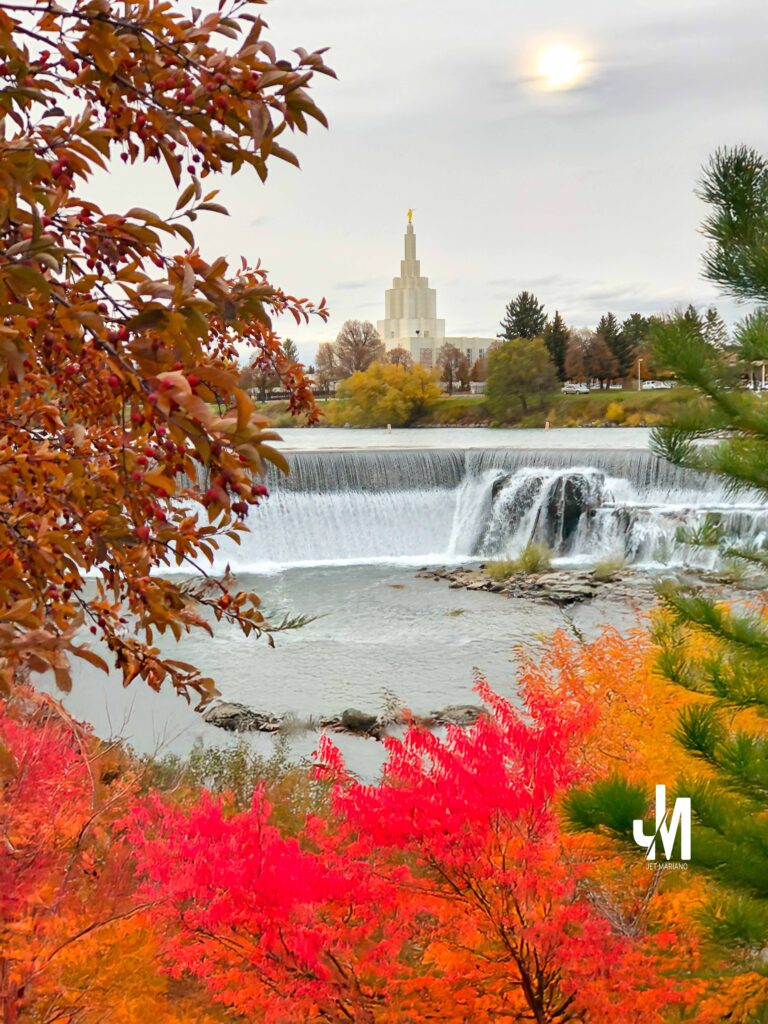
Fall reflection of the Idaho Falls Temple with the Snake River in the foreground—a visual reminder that God’s light remains constant even when clouds move through.
Excerpt
“Hopefully, we will do as the Master did and acknowledge that God is still there and never doubt that sublime reality—even though we may wonder and might desire to avoid some of life’s experiences.” — Elder Neal A. Maxwell
Intro
Elder Neal A. Maxwell’s Guideline #18 addresses the fundamental issue of constancy in a world of crisis. We are promised that trials—the stormy and dark moments—will come. The world often responds with fear and panic, but the disciple finds peace in a different reality.
The core instruction is simple and absolute: “Know that the Son of God is always there. His light will never go out, and the cloud cover will pass.”
As an Infrastructure Engineer, I understand the concept of a High Availability (HA) System—a service guaranteed to remain functional without failure, no matter what happens to individual components. The Lord is our perfect, 100% available HA resource. Our faith is the mechanism by which we connect to and draw power from that never-failing light source.
Perspective
The High Availability (HA) System Analogy Faith in Jesus Christ provides us with a spiritual redundancy and uptime guarantee that no mortal system can match.
Element
The Network (Mortal Life)
The Spiritual Parallel
The Primary Server
Our own strength, energy, and will to endure.
Our personal resolve, which can be depleted or “go down.”
The Failover System
The backup system that ensures continuous service during a crisis.
Jesus Christ: The perfect, always-on resource. His light will never go out.
The Downtime
The “stormy and dark moments of life”—trials, afflictions, Gethsemane-like anguish.
Feelings of being forgotten, forsaken, or unappreciated (as the Savior felt).
The Uptime Guarantee
The system is guaranteed to remain functional (100% availability).
The Sublime Reality: God is always there; the cloud cover will pass; the Atonement is total and constantly available.
Elder Maxwell reminds us that just as the Master acknowledged that God was still there even as He drank the bitter cup, we must never doubt that sublime reality, even if we wish to pray away the pain.
Practice (today, not someday)
To fully utilize this constant source of light, we must practice connecting to the divine HA system daily.
Acknowledge the Source: In every prayer, I start by explicitly acknowledging God’s constancy and omniscience—that He lives in an “eternal now where the past, present, and future are constantly before Him.” This grounds me in the reality that my current struggle is only a single frame in His perfect, eternal video stream.
The Enduring Test: I try to view current perplexities and intellectual shortfalls not as system failures, but as a temporary “muddled, mortal middle.” The ability to endure well and remain faithful while the outcome is still uncertain is the true test of my connection to His light.
Refusal to Be Uncomforted: In moments of deep difficulty, I actively refuse to be uncomforted. I deliberately turn my thoughts toward the promises I have received and the knowledge of Christ’s character, choosing to believe that He is there and that my temporary “downtime” is only a small moment.
Final Reflection
The assurance that His light will never go out is the ultimate security doctrine. We can be vexed by uncertainties in the immediate steps ahead, but we can have clear faith in the ultimate outcomes at the end of the trail.
Our ultimate safety is found in keeping our precious perspective wherever we are and keeping the commandments however we are tested. The Lord knows our individual bearing capacities, and because the Son of God is always there, we have the power to receive help and guidance over adverse things.
What I Hear Now
“Your current crisis has an expiration date. His light does not. Stay connected.”
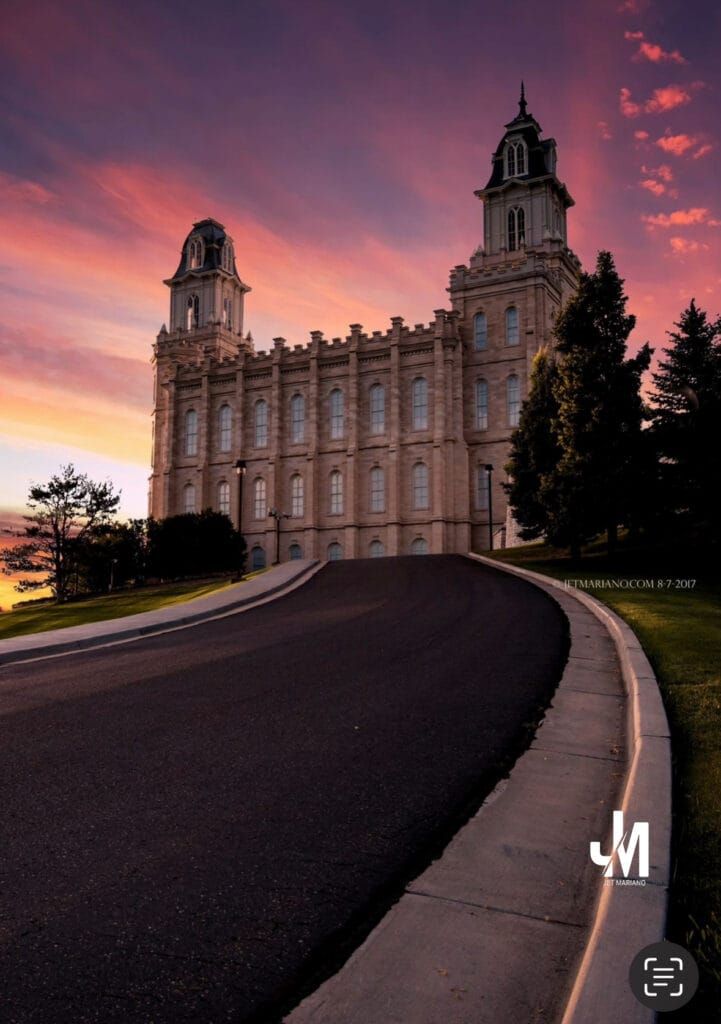
The Manti Temple: A testament to souls stretched by faith. Elder Maxwell taught that the soul is like a violin string—it only makes music when it’s under tension. Our greatest works, like this one, emerge from our deepest stretches.
Intro
The journey of discipleship is rarely comfortable; it is, by divine design, a process of tension. Before we can accept that tension, we must first recognize our divine capacity. Elder Neal A. Maxwell’s Guideline #16 addresses this necessity, giving us the perfect, two-part charge: “Believe in yourself not only for what you now are but for what you have the power to become… and let the Lord stretch your soul.”
The Manti Temple stands as a physical testament to enduring effort and spiritual pressure. Like that magnificent structure built by saints who were stretched, we are only capable of fulfilling our highest purpose when we embrace our potential and accept the load of our trials. The core truth is: The soul is like a violin string. It makes music only when it is stretched.
Excerpt
“Someone has said that the soul is like a violin string. It makes music only when it is stretched. And because he loves you, the Lord will stretch your soul.”
— Elder Neal A. Maxwell
Perspective
The System Stress Test Analogy
As an Infrastructure Engineer, I know that hardware is pushed to its limits before deployment to guarantee reliability. Our spiritual development follows the same principle of Stress Testing. The stretching is not a punishment for a failed system, but a loving process to ensure maximum spiritual resilience and capability.
Element
The Process (Mortal Life)
Spiritual Capacity (The Soul)
The Blueprint
Self-Belief: Believing in the “great possibilities” the Lord sees in you.
Acknowledge your divine identity and potential for greatness.
The Mechanism
Tension: Applying controlled, intense load to force reliance on a greater power.
The Lord’s tutoring (trials, grief, and opposition) designed to force us to choose Him.
The Outcome
Music: A refined, resilient character, fitted for greater service and happiness.
The ability to endure well and fulfill the promises you made long ago.
Elder Maxwell makes it clear that God “will tutor us by trying us because He loves us, not because of indifference!” We must trust that the Father, being perfect, is fitting us for further service and eternal joy.
Practice (Today, Not Someday)
To utilize the power of this guideline, we must actively participate in the stretching process:
Reframing the Crisis: I consciously reframe moments of deep difficulty—the moments when I feel stretched thin—not as random misfortune, but as the precise tutoring designed to fulfill my potential. I remember the violin string: if I feel this tension, I am close to making music.
Give Your Only True Possession: I strive to recognize that the only possession truly mine to give is my will. When faced with a trial, I work to let my will be “swallowed up in God’s will” rather than demanding that my will be done. This submission is the only way the stretching can be successful.
Endure for the Witness: I understand that some experiences are not explainable in the moment. I must endure the trial of my faith, trusting that the witness and the understanding of the lesson will come after I have held fast through the stretch.
“The only way to play a celestial symphony is to accept the necessary tension of mortality.”
Final Reflection
We cannot ask for immunity from tribulation when the only perfect man who ever walked the earth did not have it. The courage to face life’s challenges comes from knowing that the Lord has placed us here now, precisely because of the skills and talents that are packaged within each of us. By accepting the stretching, we allow our souls to be made resilient and ready to sound forth a lasting, beautiful melody.
Morning light at the Orem Utah Temple—where discipline becomes devotion and reflex turns into righteousness.
(October 20, 2025 — Guideline #8 from Elder Neal A. Maxwell’s “21 Guidelines for Righteous Living”)
Excerpt
In moments of pressure, there’s no time for debate. What we practice daily determines what we choose instinctively.
Intro
Elder Neal A. Maxwell’s Guideline #8 teaches that discipleship is not just knowing what’s right but becoming the kind of person who does what’s right automatically. Just as an athlete relies on muscle memory, disciples rely on spiritual reflexes—responses trained by repeated obedience.
In my world of IT, when systems crash, there’s no time to analyze from scratch. I act on instinct built from years of disciplined practice. Spiritual life requires the same readiness—decisions born not of panic but of principle.
Perspective
The Quarterback Analogy Elder Maxwell used the example of a great quarterback to explain righteous reflexes.
Element
Description
Spiritual Parallel
The Quarterback
A great quarterback doesn’t pause mid-play to analyze how to hold the football.
The individual in life’s fast-moving moments.
The Action
Proper technique is internalized—it’s all reflex.
Righteousness must be practiced until it becomes instinct.
The Reason
Life offers too many temptations and sudden tests to always stop and reason through them.
We need habits of holiness, not hesitation.
The Goal
The quarterback throws correctly without thinking.
The disciple chooses correctly without delay—spiritual safety through reflex.
Elder Maxwell reminded us that we cannot afford slow moral decisions: “Do the right thing out of reflex and not agonize over a temptation to which you then might succumb.”
Practice (today, not someday)
Righteous reflexes aren’t built overnight—they’re shaped through disciplined repetition. My daily rhythm keeps both body and spirit tuned to respond to life’s pressures with steadiness and faith.
Every night, I review tomorrow’s priorities, focusing on what’s urgent and important. I close my day with scripture study, prayer, and meditation. At 4 a.m., I start again—prayer first, then stretching, followed by 120 straight push-ups to keep my body strong and my mind awake.
Breakfast is clean and balanced before I shower and prepare for work. If I’m early, I swing by either the Oquirrh or Taylorsville Temple to photograph the morning light—my quiet offering before the day begins. By 6:30 a.m., I’m at my desk, handling the priorities of the day.
Saturday is for temple worship. Sunday is for renewing my covenants. Then Monday begins again. These patterns are not habits of routine—they are habits of devotion. They’ve become my spiritual reflexes: instinctive, practiced, and constant.
Closer Reflection
Elder Maxwell’s “righteous reflexes” remind me of Bruce Lee’s legendary speed—so fast that 1970s cameras could barely record it. Lee trained until motion became instinct; every move came from memory, not hesitation.
Spiritual reflexes are the same. They come from daily, disciplined practice until obedience is automatic. Bruce Lee said, “I fear not the man who has practiced 10,000 kicks once, but the man who has practiced one kick 10,000 times.”
In IT, the same principle applies. After years of handling systems under pressure, I’ve learned to respond instinctively—knowing where to look, how to act, and when to stay calm. It’s muscle memory built through faith and repetition.
Whether in martial arts, spirituality, or technology, true mastery comes when preparation and reflex move as one—when right choices and right actions flow as easily as recognizing the palm of your own hand.
Pocket I’m Keeping
When pressure comes, I don’t have to think twice. I’ve already decided to do what’s right.
What I Hear Now
“Keep practicing righteousness until it becomes your reflex.”
Captured outside the Oquirrh Mountain Utah Temple under a moonlit sky—a quiet reminder that repetition builds readiness. Every photo, every prayer, every early start is practice for spiritual precision.
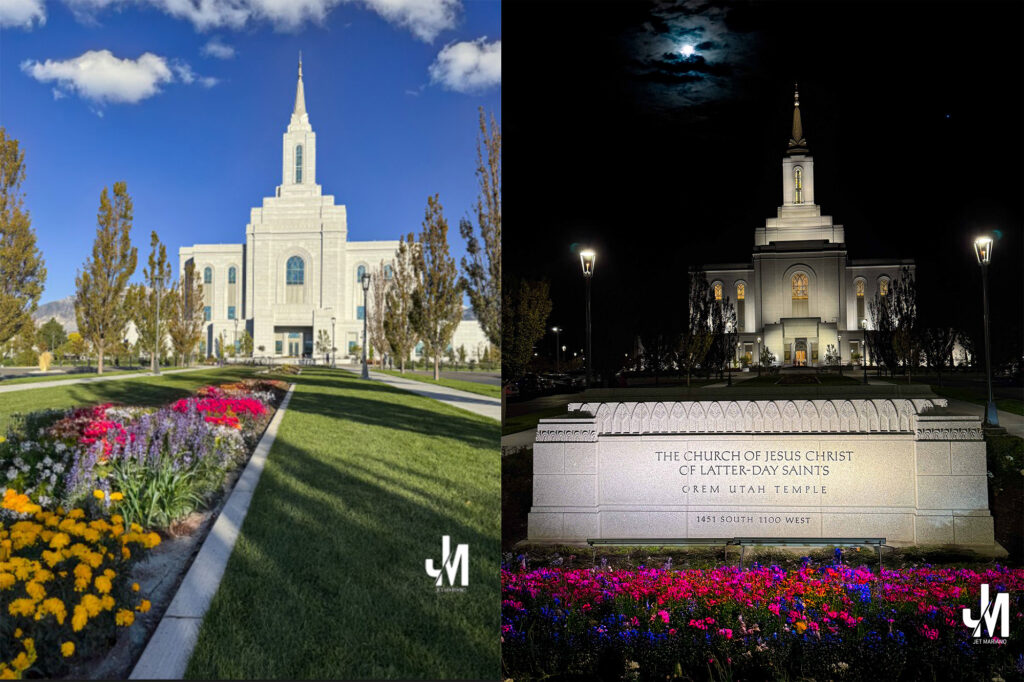
Day: Autumn flowers and clear sky framing the Orem Utah Temple—captured before my proxy endowment. Night: The Orem Utah Temple illuminated under the moon—taken after completing sacred ordinances.
Excerpt
Becoming is more than doing—it’s transforming. The gospel doesn’t just ask for effort; it asks for change.
Intro
These photos were taken on October 18, 2025—before and after my proxy endowment at the Orem Utah Temple. The sunlight and moonlight felt like bookends to a sacred day.
I never photograph temples as a tourist. Each image is a memory of worship—an imprint of the moment I performed sacred ordinances and left a part of my old self on the altar. The lens simply helps me remember what the Spirit taught that day.
President Dallin H. Oaks’ message “The Challenge to Become” echoed in my mind as I walked the temple grounds: the gospel is not about what we do but who we become through covenant living.
Perspective
The temple reminds me that becoming is a process. Every ordinance refines character. Every act of service—inside or outside the temple—draws me nearer to what Heavenly Father intends me to be.
President Oaks’ invitation is personal: the world values performance; heaven values transformation. My work, my worship, and my quiet efforts at home and at Church are all shaping me into something more Christlike.
When I leave the temple, I ask not, “What did I accomplish?” but “Who am I becoming?”
Direct Quotes from President Oaks
“It is not enough for anyone just to go through the motions. The commandments, ordinances, and covenants of the gospel are not a list of deposits required to be made in some heavenly account. The gospel of Jesus Christ is a plan that shows us how to become what our Heavenly Father desires us to become.”
“In contrast to the institutions of the world, which teach us to know something, the gospel of Jesus Christ challenges us to become something.”
Practice (today, not someday)
I will focus less on checking boxes and more on softening my heart. In every task—whether leading, fixing, or serving—I’ll remember that heaven measures growth, not status.
Becoming Christlike happens quietly: through patience with others, humility in learning, and gratitude after every challenge.
Final Reflection
President Oaks’ counsel changes how I see discipleship. The gospel isn’t a checklist; it’s a journey of transformation. Every temple visit, every ordinance, every prayer adds to who I am becoming.
I’m grateful the Lord sees me not as I am but as I can be. That vision gives purpose to every struggle, reminding me that growth is the goal—and grace is the guide.
Pocket I’m Keeping
“The gospel of Jesus Christ challenges us to become something.” That single line redefines every effort I make.
What I Hear Now
“Keep walking. You’re not just doing—you’re becoming.”
Behind the Shot (BTS)
Saturday, October 18, 2025—before and after my proxy endowment at the Orem Utah Temple. The late afternoon light revealed bright autumn blooms; by nightfall, the temple glowed beneath the moon. Both shots symbolize the Lord’s invitation to grow from light to greater light.
Crescent moon rising above the Taylorsville Utah Temple spire—captured in double exposure before sunrise. 70-200 2.8G mounted on tripod
Excerpt
Elder Neal A. Maxwell teaches that the loneliness that sometimes comes with righteousness is where we grow closer to God—and where we learn the courage of “But if not.”
Intro
At 6 a.m., Oct 17, 2025, I pulled over at the Taylorsville Temple and framed a moon-over-spire double exposure while listening (again) to Elder Maxwell’s 21 Guidelines for Righteous Living—especially Guideline 20. This week’s trials were real, yet the Spirit kept bringing me back to Daniel 3: God can deliver—but if not, we still will not bow. That truth has turned my fear of workload into faith to move forward with Him.
Notes from Elder Neal A. Maxwell
Righteousness can feel lonely, but that is where we come closer to God.
Fidelity means not bowing—even when the fire is hot.
God is able to deliver; But if not, disciples still trust and obey.
Act in faith now—serve, pray, and work; heaven’s help becomes practical courage.
Perspective (direct quotes )
The Story of Shadrach, Meshach, and Abednego To emphasize this point, Elder Maxwell recounts the biblical story:
The Fiery Furnace: Shadrach, Meshach, and Abednego were thrown into a fiery furnace that was heated to such a high temperature that the men who tended the furnace died.
The Fourth Figure: The scriptures describe the three young men walking around in the midst of the furnace unharmed. The scripture then says, “And there was a fourth figure in the fire and its form was likened to the Son of God.”
The Promise: Elder Maxwell concludes that when you are passing through these trials and lonely moments, the Lord will be especially close to you.
They were cast into the fire because they refused to bow to the idol of King Nebuchadnezzar (Daniel 3:16–17). Their loyalty brought them closer to God—the pattern for all discipleship.
Scripture (Daniel 3:17–18)
17If it be so, our God whom we serve is able to deliver us from the burning fiery furnace, and he will deliver us out of thine hand, O king. 18But if not, be it known unto thee, O king, that we will not serve thy gods, nor worship the golden image which thou hast set up.
Practice (today, not someday)
Pray, then step into the hard tickets and deadlines: God is able—but if not, I still will not bow to fear or compromise.
Serve and mentor anyway; courage grows as I lift others.
Keep temple focus and steady duty; closer to God is the goal, not merely quick fixes.
Final Reflection
Elder Maxwell’s witness reframed my week: **God can deliver—**and often He does. But if not, I can still move forward with Him. As I prayed and worked, impressions came and solutions followed. Either way, the fire became a classroom, and I felt closer to God than ever.
Pocket I’m Keeping
“God is able—but if not, I will not bow.” If there is a furnace, there is also a Fourth.
What I Hear Now
“Trust Me. Whether I calm the fire or walk you through it, you are not alone.”
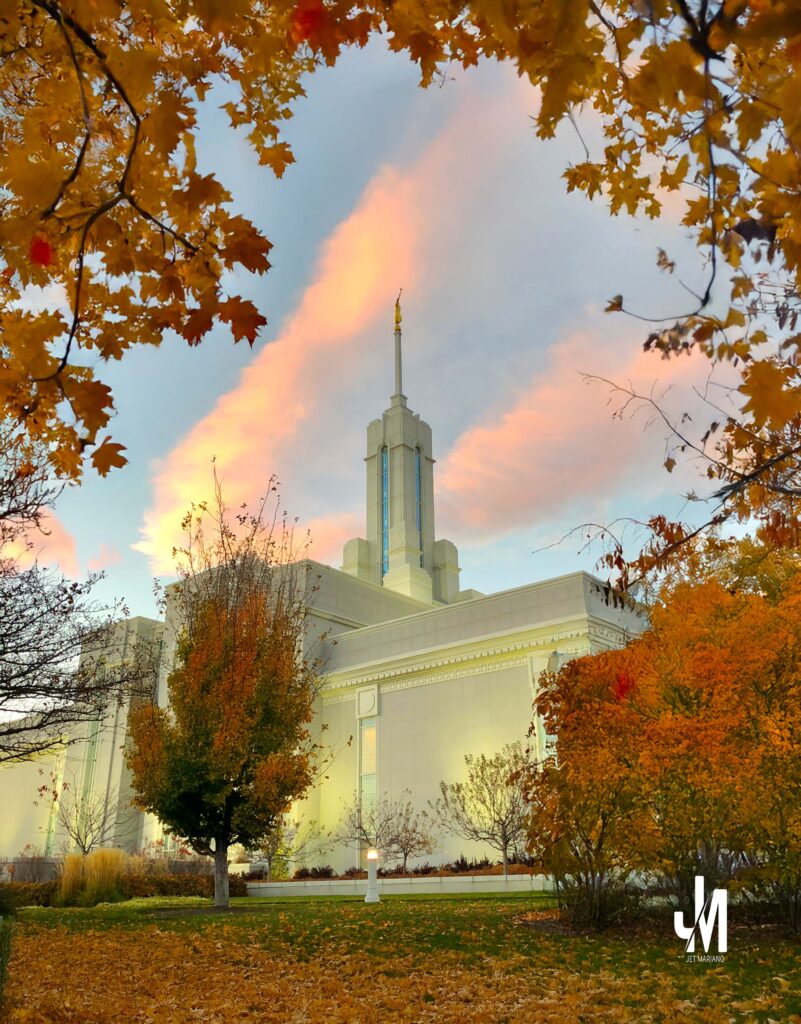
Captured outside the Mount Timpanogos Temple during peak fall—standing in stillness after a long day, I waited for the sky to open and remind me that light always returns.
Excerpt
Autumn reminds me that service is like the seasons—quiet, constant renewal. Even when we’re tired or uncertain, giving of ourselves brings color back to the soul.
Intro
This week felt like an uphill climb. Long nights, long thoughts. I could barely rest, yet something inside me refused to quit. I realized once again that when you love what you do—when your work serves a purpose beyond yourself—fatigue fades behind fulfillment.
Years ago, in another IT assignment, I worked through the night restoring a critical system. No one saw the hours or the quiet prayers between reboots, but the satisfaction came from knowing others could keep working because I did not stop. That same quiet joy has followed me ever since. It’s the joy of standing up, of helping, of serving—whether the task is big or small.
Notes from President Monson
“Unless we lose ourselves in service to others, there is little purpose to our own lives.”
“Man’s greatest happiness comes from losing himself for the good of others.”
“At baptism we covenanted to bear one another’s burdens, that they may be light.”
“How many times has your heart been touched as you have witnessed the need of another? How often have you intended to be the one to help—and yet life’s busyness interfered?”
Perspective
President Monson’s words reached deep this week. I saw how easy it is to get lost in endless to-dos, alerts, and deadlines—the “thick of thin things.” Service, however, brings focus. When I choose to help, I find peace. When I act, I feel alive again. The Savior’s example is the ultimate model of losing oneself in love and lifting others quietly, consistently, and completely.
Practice
Today, not someday, I can serve—by listening more, forgiving faster, and stepping forward even when tired. True discipleship isn’t about grand gestures; it’s in the small, unseen moments where compassion overrides convenience.
Final Reflection
Each time I walk past the temple, I’m reminded: service sanctifies. The light that falls upon its walls is the same light that can fill our hearts when we give of ourselves freely. The world doesn’t need our perfection—it needs our presence.
Pocket I’m Keeping
When I help someone quietly, heaven notices loudly.
What I Hear Now
“We become so caught up in the busyness of our lives… too often we spend most of our time taking care of the things which do not really matter much at all in the grand scheme of things.”
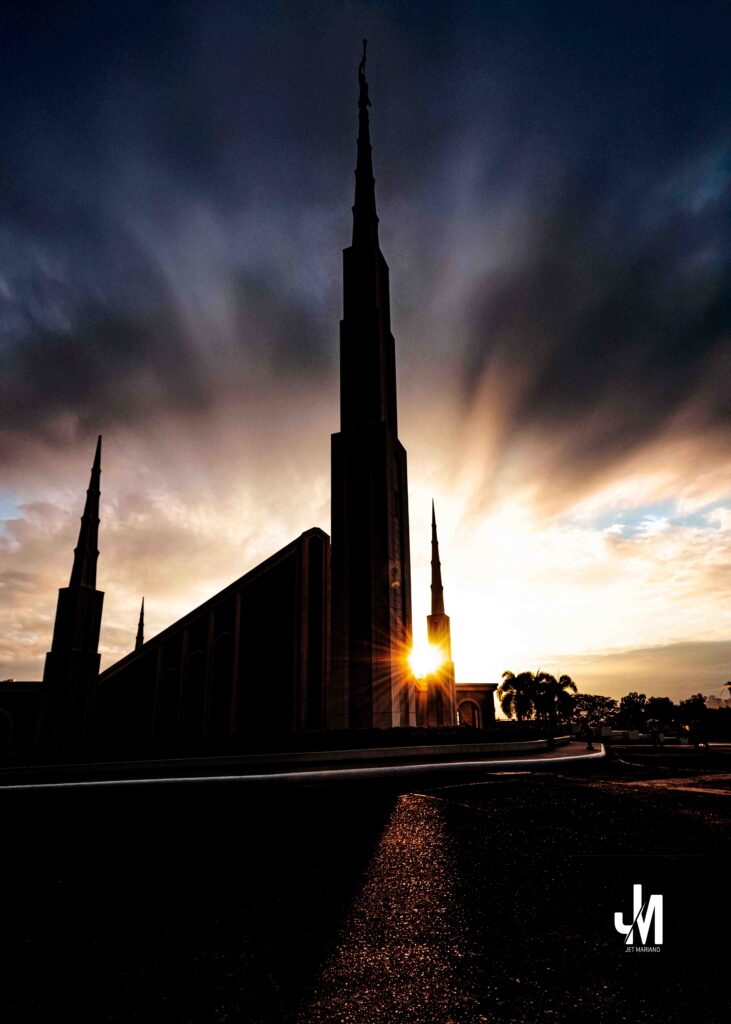
Manila Philippines Temple — I waited for the exact second the sun aligned with the spire. The light pierced through just as if Heaven itself whispered, “I’m still here.”
Excerpt
The sun hid behind the spire—then broke through. That light reminded me of a different storm long ago, when a screen turned blue, and I learned that faith and persistence are built the same way: line upon line, brick by brick.
Intro
November 1999. The world was bracing for Y2K. I was working for an aerospace company in Carson, California, getting ready to drive my parents to LAX for their flight to the Philippines. Before leaving, I decided to double-check our Veritas backup on the Exchange 5.5 server running on Windows NT 4.0. Then came the dreaded BSOD—Blue Screen of Death.
My shift was supposed to end at 4 PM Friday. I didn’t go home until Monday morning. No sleep, no shortcuts—just brick-by-brick rebuilding until email was restored. I missed saying goodbye to my parents, but I kept the company connected.
Notes from Elder Maxwell
“You’ve all been in a storm… when you couldn’t see the sun but you knew it was still there. Likewise, in the stormy and dark moments of life know that the Son of God is always there. His light will never go out.”
That quote became my anchor—both in IT and in life.
Perspective
That night taught me more than any certification. There was no Google, no AI, no online forums—just manuals, backups, and faith that the system could rise again. Today, AI fixes in seconds what once took days. But the light that kept me going then still burns now: the belief that persistence itself is a form of faith.
Practice (today, not someday)
When systems—or souls—crash, don’t panic. Pause, breathe, and build.
Keep working, even if it’s one file or one prayer at a time.
Remember: the Light is constant, even if the screen goes dark.
Final Reflection
The Manila Temple photo symbolizes that memory. When the sun broke through the spire, I felt the same quiet assurance I knew in 1999: He never left me. The blue screen, the missed flight, the fatigue—it was all part of learning that perseverance is light in motion.
Pocket I’m Keeping
The Light never goes out—only our view of it does.
What I Hear Now
“Faith is not seeing the light; it’s working until it returns.”
Seattle Washington Temple — 14°F, suit and tie, icy pavement underfoot. I slipped once, stood again, and framed this shot while the moon played peek-a-boo above the spire. My camera gear cushioned the fall, my faith kept me standing.
Excerpt
Sometimes the light we chase nearly costs us everything. But when we stand back up—cold, bruised, and trembling—we find not just the shot, but the story that defines us.
Intro
It was 14°F in Seattle. I was dressed in a suit and tie for a wedding when the moon began to play peek-a-boo behind the temple spire. I scouted the icy pavement for the right angle, slipped hard, and hit the ground. My camera backpack broke the fall. Still, I stayed—shot after shot—until my legs began to stiffen from the cold. Gathering what energy I had left, I ran toward the temple’s visitor center. Kind hands brought me into a heated room and warmed me back to life. That night reminded me why I rarely back down—from freezing weather, failing systems, or storms that test the soul. The temple stood unshaken, and so did I.
Why I kept going: It wasn’t skill—it was discipline. A simple, healthy routine and a promise to avoid quick fixes helped me stay steady. I’m not the smartest; I’m just “never say die.” I started from zero, and service keeps me moving.
Notes from {Speaker}
Courage isn’t the absence of cold; it’s pressing the shutter before the light fades.
Sometimes the miracle isn’t surviving—it’s still choosing to serve after you do.
The temple teaches us that endurance and grace can share the same frame.
Perspective
In IT, storms don’t always come from the sky—they come from critical outages, failed updates, and people relying on you at impossible hours. I’ve faced those too—sometimes while boarding flights or crossing oceans. I was in the Philippines before COVID and still handled tickets for a U.S. client. At Incheon Airport, I restored a VM. In Western Samoa, I fixed email for a company thousands of miles away. Once, 29,000 feet above ground, my soft-phone rang mid-flight—Tahiti users couldn’t send email. I helped them anyway. You could call me a workaholic. I call it love for helping people.
Practice (today, not someday)
When fatigue hits, serve once more—small acts reignite large faith.
Write down one storm you’ve survived and what it taught you.
Find a temple—or a quiet place—and let stillness thaw your heart.
Final Reflection
My life has felt like a series of tours of duty—local government, universities, law firms, manufacturing, perinatal, and home builders—each relying on me as a “Swiss knife” of IT. After the 2012 recession, I lost clients but not calling. I passed the business to my son and returned to corporate life in 2014.
“Vacation?” I can’t recall one. Every trip seemed to bring a new emergency. But I’ve learned to see service as my rest—because helping others is where my soul finds warmth. I’ve done this since before Google or AI existed, when documentation came from books and discipline.
Through it all, the pattern holds—stand a little longer, look for the moon, run for warmth when you must, and let the temple remind you that light is never lost to the cold.
Pocket I’m Keeping
Light is rarely free; it asks something of us.
What I Hear Now
“If the only thing you take into the storm is faith, it will be enough.” “Composition comes back after compassion—first for yourself, then for others.”
Link to the Talk
My IT Journey — the long road that led to that frozen night at the Seattle Temple.
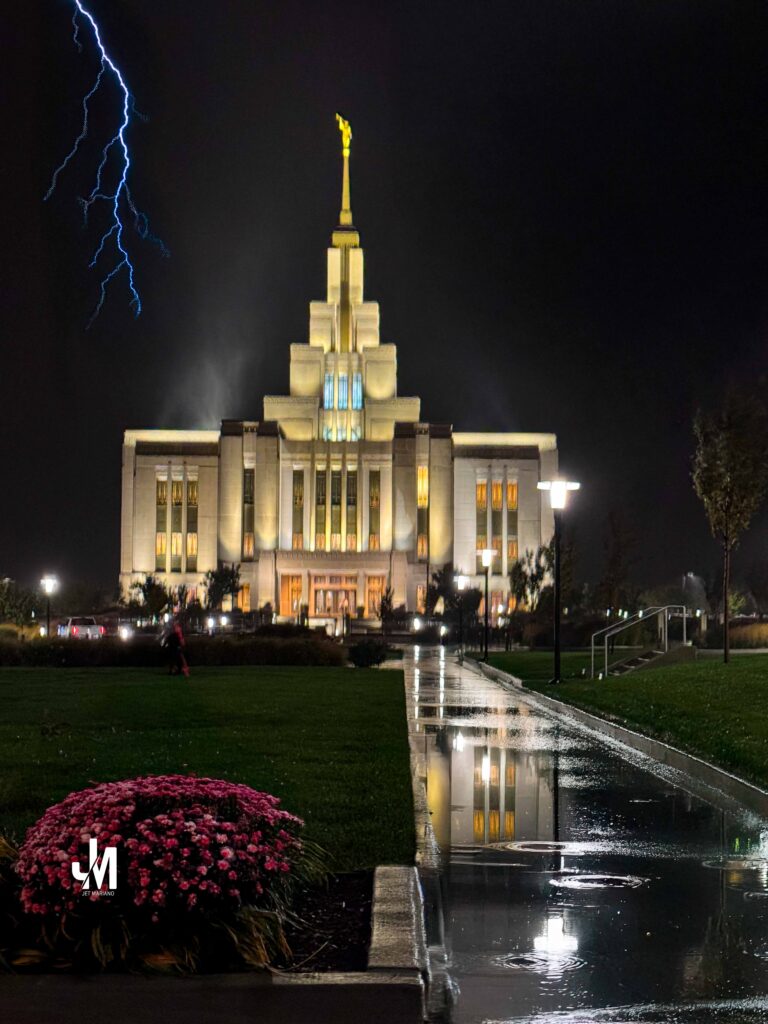
Lightning breaks over Saratoga Springs Temple—framed through the open driver’s window, with rain reflections and the flower bed lit by my Tesla.
Behind the Shot (BTS)
I waited patiently for the perfect lightning strike, switching my iPhone to video mode so I could later capture the exact frame. I parked strategically, rolled down the driver’s window, and composed the scene—rain-slick path, temple reflection, and the flower bed on the left illuminated by my Tesla’s headlights. I took over fifty shots, braving 55-mph winds and heavy rain until I was drenched to the bone.
Tesla’s Summon feature became my safety net—it allows the car to move itself up to 20 feet in a straight line. I’ve visited this temple many times and know exactly where to park during storms like this. When the lightning finally hit, my car quietly rolled beside me, heater set to 75°, ready to bring warmth after the storm.
Excerpt
Setbacks lose their sting when we turn outward. The surest cure for heaviness of heart is to lift another’s. In serving, we find strength we didn’t know we still had.
Intro
After proxy endowment at the Saratoga Springs Temple, rain came hard—55 mph winds, lightning cracking over the spire. I was soaked through but determined to capture the moment. This week was one of the toughest—under the weather, training a new engineer, racing the Windows 10 → 11 deadline. Yet, even weary, I pressed on. Elder Neal A. Maxwell once said, “When difficulties come, don’t feel sorry for yourself. Lose yourself in service… When you feel down, lift other people up.” That truth steadied me more than the storm.
Perspective
In IT, storms don’t always come from the sky—they come from deadlines, downtime, and people who depend on you. The temptation to withdraw is strong, but the gospel has taught me that light returns when I reach outward. Service becomes medicine: teaching, fixing, lifting, sharing, mentoring. Each act reorders the soul toward purpose. The temple reminded me that the Lord’s work never pauses for weather, and neither should mine.
Practice (today, not someday)
When exhaustion whispers, “You’ve done enough,” I’ll answer with quiet action. I’ll keep helping the next person who needs guidance—whether that’s a coworker puzzled by PowerShell or a friend weighed down by unseen battles. The Savior’s healing always flowed outward; so must mine.
Final Reflection
The downpour cleansed more than the temple steps—it washed away my self-pity. I realized that serving amid struggle doesn’t drain me; it refills me. My soaked jacket, cold hands, and the warmth of my car’s heater at 75° felt symbolic: heaven never leaves its servants freezing in the storm.
Pocket I’m Keeping
“Lose yourself in service.” When the clouds gather again, I’ll remember this night of lightning and light—how the act of giving steadied the heart that was slipping.
What I Hear Now
“Lift others. That’s how I’ll lift you.” The whisper wasn’t from the wind but from the One who calms it.
Macro ant on a leaf—small bug, big damage. Quiet inbox rules (forward/delete/hide) are how real-account impersonation starts. This post shows 10 PowerShell fixes to stop it fast.
Excerpt Most “email impersonation” losses start quietly—rules that forward, delete, or hide mail. This playbook backs up evidence, stops the bleed, removes risky rules, clears forwarding, and verifies. Calm hands, clear steps.
Intro Most “email impersonation” (BEC) starts in two ways:
Real-account misuse—someone phishes a password/token and quietly adds inbox rules (forward, delete, hide) or enables mailbox forwarding.
No-account spoofing—look-alike domains and weak SPF/DKIM/DMARC let crooks send as if they’re us.
This post fixes bucket #1 fast. You don’t need Compliance Center/Purview to clean a single mailbox: run these in Windows PowerShell 5.1 to back up → stop all rules → remove risky patterns → clear forwarding → verify. The examples below target [email protected]. After cleanup, keep the door shut by disabling SMTP AUTH/legacy protocols and blocking external auto-forwarding. (For bucket #2, tighten SPF/DKIM/DMARC—that’s outside this quick fix.)
Perspective There are no super heroes in IT—no capes, no instant rescues. When rules go rogue, heroics make noise; runbooks make progress. The job is to protect people’s work with boring, proven steps.
Practice (today, not someday)
Connect (read-only) — open a secure session to Exchange Online for the mailbox you’re fixing. Import-Module ExchangeOnlineManagement -RequiredVersion 3.9.0 -Force Connect-ExchangeOnline -UserPrincipalName [email protected] -ShowBanner:$false $mbx = "[email protected]"
Backup rules to CSV (read-only) — take a snapshot so you have evidence and an easy rollback reference. $ts = (Get-Date).ToString('yyyyMMdd-HHmm') Get-InboxRule -Mailbox $mbx | Select Name,Enabled,Priority,From,SentTo,SubjectContainsWords,MoveToFolder,ForwardTo,RedirectTo,DeleteMessage,StopProcessingRules | Sort Priority | Export-Csv "$env:USERPROFILE\Desktop\$($mbx)-InboxRules-$ts.csv" -NoTypeInformation -Encoding UTF8
Disable all rules (change) — safe stop; nothing runs while you fix things. Get-InboxRule -Mailbox $mbx | Disable-InboxRule -Confirm:$false
Remove delete rules (change) — get rid of any rule that silently deletes messages. Get-InboxRule -Mailbox $mbx | Where-Object {$_.DeleteMessage} | ForEach-Object { Remove-InboxRule -Mailbox $mbx -Identity $_.Name -Confirm:$false }
Remove hide/stop rules (change) — remove rules that hide mail (Junk/Archive/RSS/Conversation History) or halt further processing. Get-InboxRule -Mailbox $mbx | Where-Object { $_.StopProcessingRules -or ($_.MoveToFolder -match 'Junk|Archive|RSS|Conversation History') } | ForEach-Object { Remove-InboxRule -Mailbox $mbx -Identity $_.Name -Confirm:$false }
Remove forward/redirect rules, focusing on external (change) — strip any rule that forwards or redirects mail, especially off-tenant. $internal = @('jetmariano.us') # add internal domains if needed $rules = Get-InboxRule -Mailbox $mbx foreach($r in $rules){ $targets=@() foreach($t in @($r.ForwardTo)+@($r.RedirectTo)){ if($t -is [string]){$targets+=$t} elseif($t.PrimarySmtpAddress){$targets+=$t.PrimarySmtpAddress.ToString()} elseif($t.Address){$targets+=$t.Address.ToString()} elseif($t){$targets+=$t.ToString()} } $external = $false foreach($addr in $targets){ if($addr -match '@'){ $domain = ($addr -split '@')[-1].ToLower() if(-not ($internal -contains $domain)){ $external = $true } } } if($external -or $targets.Count -gt 0){ Remove-InboxRule -Mailbox $mbx -Identity $r.Name -Confirm:$false } }
Clear mailbox-level forwarding (change) — turn off any top-level forwarding set on the mailbox. Set-Mailbox -Identity $mbx -DeliverToMailboxAndForward:$false -ForwardingSmtpAddress $null -ForwardingAddress $null
Verify list and count (read-only) — prove you’re clean; zero is ideal. Get-InboxRule -Mailbox $mbx | Sort Priority | Format-Table Name,Enabled,ForwardTo,RedirectTo,MoveToFolder,DeleteMessage -Auto (Get-InboxRule -Mailbox $mbx | Measure-Object).Count
Re-enable only safe movers (optional change) — if you truly want routine filing, turn on only simple move-to-folder rules. Get-InboxRule -Mailbox $mbx | Where-Object { $_.MoveToFolder -and -not $_.ForwardTo -and -not $_.RedirectTo -and -not $_.DeleteMessage -and -not $_.StopProcessingRules } | ForEach-Object { Enable-InboxRule -Mailbox $mbx -Identity $_.Name -Confirm:$false }
Disconnect (read-only) — close your session cleanly. Disconnect-ExchangeOnline -Confirm:$false
Final Reflection The work narrowed down to steady steps. Not a clever hack—just patience, order, and protection of someone’s inbox.
Pocket I’m Keeping Runbooks over heroics.
What I Hear Now Be steady. Protect the work. I’ll show you the next step.